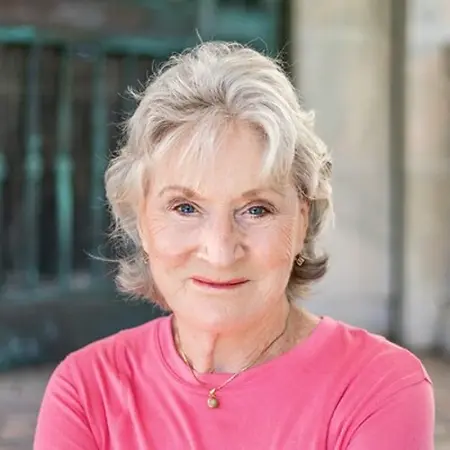
Her Story
About Susan
I started my career as a classroom teacher, working part-time while my children were young, exclusively teaching science at the elementary level. When full-time teaching jobs were scarce, I moved into textbook publishing for science and health education. From there, I transitioned to development and fundraising work for a mental health system in Columbus, Ohio, where I educated corporate leaders on how supporting mental health initiatives could benefit their workers and properties. This was really an educational sales job, about finding allies and showing mutual benefits rather than just asking for money. Then I started my own business, AZAC and Associates, 35 years ago. I began with sales training, then moved into communications and customer service, which was just coming on board as an important business focus at that time. Organizations wanted their managers and supervisors to know how to manage customer service people, so I expanded into management and leadership development and eventually team development and retreats. I teamed up with people who had expertise in specific segments like healthcare and community policing - I couldn't teach policemen about customer service as a female without someone who had an in with them. Over 20 years, I worked with diverse organizations including Nationwide Insurance, Honeywell, government agencies, federal women's conferences, and Pinellas County utilities. I took generic topics like conflict management, change management, and interpersonal communications and cultivated them for particular situations and audiences. I started adding intrapersonal communications, helping people understand their own thoughts and their part in conflicts. It was amazing how audiences grew and became more open to understanding their role over those 20 years. Now, I've evolved to focus on writing and helping caregivers with their mental health. I'm not a psychologist or therapist, but I was an 18-plus year family caregiver for my life partner who had dementia and other diseases. Based on my prior experiences, I integrated cognitive behavioral practices and emotional intelligence into addressing the mental challenges of caregiving. My regular day now looks like an author's day - sitting down typing, posting on LinkedIn, writing and reviewing my manuscript that just came back from an editor, attending conferences to learn from other authors about promoting books, and working to broaden my social media reach. It's about finding people who are interested in hearing and reading what I have to say. My biggest opportunity is that I can influence people and the way they think - not what they think, but how to think, how to use our minds instead of letting our minds use us. I'm focused specifically on the mental health of caregivers, and it's a gift to stand in front of caregivers and offer them something they haven't heard before. Some of these ways of thinking are very generic in the world, but nobody's talking about how to do it in caregiving, and I think that's a fabulous opportunity.
Her Interview
Ten minutes with Susan
01What do you attribute your success to?
I attribute my success to being open, being flexible, and being resilient. But definitely having the fortitude to keep going. I think just having tenacity is so important - being flexible, but having tenacity to follow through on your vision. So just keep going. Sometimes the vision changes, the details change, but the vision is holding, holding a place for me to move forward. The flexibility, and hold the vision.
02What’s the best career advice you’ve ever received?
I think just having tenacity is the best advice - being flexible, but having tenacity to follow through on your vision. So just keep going. Sometimes the vision changes, the details change, but the vision is holding, holding a place for me to move forward. It's about the flexibility, and holding the vision. The moral of that lesson is just keep going, because it's the journey as much as the destination. The journey is the teacher. The destination is the achievement, but the teacher is the journey.
03What advice would you give to young women entering your industry?
We all have lovely stories to tell. Some of those are painful stories, some of those are exciting stories. But it's our story, and the way we tell it makes it creative. And I'm talking to authors - it makes it creative, and it is a way of getting to know ourselves better too, because as we write, as I write, I sort of reflect on who I am, and the words allow me to broaden the understanding of what I'm writing. The words, you know, one word can have a little bit different meaning than another, so choosing the right words and maybe even choosing metaphors and analogies to something helps me understand my life and my purpose better. And that's exciting. And then there are other men and women doing the same thing, so many of us writing these days, and it's really kind of fun, because you know, it's never boring. There's nothing boring. Every day, every hour sometimes, I learn something new. And that is so exciting. The moral of that lesson is just keep going. Because it's the journey as much as the destination. The journey is the teacher.
04What are the biggest challenges or opportunities in your field right now?
The biggest challenges I'm facing right now are social media and finding people who are interested in hearing what I have to say, reading what I have to say. It's not just about writing, it's about finding your audience and broadening my social media reach. As for opportunities, the biggest opportunity is that I can influence people and the way they think - not in terms of what they think, but how to think, how to use our minds instead of letting our minds use us. And therein lies my focus right now specifically on the caregiver. The mental health of the caregiver is of extreme importance to me, since I have experienced horrific stress with a dementia loved one. It's a gift to be able to stand in front of caregivers and offer them something that they haven't heard before. Some of those changes or ways of thinking are very generic in the world, but nobody's talking about how to do it in caregiving. So I think that's a fabulous opportunity for me.
05What values are most important to you in your work and personal life?
Personal growth and development is most important to me. It's about learning how I think, and how those thoughts and those beliefs may or may not fit the situation, and being willing to investigate them, cross-examine them, and perhaps change from the inside out. That's where the real power is - inside, in our ability to be able to see ourselves as we are and move forward to where we'd like to be.
Join Influential Women and start making an impact. Register now.