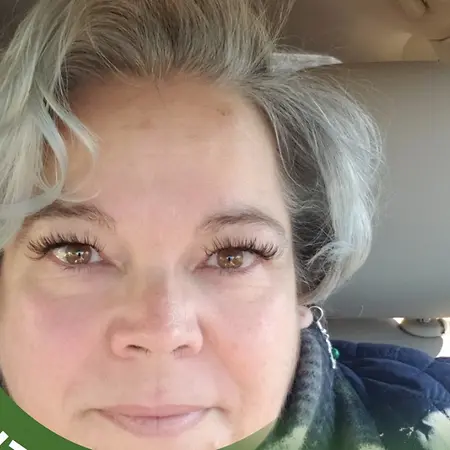
Her Story
About Susanna
My journey in nursing began in 1996 when I became an LVN, inspired by my grandmother who was an old-school nurse with starched uniforms who taught me how to do shots on an orange when I was young. I never wanted to be anything else. After 17 years as an LVN, I knew I was called to do more, so I went back and got my RN in 2013, then my master's degree in 2015. This was while raising three children as a single mom, homeschooling them, living on a farm doing animal chores, working home care during the day, and then working the 3 to 11 shift at the hospital. I'm also a breast and thyroid cancer survivor, and getting through that really reinforced that I needed to go further in my career. Today, I serve as a manager of care management, overseeing a Medicaid program out of Oregon with 14 nurses, 10 CHWs, 2 supervisors, and 4 non-clinical personnel. We manage health-related social needs for 2,300 LTSS members who need either in-home support and care or are in facilities. I've worked in many states including California, Alaska, Washington, South Dakota, Minnesota, and now Virginia. One of my greatest achievements was creating a transition of care program for CMAR Community Health Clinics, an FQHC out of Washington, where we lowered our readmission rate from 13% down to about 9%. My work is driven by the belief that it's a privilege to be allowed into people's lives when they're at their weakest, sickest, most vulnerable, and being able to help them navigate very complicated healthcare systems and advocate for them.
Her Interview
Ten minutes with Susanna
01What do you attribute your success to?
The motivation initially was providing for my children, but doing something that I really believe I was called to do. Making a difference in people's lives is incredibly rewarding. I knew as an LVN that I was meant to do more than that, and after I fought breast and thyroid cancer and got through that, I really knew that I needed to go further. It took me 4 years to go back and get my bachelor's degree and 2 more years to get my master's, but I just knew I was called to do more, and so I just worked really hard to achieve it.
02What advice would you give to young women entering your industry?
Get the experience in acute care, because that will, no matter where you go, because there are so many niches within nursing, having that foundation in acute care is absolutely important. So start there, and don't get discouraged, because that adage that nurses eat their young, unfortunately, is very true, so do not get discouraged when you encounter that. Just keep going and find that place within nursing that really touches your soul and really makes getting up every day and doing this worthwhile, because nursing is challenging, and if you find yourself in a soul-sucking position, it will not be worth it. When nurses get burnt out, our profession lost a professional, and our members lost somebody, and it's such a huge loss when we have burnout. So if you can find that place that really matters to you and feeds you, the chance for burnout is just so much less. Stay up on your continuing education, because this is an ever-changing field, so that's extremely important. Find the niche that really speaks to you and gives you meaning, that you can pour yourself into. Don't ever stop learning. Go for the bachelor's degree, go for the master's degree, keep promoting yourself, and keep filling yourself with that education, because it will not only benefit you, but benefit the profession, and benefit your patients, members, clients. Keep educating yourself, it's extremely important.
03What are the biggest challenges or opportunities in your field right now?
Oregon's care management is highly regulated by the Oregon Health Authority, and it's highly unusual compared to the many states I've worked in, including California, Alaska, Washington, South Dakota, Minnesota, and now Virginia. Our Medicaid members who are part of LTSS, Long-Term Services and Supports, are high-needs members who need either in-home support and care or are in a facility. They need care plan reviews every 90 days. I have 2,300 LTSS members and only 5 care managers, and there are just not enough hours in the day to even fulfill that one regulatory requirement, let alone manage a caseload of 50 other Medicaid members and manage our high-cost list. There are a lot of regulations that need to be adhered to in order to meet these regulatory demands, and honestly, my day looks like meetings, meetings, more meetings, and more meetings, with lots of administrative burden. It's about making sure that everybody is meeting the letter of the law and doing everything they're supposed to be doing to meet those requirements.
04What values are most important to you in your work and personal life?
Member care is most important to me. It's almost a privilege to be allowed into these people's lives when they're at their weakest, sickest, most vulnerable, and being able to provide ease to them, to help them navigate very complicated healthcare systems, being able to advocate for them, being able to make a difference in their lives and help them heal. I believe in looking at the whole person, both physically, mentally, and spiritually, and knowing that it takes all of those things and being able to minister to all of them in order to make a difference. These people have rich history. They have kids, they have grandparents, they have jobs, they have lives, they have everything. They're contributing to this world, and when they're sick and in despair, it impacts that. So when we can make a difference, we are having a far-reaching effect in families and communities, the whole nine yards.
Join Influential Women and start making an impact. Register now.