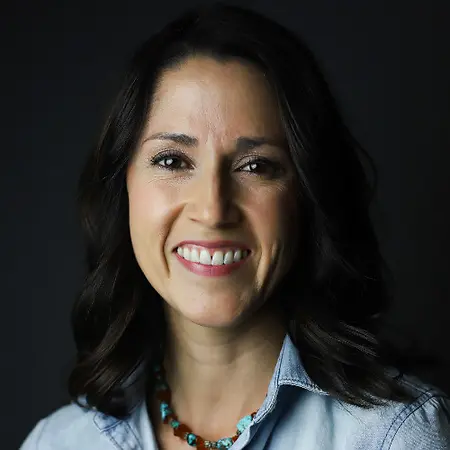
Her Story
About Suzana
I've been in higher education for going on 16 years, and I'm currently the Assistant Vice Provost of Academic Innovation and Director of Online Marketing and Enrollment, a role I've held for nearly 7 years. I started my career in for-profit education, where I was hired to train enrollment counselors to do their jobs at a high level. While there were ethical issues I didn't agree with in that environment, I recognized they did customer care exceptionally well in a way that was competitive and respectful of students' time. I saw a gap when I transitioned to nonprofit education - non-traditional learners needed that same white glove service. For the past 14 years, I've been in the nonprofit sector, working to bridge that gap. My proudest moments include launching the Starbucks Achievement Plan in collaboration with the COO of ASU Online, which was an emotional experience that showed me how our work impacts people across generations. I also had the privilege of working with my alma mater, the University of Arizona, building their online program with what I call my dream team. My role today is less operational and more about thought leadership - being curious about the market, keeping my ear to the ground on national issues, helping my team peek around the corner to anticipate changes, and connecting the pieces across siloed areas. I focus on accountability, collaboration, and moving rocks out of the way so my leaders can do their jobs effectively.
Her Interview
Ten minutes with Suzana
01What do you attribute your success to?
I attribute my success to the mentors who shaped me early in my career, particularly Monty Wells and Lamarck Brim, who were my first bosses out of college. I came into the workforce very traditional - respecting elders, asking permission to speak, taking marching orders. These two men helped me ground myself and have confidence that I mattered. I remember Lamarck once told me, 'I want you, from now on, you have something important to say, I don't want you asking permission to say it. You come in here and you tell me. It's not a good look for you to always ask permission to speak.' That kind of mentoring taught me to own myself, own my voice, and know that I matter. They showed me that it doesn't matter what level you are at the company, everybody needs to be held accountable. You talk about things directly with respect and humility, but you don't let things fester. Those lessons have stayed with me for 20 years, in every single career move I've made.
02What’s the best career advice you’ve ever received?
The best career advice I ever received came from my boss Lamarck, who told me: 'I want you, from now on, you have something important to say, I don't want you asking permission to say it. You come in here and you tell me. It's not a good look for you to always ask permission to speak.' That advice fundamentally changed how I showed up in my career. It taught me to own who I am in any space, to have confidence in my voice, and to know that I matter regardless of my position. It also reinforced the importance of direct communication with respect and humility, and not letting things fester. Those words have guided me through every role I've held over the past 20 years.
03What advice would you give to young women entering your industry?
I would say take some time in those quiet moments to really understand and reflect on who you are, what roots you as a human being, and find a place that aligns with those values. That's the easiest way to be able to sleep, have peace, and it's also very motivating. Find someone who specializes or has done research in how to understand the science behind our actions, so that we have better control of our environment. So much of the time we're reacting, responding, always in crisis mode, always building. In higher ed, we're under siege right now, and there's a lot of shakeup happening. We spend so much time responding, worrying about what our boss thinks, or whether something will be socially acceptable, instead of taking time in those quiet moments to fundamentally root yourself. Find books and groups that help you pay attention to you, to listen to yourself. That builds confidence. When you figure out your compass and get grounded, then you can move forward and make decisions with confidence, know when not to make decisions, and know when to give yourself space. This is all emotional, mental, internal warfare that we all have within ourselves, and that really is the biggest thing to overcome in any profession.
04What are the biggest challenges or opportunities in your field right now?
I think it's really easy to get wrapped up in power or influence the higher up you get. The more it becomes about the political game in most instances, and less about those doing the frontline work. Really good leaders need to hire teams that push back on them, teams that are experts in their own right and aren't afraid to provide boundaries, direction, and data grounded in our goals. The higher up you get, the less it sometimes becomes about the good work being done by your front-end folks, and more about that political piece. It's a struggle to do that with grace and humility while also standing up for yourself as you deal with bigger egos and power dynamics. This is a particularly serious issue for women. There's research showing that women are less likely to be in leadership roles because they feel more connected working with the people or students, and the higher up they get, the more out of touch they become. They're less willing to deal with the power dynamics, so they usually stay in front-end, mid-managerial roles versus moving up into higher leadership positions. We're trying to juggle so much, and a lot of the time women think, 'I don't want to deal with it, I'm just going to stay where I'm at,' instead of pushing back on those norms and staying true to themselves.
05What values are most important to you in your work and personal life?
Being a mom is 100% number one for me. It's the most important job I'll ever have, and my kids are teaching me how to be a better human being. My main goal every day is to be a good mom and get an A+ as many times as possible in that role, versus being an excellent employee. I have an amazing husband who is a true feminist - he gave up his career and put it on hold to allow me to follow my dreams. I don't subscribe to the idea that you leave your personal life at the door when you come to work, or leave work at the door when you come home. I am who I am in all areas. Some days I really do have to choose what am I going to be A-plus in, and what am I okay getting a C in today. It's an everyday decision that fluctuates. I also believe in the fundamentals of who you need to be as a human to lead well, not just lead others but lead yourself. I follow Brene Brown because she speaks to my soul about what it is to be a professional woman, and I love that she's actually a product of Texas community colleges - she's literally the student population we look to support. Learning that rooted me even more in what I do professionally and personally.
Join Influential Women and start making an impact. Register now.