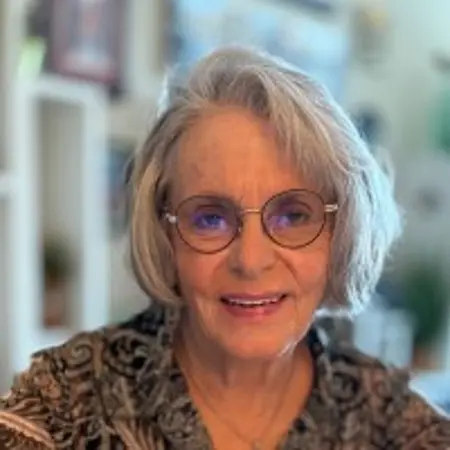
Influential Woman · Education, Technology, literacy
Suzanne Feit
Author, Speaker, Consultant, Hands-on Training, Self Employed
Marina Del Rey, CA 90292
Her Story
About Suzanne
Suzanne Feit is a special education educator, assistive technology consultant, author, and speaker based in Marina del Rey, California. With more than 35 years of experience at the intersection of education and technology, she is known for making complex tools accessible, practical, and empowering for learners of all ages and abilities. Suzanne holds a master’s degree in Special Education and has built a career grounded in inclusion, lifelong learning, and Universal Design for Learning.
Throughout her career, Suzanne has worked globally as a curriculum developer, trainer, and implementation specialist, supporting educators and institutions across the United States, Japan, England, Finland, and Australia. She founded a nonprofit technology resource network connected with companies such as Apple and Microsoft, helping schools and families integrate assistive technologies effectively. Her work has included district-wide implementations, university-level teaching, and extensive “train-the-trainer” programs focused on enabling independence and meaningful access for students with diverse learning needs.
In recent years, Suzanne has turned her attention to artificial intelligence as a powerful and inclusive learning tool. She is the author of Family Adventures from A to Z Using ChatGPT, a hands-on guide designed to help families and educators move from AI anxiety to AI partnership through creative, accessible activities. Through workshops, speaking engagements, and consulting—including upcoming appearances such as the LA Times Book Festival—Suzanne continues to advocate for human-centered uses of AI that foster curiosity, creativity, and connection. She was selected as an Influential Woman representing Marina del Rey for 2026 and remains committed to helping individuals first understand how learners access tools, and then adapt solutions that allow everyone to thrive.
Her Interview
Ten minutes with Suzanne
01What do you attribute your success to?
I attribute my success to a lifelong commitment to listening closely, solving real problems, and believing deeply in human potential. For more than fifty years, my work has lived at the intersection of education, technology, and access—not because I set out to build a legacy, but because I was driven to notice what wasn’t working for learners who were too often overlooked, underestimated, or unheard. That instinct—to observe first and respond thoughtfully—has guided every chapter of my career. My journey began in special education, where I earned my master’s degree and quickly recognized that access, not ability, was the greatest barrier facing many students. Long before assistive technology entered mainstream conversation, I collaborated with educators, therapists, families, and emerging technology companies to develop tools that gave learners greater agency over their education and their voices.
In the late 1980s, I founded a nonprofit network connecting schools and families with major technology partners. That role took me around the globe, developing curriculum, training educators, and implementing assistive solutions that helped students not only participate but thrive. What has sustained my work is seeing the impact firsthand—from a nonverbal child speaking her first words through a communication device to a stroke survivor finally expressing complex thoughts using adaptive technology. Most personally, I have experienced this impact as a parent, raising my son with Down syndrome and using technology as a bridge to independence, connection, and joy.
More recently, my curiosity has led me to explore artificial intelligence as the next frontier of accessibility. That work resulted in my book, Family Adventures from A to Z Using ChatGPT, which helps families and educators move from AI anxiety to AI partnership through creative, human-centered use. Whether I am training educators, writing, or speaking at events such as the LA Times Book Festival, my purpose remains the same: to translate powerful tools into accessible, empowering experiences that help people realize what is possible.
02What’s the best career advice you’ve ever received?
Use technology as a thinking partner, not a replacement. Maintain your authorship, judgment, and voice—while allowing innovation to expand what’s possible.
For me, that means starting with my own ideas and perspective, then using AI to refine, challenge, and build on them. Technology should amplify human thinking, not replace it. When we keep the judgment loop intact, where we decide, AI responds, and we decide again, we preserve creativity, ethics, and ownership.
That balance is the real literacy of the future: collaborating with innovation, while staying fully human at the center of the work.
For me, that means starting with my own ideas and perspective, then using AI to refine, challenge, and build on them. Technology should amplify human thinking, not substitute for it. When we keep the judgment loop intact, where we decide, AI responds, and we decide again, we preserve creativity, ethics, and ownership.
That balance is the real literacy of the future: collaborating with innovation while keeping the human center of the work.
03What advice would you give to young women entering your industry?
My advice to young women entering this field is to listen first. When technology is placed in the hands of people who approach challenges like detectives, observing carefully, asking thoughtful questions, and truly understanding the problem before prescribing a solution, it becomes transformative. That mindset has guided my work from the beginning, continues to shape my practice today, and fuels everything I hope to build next. I encourage you to seek first to understand, and then to be understood. Be an observant problem-solver: notice how a person accesses tools, where barriers exist, and what strengths are already present. When you adapt solutions to the individual rather than forcing people to adapt to technology, you create access, empowerment, and lasting impact.
04What are the biggest challenges or opportunities in your field right now?
The greatest challenges in my field have rarely been about technology itself. They’ve been about perception, access, and timing. For decades, assistive technology was often misunderstood or dismissed as a “nice-to-have” rather than a necessity. Convincing institutions to invest in tools for students with diverse learning needs required repeatedly proving their value, even when outcomes were clear. Innovation frequently outpaced policy, funding, and training, leaving eager educators and families without the support they needed. Equity has been another persistent challenge. Access to technology often depends on geography, income, or awareness. Brilliant solutions exist, but they don’t always reach the people who need them most.
Bridging that gap requires advocacy, partnerships, and ongoing education—not just about how to use tools, but also about why they matter. On a personal level, navigating these systems as a parent of a child with Down syndrome brought its own obstacles. Others often set expectations low, and families were forced to push back, demonstrate potential, and insist on inclusion. Those experiences reinforced my commitment to creating solutions that empower individuals rather than define them by their limitations.
Today, artificial intelligence presents a familiar challenge in a new form: fear of the unknown. AI, like every transformative technology before it, raises concerns about misuse and displacement. My focus is on reframing that conversation, helping people see AI as a supportive, creative, and independence-enhancing tool when guided by thoughtful human intention. While public hesitation and limited awareness present practical hurdles, AI tools like ChatGPT also consolidate many assistive features into one accessible platform, opening new opportunities for training, inclusion, and meaningful learning. I’ve learned that progress doesn’t come from avoiding complexity, it comes from leaning into it, asking better questions, and refusing to accept “that’s just how it is” as an answer.
05What values are most important to you in your work and personal life?
I have been deeply passionate about special education and assistive technology for more than fifty years, but that passion became profoundly personal when I began working alongside my son, David, who has Down syndrome. He didn’t just influence my career; he inspired it, shaped it, and gave it purpose. Every classroom I entered, every technology I championed, and every system I challenged was guided by the belief that families deserve tools that open doors rather than limit expectations. That belief also inspired me to write Family Adventures from A to Z Using ChatGPT, a book designed to help families use AI to connect, explore, and create meaningful experiences together.
For me, technology is never a replacement for relationships—it’s a bridge that strengthens them, sparks curiosity, and expands possibilities. Sharing this work with families through platforms like Amazon, Barnes & Noble, IngramSpark, and BookBub has been incredibly rewarding. My values—accessibility, empowerment, curiosity, and connection—drive everything I do, both professionally and personally, and continue to guide the work I hope to contribute in the years ahead.
Join Influential Women and start making an impact. Register now.