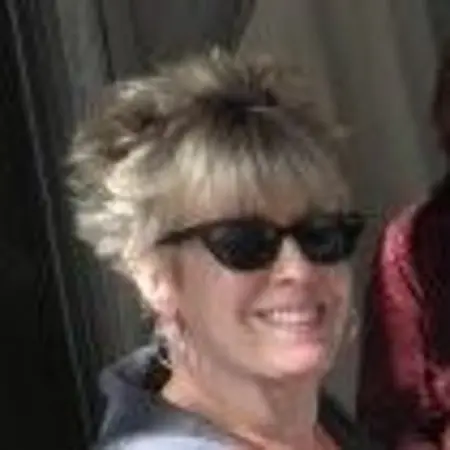
Her Story
About Suzanne
Suzanne Podesta recently retired in 2026 after a nearly 49-year career with Tucson Electric Power, where she served in a wide range of roles across billing, pricing, engineering project controls, and regulatory compliance. In her most recent position, she spent 15 years as a NERC Compliance Specialist, overseeing federal reliability and cybersecurity standards for the utility and ensuring audit readiness under strict regulatory requirements.
Throughout her career, Suzanne was known for her ability to strengthen internal processes and reduce compliance risk, including developing systems that eliminated repeated violations of critical industry standards. She played a key role in protecting the organization from significant financial penalties by ensuring adherence to complex federal regulations and improving cross-departmental accountability. Earlier in her career, she also contributed to pricing and regulatory work that supported utility operations and governance.
Suzanne’s career was shaped by a strong commitment to integrity, communication, and seeing the broader impact of operational decisions. While working full time, she earned both a Bachelor of Science in Business Administration and a Master’s in Organizational Management, graduating with honors. She was also selected as an undergraduate student speaker at the University of Phoenix, reflecting both her academic achievement and leadership.
Her Interview
Ten minutes with Suzanne
01What do you attribute your success to?
I don't think you can pinpoint it with one thing in particular - it's the culmination of things over years. It's your skill, it's your drive, it's your integrity, it's your consistency, and it's your ability to see the picture globally in what you're doing. What I mean by that is not only what you're doing and how it impacts you in the moment, but understanding how everything you do webs out into how it impacts other people, and making adjustments for that or letting them understand what you're doing so they understand how it impacts them. That's actually one of the greatest failings I see in people working today - they just don't understand that what they do is not just about what they're doing in the moment. It impacts other people and it impacts the company as a whole. That's something that actually comes very naturally to me. It's one of my strengths. Not only can I work in detail, but I can see the bigger picture. Over years, I was able to gain a reputation. I received more difficult assignments, and if I was successful, I would receive a different assignment, a more complicated assignment. It has to do with how well you perform, especially as a woman. Things aren't given to you as a woman. You have to work for them.
02What’s the best career advice you’ve ever received?
I've never really had anybody sit down with me and have a long conversation about career advancement or what it's gonna take. I'm typically a person who gives advice rather than receives it. But probably the best advice, and this isn't even advice really, came from a CEO who was brought in as basically a hatchet man. He sent an email to every single person in the company saying your job is no longer secure unless you add value to this company. You're at risk, and we're gonna offer you a buyout. He said you need to have been promoted within a certain timeframe, and if you haven't been promoted within that time, basically you need to start looking for another job. I had been recently promoted and I wasn't afraid - I was actually working on a very critical job. But what it did do is it really made me think and pushed me. I wanted to go back to college, I hadn't yet gone back, and I enrolled in college again right after that. I think the lesson there is that you have to be a person that creates value for the company. I had to sit back and think about, okay, I think what I do now is valuable, but I've got to think about my future and I've got to grow. So that pushed me. For me, it was actually a very positive push. I think probably the best advice would be that you need to think about the value that you create for the company, and if you're not creating value, you need to figure out a way to do that.
03What advice would you give to young women entering your industry?
Times have changed so much over the years. The advice I would give today is not the advice I would have given 20 years ago or 30 years ago. It used to be very skill-oriented - you had to be smart, you had to be skilled, you had to know what you're doing. Today the advice is very different. But I think in general, you need to be smart, you need to be educated, and you have to be very politically savvy, much more so than you had to be years ago. I think the best advice I could give is that you need to be in alignment with the company now. Understand what they do, how they do it, understand the culture, what does the culture appreciate. One of my favorite sayings I have in business is that we reward what we value. And really, nothing is truer than that. If you're not being rewarded, you're not doing anything that's considered of any value, even though you might think it's valuable. So primarily, you need to be in alignment with the company and understand it on different levels. If you're just going into it and you want to succeed, go in with your eyes wide open, figure out how you need to align yourself work-wise, politically, and unfortunately play that game, because it may not be in personal alignment with yourself. And that's something else I would say - if you're not in a job that's personally aligned with yourself, you will not be happy and you probably won't succeed. I was fortunate. I was aligned with my positions, and probably that was one of the things that really helped me. I was very comfortable in what I did, I had a lot of confidence in what I did, and what other people thought really didn't matter to me because I knew I was on the right track, because I always worked for the benefit of the company.
04What are the biggest challenges or opportunities in your field right now?
The biggest challenges I had were with men who were not able to accept women in the role that I was in. The opportunities came from men who like women, who wanted them to succeed, who saw me as someone that they could promote and who would open the door to opportunity for me. In the male-dominated world, which the utility industry is, that will make or break you, and it has a lot to do with them and not a whole lot to do with you. It's just based on how they feel about women. It's very hard to persuade somebody to change their innermost views - that's part of their DNA. They can accept you on a superficial level, but the people who will really root for you are the people who actually like women, appreciate them, see their value, and who aren't threatened by them.
05What values are most important to you in your work and personal life?
As a woman, I think in the business world it's really critical that you become an asexual person. In other words, you don't present yourself as somebody who brings her sexuality into the workplace. You don't sleep with anybody in the company, you don't flirt. You must show that you are a person of integrity and you must treat men as equals rather than as a potential partner for whatever reason. Men have to feel very comfortable with you, and they are much more comfortable with you if you take the element of sexual tension out of your connection. If they can just talk to you like a person, like they would talk to a man, I think that's very important. I think it's extremely important to be authentic, and there's actually a prerequisite to that - you need to be a person of high integrity. You have to be honest in your communication, you have to say what you mean, mean what you say. People need to recognize you as an authentic person, somebody they can trust. I heard that over and over again from my previous boss - he says, I trust you, I sleep at night because I have you in the position that you're in. And when I retired, he said all of upper management trusts you. You have to be somebody that people trust. They trust you at your word, they trust you that you'll do what you say you're gonna do, that you give them good results, and that you're honest and forthright. That's another problem I see in the working world - people are not forthright. You have to dig to get information out of them, and that is not a way to succeed. Having integrity, being authentic, being honest, being able to actually approach people - I guess would be another one. You have to be a person who's comfortable in talking to people, who can immediately break down barriers. You're very comfortable meeting new people, you're very comfortable in having discussions with them on topics that maybe you've never talked to them about. You have to have an extreme amount of self-confidence.
Join Influential Women and start making an impact. Register now.