Tacorra Gray, M.Ed, BCBA
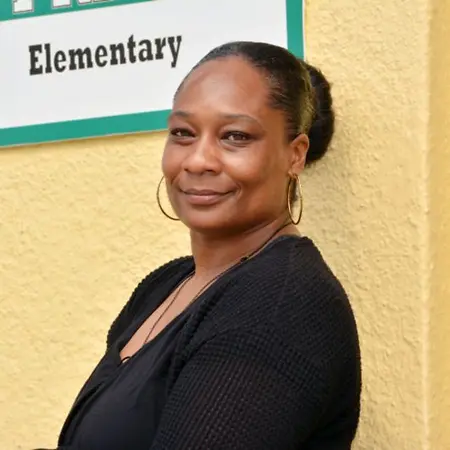
Tacorra Gray has built a career in education and behavioral health that is deeply rooted in lived experience, purpose, and a commitment to prevention and equity for students in underserved communities. Her professional journey began with an early desire to become a professor at a historically Black college or university, but everything shifted after witnessing her younger brother’s struggles with reading and the negative impact school systems had on his confidence and learning experience. That moment became the catalyst for her decision to return to school and pursue a master’s degree in educational therapy, followed by additional training in applied behavior analysis, ultimately shaping a career centered on ensuring that other children would not experience the same educational barriers her brother faced.
She began her work as an educational therapist supporting students with reading challenges, later transitioning into roles as a behavior technician providing in-classroom support services and implementing behavior interventions. Over time, she expanded her expertise and became a Board Certified Behavior Analyst (BCBA), taking on increasingly complex roles in schools across Oakland, California. Today, she serves as a Community Schools Manager within Oakland Unified School District, where her responsibilities are similar to those of a vice principal. In this role, she coordinates multi-tiered support systems that address students’ academic, behavioral, mental health, and family needs, while also coaching teachers and helping schools implement effective, culturally responsive interventions.
Throughout her career, Gray has remained focused on preventative, whole-child support—working to identify challenges early so students are not pushed out or overlooked by the education system. Her work is grounded in a strong belief in culturally responsive education, particularly for Black and Brown students who are often misjudged or underserved in traditional school environments. As a member of Sigma Gamma Rho Sorority, Inc. and an advocate within the behavioral health and education community, she continues to mentor, collaborate, and lead initiatives that strengthen student outcomes. Her greatest achievement, she notes, is returning to her own community equipped with advanced training and experience, now working to ensure that students receive the support they need before they fall through the cracks—transforming personal pain into purposeful, preventative impact.
• Board Certified Behavior Analyst (BCBA)
• Educational Therapy Credential
• Lane College
Bachelor of Arts - BA, Sociology
• Holy Names University
Master of Education - MEd, Educational Therapy
• Arizona State University
Certificate , Applied Behavior Analysis
• Black Women in Behavior Analysis
• Sigma Gamma Rho Sorority Incorporated
• Active at church
• Church volunteer work
What do you attribute your success to?
What I attribute my success to is, first and foremost, my faith in God and my family. They keep me grounded and give me strength through all the challenges. Beyond that, it's really about knowing that I want to give back to my community. That sense of purpose really pushes me and drives everything I do. My younger brother's experience in elementary school was the catalyst for my entire career path. Watching him struggle with reading and seeing how the school and teachers treated him, seeing him fall through the cracks, that's what set me on this journey. Even though it's been a bouncy road for him, his story propelled me to where I am today because this isn't the field I thought I would be in. I originally wanted to be a professor at an HBCU, but his experience changed everything. Now I'm able to be here in a school setting in East Oakland with socioeconomically challenged students, and I'm on the preventative side rather than the remediation side. My greatest achievement is being back in my community with these multiple degrees and actually supporting students before they blow out or fall through the cracks. I wanted to support other kids that looked like me, Black and brown kids, who were already being judged or labeled, so they didn't have to experience what he experienced.
What’s the best career advice you’ve ever received?
The best career advice I've ever received came from my mentor, Dr. Tiffany Robinson Young, who recently obtained her doctorate. My favorite quote from her was, 'I no longer could have a job. I needed a career.' That really propelled me and shifted my mindset about what I was building professionally. It helped me understand the difference between just working and actually building something meaningful and lasting. That perspective has stayed with me throughout my journey and continues to guide how I approach my work and my purpose.
What advice would you give to young women entering your industry?
I would say to find a good community and mentorship group, because it does get hard along the way. Having people in your corner to support you makes all the difference. And then just know your why. Know what your reasoning is behind choosing this path and keep that purpose at the center, especially during difficult times. If I didn't have the experience I had with my brother that day at his school, I can't say that this is where I would be. But even when things got tough and it was time to do exams or write my thesis, he was my why, because I wanted to be able to support kids in the future so that they didn't have to experience what he experienced. That sense of purpose will carry you through the challenging moments.
What are the biggest challenges or opportunities in your field right now?
Right now, the biggest challenge in my field is funding, especially because I'm in a school setting where there are a lot of budgeting constraints going on. There have been improvements, but we still need more culturally responsive education and a focus on looking at the whole child, not just the little episode or behavior they might have in a moment. Another major challenge is really having enough resources to support the school and the school staff the way they want to be supported. We also look at students' home lives, and unfortunately we have a lot of kids who are impacted by being unhoused, so identifying and securing those types of resources is a constant challenge. Things are tight all over, which makes it even harder to provide the comprehensive support these students and families need.
What values are most important to you in your work and personal life?
The values most important to me in my work and personal life are my faith in God, my family, and giving back to my community. These three things really push me and keep me grounded through everything. My faith provides the foundation for everything I do, and my family reminds me why this work matters. The commitment to giving back to my community is what drives me every single day. Being able to be back in my community with my degrees and actually supporting students before they fall through the cracks, that's what it's all about for me. I also really value spending time with my family, especially now that my kids are getting older, so I cherish all the moments I can get with them. And honestly, I love reading, probably more than I should, even though my job involves so much reading already. These personal moments of connection and growth, whether through books or time with loved ones, remind me why this work matters beyond just the professional accomplishments.