A personal account of navigating career transitions in research when grant funding ends, emphasizing the importance of adaptability, continuous learning, and seizing unexpected opportunities for professional growth.
Her Story
About Tammy
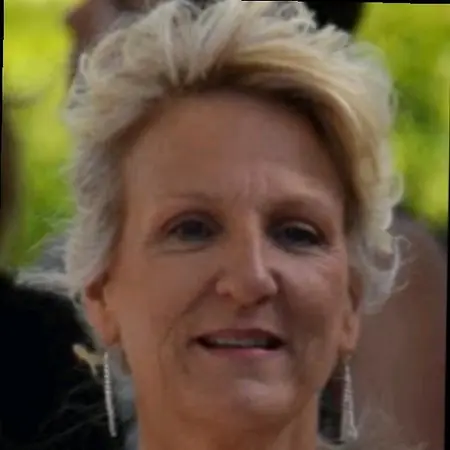
Tammy Sexton has dedicated more than four decades to advancing scientific research and supporting groundbreaking medical discoveries through her expertise in histology and laboratory management. Currently serving as a Research Assistant and HT (ASCP) at Wake Forest University School of Medicine, Tammy manages the Tumor Tissue Pathology Shared Resource Core, a highly utilized laboratory that supports both clinical research trials and basic science projects. Her work includes tissue processing, embedding, microtomy, staining, immunohistochemistry, tissue microarrays, and genomic-related research for both cancer and non-cancer studies. Known for her precision, reliability, and fast turnaround times, Tammy has become an invaluable resource for researchers working to meet critical publication and grant deadlines.
Tammy’s career began in the early 1980s after earning her Bachelor of Arts degree in Biology with a minor in Chemistry from Appalachian State University. Throughout her 42-year career at Wake Forest, she has contributed to a wide range of research disciplines, including cholera studies in microbiology, physiology and pharmacology research focused on drug abuse, and comparative pathology projects involving atherosclerosis. As research needs evolved, Tammy helped establish and grow the Cancer Center-supported histology core laboratory into one of the institution’s most successful and heavily utilized shared resources. Her willingness to continuously learn and adapt has allowed her to remain at the forefront of an industry increasingly focused on molecular and genomic technologies.
Beyond her technical expertise, Tammy is deeply respected for her collaborative spirit, mentorship, and dedication to helping researchers succeed. She takes pride in working directly with investigators to understand their goals and develop the best possible solutions for their projects. Colleagues frequently recognize her for her attention to detail, problem-solving abilities, and commitment to excellence, while many students, technicians, and postdoctoral researchers have benefited from her guidance and training over the years. Tammy considers building and managing the histology core laboratory to be the highlight of her career, reflecting both her passion for science and her enduring impact on medical research and innovation.
Her Interview
Ten minutes with Tammy
01What do you attribute your success to?
I attribute my success to building and managing a much-needed histology core, strong mentorship from the pathologist who started the lab, consistent responsiveness (fast turnaround) for researchers, and a commitment to continual learning.
02What’s the best career advice you’ve ever received?
My supervisor suggested I try the new part-time histology role while finishing my old job — that opportunity led to full-time work and the chance to help launch the core. A relative also encouraged me to pursue Mohs training, which helped expand my clinical skills.
03What advice would you give to young women entering your industry?
I would tell her to always learn. In science, you cannot stop learning, and when you stop learning and turn that switch off, you're really not desirable anymore in the job field, because science changes every day. This histology now, instead of just staining an H&E slide, is constantly moving downstream to molecular and genomics. I can't... it's unbelievable. Everybody wants to do genomics because when you look at a slide, you can't really tell the disease state unless you do further testing. I also think it's important for people to understand that you don't have to do clinical work - you can have the clinical skills and do research. Some people think that to learn histology, you gotta go the clinical route, and you don't. I wish I could explain to people how interesting this job is, because I think when you go through these programs, all they see is the clinical side. I'm not bashing clinical, it's very important, but there's options out there. You're really more marketable if you do clinical and get your experience and do both.
04What are the biggest challenges or opportunities in your field right now?
Challenges and opportunities include grant funding instability, the shift from traditional staining toward molecular and genomics testing, widespread lack of awareness about allied health and research histology roles, and staffing strains despite high demand.
05What values are most important to you in your work and personal life?
Lifelong learning, dependable service to researchers (fast turnaround), and advocating for greater awareness of histology and allied-health career paths.
Her Content Hub
Articles by Tammy
Research Assistant, HT (ASCP)
How Continuous Learning and Adaptability Opened New Career Doors When Research Funding Ended

What to Do When the Grant Money Finally Runs Out
When I started as a lab technician in a microbiology lab more than forty years ago, I was excited to begin my career in the research field. I worked on new projects constantly, met new graduate students each year, and was mentored by some of the brightest postdoctoral fellows and faculty members at the medical school.
However, after my second child was born and it was time to return to work, I received the dreaded “pink slip” along with the notice that our grant funding had run out and the lab would eventually close.
In the research world, teaching and collaboration are part of the process, so new faculty members and postdoctoral fellows are constantly moving in and out of the university. Fortunately, the Department of Physiology and Pharmacology had hired a new chair who brought a team of young scientists to Wake Forest University, where I found a new opportunity to continue doing research for another 27 years.
In that role, I was able to learn many techniques and skills that kept me employed until our project experienced major cuts in grant funding.
The skills I acquired in the research lab allowed me to step outside of my comfort zone and obtain my HT certification through training in a clinical lab setting. While completing that training, I also remained part-time in my former lab until the current histology core lab was established, where I worked part-time in the afternoons.
The core lab became a huge success because there was such a strong need for histology services for both clinical research teams and basic science projects. Eventually, I became a full-time core lab manager and was able to leave the other two part-time positions behind.
Stepping outside of my comfort zone after such a long career as a research lab assistant was uncomfortable at times. But if that grant money had not run out 11 years ago, I may never have pursued this career change.
For that unexpected turn of events, and for meeting the right people at the right time, I will always be grateful.
Never stop learning new skills or techniques. When the grant money finally runs out, you will have a much better chance of finding a new opportunity if you remain informed, adaptable, and well-trained.
Join Influential Women and start making an impact. Register now.