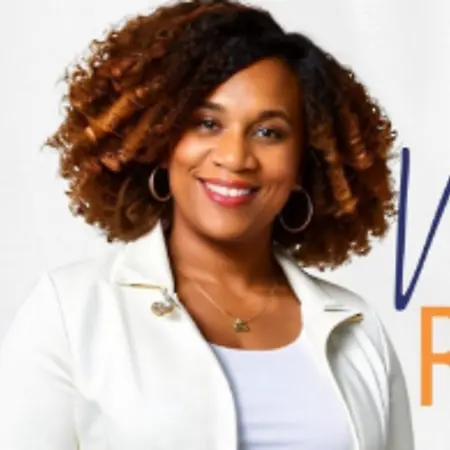
Her Story
About Tanik
Tanik Heard is a healthcare revenue integrity leader, educator, and author based in Houston, Texas, whose career reflects resilience, determination, and a deep commitment to helping others grow. Her journey into healthcare began more than two decades ago when she was working as a pre-kindergarten teacher while struggling to support her young son and daughter financially. With no prior experience in medical collections, she was given an opportunity by a mentor who recognized her willingness to learn, a moment that became the foundation for her career in healthcare administration and revenue cycle management. From there, Heard taught herself every aspect of the field, including medical collections, insurance verification, accounts receivable, referrals, charge capture, and coding compliance. Her experience expanded through positions with healthcare organizations including Memorial Hermann Health System and St. Joseph Medical Center, where she gained specialized knowledge in perioperative services, operating room workflows, implant recognition, and reimbursement processes. Today, Tanik serves as Manager of Facility Revenue Cycle and Revenue Integrity at Houston Methodist Hospital, where she leads a team focused on charge integrity, coding education, workflow optimization, and revenue protection. Her responsibilities include developing coding education strategies for 2026 and 2027, onboarding coding educators, implementing automation initiatives, and designing workflows that help prevent revenue loss while maintaining compliance and patient-centered financial practices. Over the course of her career, she has earned multiple professional credentials, including CPC, CPC-I, CRCR, CBCS, and NRCCS certifications, and became an approved instructor through AAPC. As an educator, she achieved a reported 92 percent first-time pass rate among students preparing for national coding certification exams. She also taught billing and coding courses at The College of Health Care Professions and continues mentoring individuals pursuing careers in healthcare revenue management and coding. Beyond her professional accomplishments, Tanik is passionate about encouraging others through education, storytelling, and faith-driven perseverance. She published a book titled The Short Version: An Introduction to Medical Billing and Coding, an instructional and inspirational resource designed to help newcomers understand the field while also sharing lessons from her own life experiences. She recently completed the final coursework toward her bachelor’s degree in Human Services and plans to pursue a dual master’s program in Strategic Learning. A devoted mother, she often encourages her children and students to trust the process, continue learning, and never allow difficult beginnings to define their future. Guided by compassion, integrity, and a desire to feel useful in the world, she has built a career centered on service, leadership, and empowering others to believe in their potential.
Her Interview
Ten minutes with Tanik
01What do you attribute your success to?
I think the key to my success is my drive and ambition - I never give up. When I first started in healthcare over 20 years ago, I had no experience whatsoever, but I was willing to learn. I taught myself everything I possibly could, from medical collections, AR, and insurance verification. I would look at people's credentials on LinkedIn and think, 'I can do that,' and then I would just go do it. I'd come back to work and tell my boss I just became a Certified Revenue Cycle Representative, and I was the first team member on our team to become a CRCR. Anything that I thought would help me get where I needed to be in my career, I did it, and I just kept doing it. I wanted to have the knowledge and experience, and I wanted people to see that when I was coming into the room, I was going to work just as hard as everyone else. Every year I go to the Revenue Integrity Symposium and sit there for days just taking notes. I never looked back after I found my path in healthcare.
02What advice would you give to young women entering your industry?
I always tell my students and the young women I speak to that it's okay to not be okay, and it's not where you start, it's how you end. Wherever you decide to land in your decisions, it doesn't have to end there. I want them to know that they can't stop - their current position cannot be their final destination. They have to keep going, they have to keep growing. I encourage them to look into certifications and opportunities that will help them advance. When I was teaching, I had a 92% success rate with my students passing their exams on the first try, and many of them still reach out to me years later to tell me they registered for school to get their associate's degree or that they're taking their CPC exam. I even helped one of my students, Erica, get a job with a licensed social worker I knew, and she's been there for three years now doing credentialing. I tell them to keep learning, know their worth, and never give up on themselves.
03What are the biggest challenges or opportunities in your field right now?
Right now, one of the biggest challenges and opportunities in my field is automation and artificial intelligence. We're trying to create automation processes that will help with claim edits and reduce tedious work, but there's a lot of fear around it. People immediately fear automation because they think it means job loss or that there won't be enough work. When you're trying to implement innovation, the organization wants it but the team does not, so you have to start small with the items that the team complains about the most and show them that the work will still be the same, but now they don't have to worry about these tedious items that cause them grief. It's a gradual build to what the organization really wants to do in the near future, and we're trying to do that while avoiding job loss at the same time. We also have to keep up with constantly changing Medicare rules through OPPS - you just never know what's going to change tomorrow. It's really important that we not only protect our financial institutions, but we also don't want to pass that burden on to our patients. We want to make sure it's an even playing field for both the organization and the patient.
04What values are most important to you in your work and personal life?
The values most important to me are respect, compassion, and integrity. I wanted to bring satisfaction to my life and feel useful in this world, doing something that was helpful. I feel like I come to the rescue of organizations when it comes to reimbursement and insurance, making sure they're reimbursed properly. But it's not just about the organization - we want to make sure it's an even playing field for both the organization and the patient, because we need patients to continue to come to our organization. I also value being there for my team. At Houston Methodist, we have a code word 'bananas' that we use when we're beyond stressed or having a moment, and it allows leadership to make intentional decisions to be there for one another and recognize when a team member could use some help, a break, or a fresh set of eyes. That intentionality behind saying something and checking on each other is so important to me.
Join Influential Women and start making an impact. Register now.