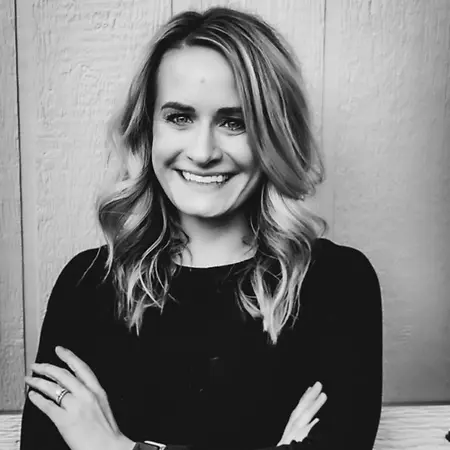
Influential Woman · Construction and Retail Project Management
Tanya Schneider
Principal, tk Project Management LLC
Denver, CO 80204
Her Story
About Tanya
Tanya Schneider has built a career at the intersection of design, construction, and strategic project leadership, transforming ambitious retail concepts into immersive flagship experiences for globally recognized brands. Based in Denver, she currently serves as the Principal of tk Project Management LLC, where she oversees large-scale retail development projects with a focus on operational excellence, collaboration, and design integrity. With nearly two decades of experience in commercial construction and project management, Tanya has become known for her ability to lead complex projects from early planning and due diligence through construction, turnover, and final delivery. Her portfolio includes luxury retail environments and high-profile flagship locations, including the celebrated Cartier Miami Design District boutique that was featured in Architectural Digest. A graduate of Harrington College of Design with a Bachelor of Fine Arts in Interior Design, Tanya entered the workforce during the 2008 economic downturn, an experience that shaped her adaptability and long-term leadership approach. Beginning in administrative and coordination roles on city projects in Chicago, she steadily advanced through firms such as JLL and Arcadis, gaining expertise in retail, corporate, and public-sector construction programs. Her ability to communicate across disciplines—from architects and contractors to executives and field teams—became one of her defining strengths. Tanya later expanded her experience into the startup and retail sectors, managing national showroom buildouts and flagship developments while refining her reputation as a solutions-oriented leader who balances creativity with precision. Throughout her career, Tanya has emphasized the importance of authenticity, respect, and humanity within the construction industry. She believes successful projects are built not only through budgets and schedules, but also through trust, communication, and strong relationships among the people bringing the work to life. Colleagues consistently describe her as proactive, collaborative, and deeply committed to excellence under pressure. As she enters a new phase of her professional journey and launched her own business, Tanya continues to draw on her interior design roots, operational expertise, and passion for creating meaningful spaces that leave a lasting impact on both clients and communities.
Her Interview
Ten minutes with Tanya
01What do you attribute your success to?
I've always stayed curious, and I've never believed that any role was beneath me. I understood early on that every opportunity could become a stepping stone to the next chapter. When I started my career as an administrative assistant, I wasn't chasing a title, I was just trying to learn. If you had told that version of me I'd one day be leading flagship projects for Cartier, I would have laughed in such a male driven field. The path was never a straight line, but looking back, starting at the bottom was one of the greatest advantages I could have had. It gave me the opportunity to understand what every person on a project contributes. Today, whether I'm talking to a subcontractor, an architect, an owner, or a CEO, I can appreciate their perspective because I've spent my career learning how all those pieces fit together. Along the way, I realized that success isn't about being the loudest voice in the room. It's about becoming someone people trust when the project gets hard. And in construction, projects always get hard.
If you can be someone who listens, solves problems, and makes people feel heard, regardless of their title, that's where your value is.
02What’s the best career advice you’ve ever received?
<blockquote><span style="color: rgb(0, 0, 0);">Every time an opportunity comes up to learn something new, sit in on a meeting, visit a jobsite, or take on work outside my job description, I say yes. Looking back, those small opportunities changed the entire trajectory of my career. None of them feel life-changing in the moment, but they compounded over time. It taught me that you don't have to have your entire career mapped out. You just have to keep saying yes to opportunities that stretch you, even if they're a little uncomfortable.</span></blockquote>
03What advice would you give to young women entering your industry?
I think I would tell young women not to mistake authenticity for weakness.
Early in my career, I received a lot of advice that, while well-intentioned, never really fit who I was. I was told I was too nice, too soft, that I needed to speak up in every meeting; even if I didn't have anything meaningful to add just to be noticed.
Honestly, it never felt authentic. What eventually changed my career wasn't pretending to know everything or trying to be the loudest person in the room. It was being honest about what I didn't know, asking thoughtful questions, and becoming someone who genuinely wanted to learn.
In construction, people can tell pretty quickly when you're bluffing. I found that saying, "I actually don't know, but I'll find out," built far more trust than pretending to have all the answers, or criticizing others answers.
Once I stopped trying to fit someone else's definition of what a successful leader looked like and started leading in a way that felt authentic to me, everything changed. So my advice would be this: be prepared, be curious, be reliable, and never stop learning—but don't feel like you have to become someone else to earn respect. Your authenticity can become one of your greatest strengths.
04What are the biggest challenges or opportunities in your field right now?
I think one of the biggest challenges in our industry today is simply the complexity of projects. There are more stakeholders, more technology, more regulations, and more moving parts than ever before.
Because of that, I think communication has become just as important as technical expertise. The people who can bring different disciplines together, build trust, and keep everyone aligned are becoming some of the most valuable leaders in our industry. That's actually what excites me most. Construction has always been about building buildings, but today it's just as much about building relationships.
05What values are most important to you in your work and personal life?
Integrity and authenticity, without question.
For a long time, I thought success meant molding myself into the version of a leader I thought I was supposed to be. But the older I've gotten, the more I've realized that people don't connect with perfection—they connect with sincerity. As long as I'm honest, prepared, and genuine, that takes me much further than trying to be someone I'm not. I also value respect and kindness. Construction is often viewed as a tough industry, but at its core it's incredibly human. Every project is built by people—people who take pride in their work, solve problems together, and care deeply about what they're creating. When you remember that, you approach everyone differently, whether they're a laborer on the jobsite, an architect, or the CEO.
I've found that treating people with respect, listening before speaking, and staying true to who I am has become one of my biggest strengths. Ironically, the qualities I was once told were "too soft" have become the qualities that have helped define my career.
I hope those values become less of a differentiator over time and more of the standard for our industry.
Join Influential Women and start making an impact. Register now.