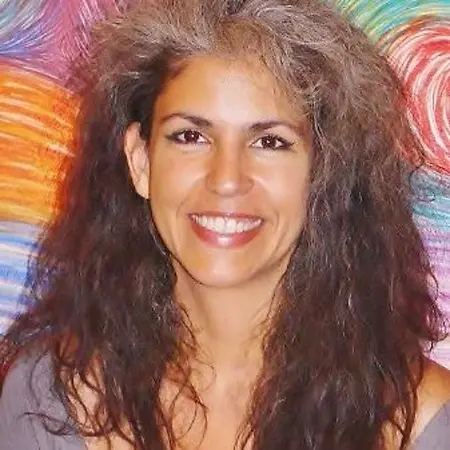
Her Story
About Teresa
I've been an artist since I came out of the womb - it was predetermined in my DNA. I come from a line of artists: my grandfather was a saxophonist and a bricklayer, my father was a classical painter, my grandmother was a ceramicist, and my great-grandparents in Spain were jewelers. I'm a jeweler also. Despite this artistic lineage, I was highly discouraged throughout my life - by my parents, in religious schools, and even in college where all my instructors, art history lessons, and visiting artists were men. I graduated from college at 19, and the jewelry industry I entered was male-dominated. The only person who really supported me was my printmaking teacher, who I call my art father. He would come back to class and say he'd been thinking about the direction I was going with my work in his free time, and that made me feel like people actually cared what I was doing. I felt extremely lonely up until that point. For 16 years, I've run a zero-waste organization where I go into low-income communities and turn any trash into artwork, teaching them how to do it. I started making green roses out of toilet paper cores when my kids were little because I couldn't have my jewelry bench open with all the dangerous acids and blades. I still fill orders daily and I'm still pulling checks from toilet paper cores. As a professor, I'm passionate about taking capitalism out of art. I give lectures where I never once mention galleries or shows, because art isn't about inviting all your friends to see what you put on a wall. It's about community, it's about developing skills and neuroplasticity that help you creatively solve problems in all areas of life. I teach my students that art isn't just fine art - it's how you arrange your room, a map you draw for someone, a card you make. Once you take an art class, it trains your brain to creatively solve problems, and that carries over into other situations.
Her Interview
Ten minutes with Teresa
01What do you attribute your success to?
I attribute my success to determination and claiming my identity as an artist despite constant discouragement. I wrote in an article that my work was predetermined in my DNA - I think I had no choice. I was highly discouraged by my parents, in religious schools, by my college instructors who were all men, and in the male-dominated jewelry industry. I was delivering my artwork in trash bags because that's all I had. But I realized the scariest thing was me not claiming my identity as an artist, like the rest of my creative family who never tapped into it because of fear. I was determined to say I'm an artist, even though there's really no money in it. It wasn't about money for me. If I was that determined to remain an artist through all that adversity, it tells me that it was meant to be.
02What’s the best career advice you’ve ever received?
The best advice I received wasn't really advice in words - it was from my printmaking teacher, who I call my art father. He would come back to class and say things like, 'You know, I was thinking about the direction you were going with your work in my free time.' Just the idea that he was thinking about my work in his free time made me realize that people actually do care what I'm doing. I felt extremely lonely up until that point, and that validation meant everything to me.
03What advice would you give to young women entering your industry?
My advice is don't get hung up on fine art and making money from it. Art is not just about gallery shows or selling work - it's just living. It's how you arrange your room, it's a map you draw for somebody to get to your house, it's a card you made for your friend or mother, it's something for your house. Once you take an art class, it trains your brain to creatively solve problems, and that neuroplasticity carries over into other situations. If you get trapped under a bridge or something, your brain is going to figure out all different ways to solve it, just like we teach in art class. Also, don't let yourself be marginalized into being a woman artist or defined by your race or background. I never really paid attention to those labels because I feel like we're all people - we're all the same color on the inside. Just plow forward. Your race, your money, your sex - that has nothing to do with it. Bring your insides out to make your artwork.
04What are the biggest challenges or opportunities in your field right now?
The biggest challenge in my field is that art is not represented or valued the way it should be. When our campus wanted each school to represent what they do, it was science and history, but nobody ever represents the arts. I always throw my hat in the ring when art is not represented because everyone asks, 'What are you going to do with an art degree?' The challenge is that people associate artists with gallery shows and selling work, and they don't understand that art is really about developing creative problem-solving skills, building community, and learning a way of thinking that applies to all of life. My department loves what I'm doing because I'm taking capitalism out of art - showing that it's not about shows or galleries or inviting all your friends to see what you put on a wall. That's so superficial and prideful. The opportunity is to change that perspective and help people understand that art is about community, about processing, about saying something visually, and about developing skills that make you a better thinker in all areas.
05What values are most important to you in your work and personal life?
The most important values to me are family, community, and inclusivity. My family comes first - I have two daughters, and even though one has a genetic bone disease requiring multiple surgeries and the other is in college, I'm doing everything I can to support them. In my work, community is everything. I concentrate on teaching low-income communities how to create art from trash because art should be accessible to everyone, not just people with money. Inclusivity is central to how I see art - I don't believe in marginalizing people as woman artists or Mexican artists or any other label. We're all people, we're all the same color on the inside. I also value authenticity and staying true to my purpose rather than chasing money or recognition. Everything I do is voluntary or free, and if that means I don't succeed financially, then I don't succeed. It's not about that for me. I don't spend money on promoting my career because my work is about the art itself, about community, and about helping others develop creative problem-solving skills that will serve them throughout their lives.
Join Influential Women and start making an impact. Register now.