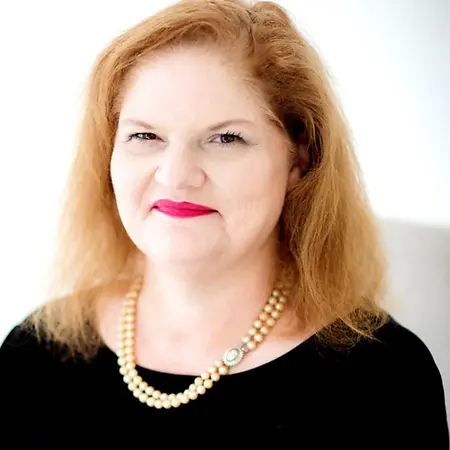
Her Story
About Teresa
Teresa Gregory is an accomplished executive coach, leadership strategist, and best-selling co-author dedicated to transforming how leaders think, communicate, and lead in today’s complex organizations. As the founder of G Squared Consulting LLC, she specializes in guiding executives and senior teams through bias-aware coaching that uncovers the unseen dynamics shaping decision-making, team culture, and performance. With a foundation in instructional design and ethical governance, Teresa creates space for leaders to move beyond surface-level solutions and into meaningful, lasting transformation rooted in clarity, accountability, and trust.
With more than two decades of experience in training, organizational development, and executive coaching, Teresa’s career reflects a deep commitment to elevating both people and performance. She began her journey in training and development at Target before advancing into technical and leadership training roles at Microsoft, where she helped design the company’s first required Standards of Business Conduct training—an award-winning program whose instructional principles remain in use today. Her expertise spans scenario-based learning, leadership development, and organizational strategy, with a particular focus on helping leaders bridge the gap between intention and impact to foster inclusive, high-performing environments.
Beyond her consulting work, Teresa is a passionate advocate for education, equity, and community leadership. She serves as a school board director, helping shape policies that support student success, safety, and inclusive learning environments. A certified Myers-Briggs instructor and experienced facilitator, she brings both insight and practical tools to every engagement. Whether coaching C-suite executives, designing transformative learning experiences, or mentoring future leaders, Teresa is driven by a clear mission: to help leaders rise with integrity, lead beyond bias, and create organizations where people and performance thrive together.
Her Interview
Ten minutes with Teresa
01What do you attribute your success to?
I attribute my success to mentorship. Early on in my career, I met professional women and got my first mentor, Marilyn Sierra. I didn't even know what mentorship was at the time. When I graduated from college, I couldn't get a job because I had worked retail and didn't have office experience, even though I graduated from the Foster School of Business. That mentorship relationship changed everything for me. I always tell people you need a mentor, and it doesn't have to be someone who knows everything or is a big shot. They're someone who knows some of the skills you want to learn, and you learn from their life experience. That is invaluable. Throughout my career, I've always gone out and gotten mentors. Even as a school board director, I got a mentor from another district because I can't have one on my own board due to violation rules. I always tell people: if you're not mentoring someone, who are you mentoring? You should be mentoring someone, and you should have a mentor. My mother was also a driving force. She was a nurse and had this quiet authority that was more powerful than anything else. She was a preceptor who trained new nurses, so I think I got this idea of mentorship and training from her. But mentorship is the true answer to my success.
02What’s the best career advice you’ve ever received?
Find mentors who challenge and guide you, and never stop learning. Teresa emphasizes the importance of reflecting on experiences, staying curious, and being open to evolving career paths—even when they take unexpected turns.
03What advice would you give to young women entering your industry?
If I was going to give advice to a young professional, I would tell them this. First, get a mentor. If you do not have a mentor, you need a mentor. It does not have to be in your field, it could be another person from your church, the coffee shop, the old guys having coffee every morning where you bounce ideas off of them. Whoever it is, you need to find a mentor. Second, stay current in the industry. Oftentimes what happens as we grow in our career, we rely on 'oh, I know that won't work' because we've done it before. But it's important to stay current on what is the latest, what should be the process. My last piece of advice is this: almost everything you learned in college is incorrect, because it doesn't have application, it has a lot of theory, not application. The theory is correct on what you should do, but the steps are wrong because that's not practical. You are going to build your skill on the projects that you take, and every project's going to teach you something. At the end of the project, you need to sit down and reflect: What did I learn from this project? What did I do? What did I not do well, and how do I get better? We don't pause to do that. I didn't do that early in my career, but I do that now. Your career path is not going to be straight. You will build your skills on projects, and you need to reflect on what you learned.
04What are the biggest challenges or opportunities in your field right now?
The biggest challenges in my field right now are threefold. First, companies and managers think that AI can solve their problems. They think AI can just build training for them, but the key problem is who's going to deliver it? AI may build you a class, but it's not going to give you that nuance. It doesn't know nuance, and you can't program nuance into it. People think they can outsource the soft skills and coaching that's needed, but they can't. The second biggest challenge is market saturation. When I look at the layoffs at Amazon, Microsoft, Oracle, and all the big tech firms, one of the biggest groups they're laying off is project managers, instructional designers, and trainers because they think it's low-hanging fruit. There used to be only a handful of us applying for jobs, but now there's like a thousand people applying for that same one job. The challenge is how do you differentiate yourself and get bubbled to the top of that list? That's where networking comes into play. You don't get a job from a job board, you get a job through your connections. The third challenge is that people's skill sets are getting stale. People are waiting for the perfect job, the same job they had, and their skill set gets stale because we're constantly moving. You've got to stay current on your skill set. As for opportunities, I think the opportunity to write a book felt unattainable to me years ago, but now if you put your mind to it and put in your life experience and skill, you can write it, self-publish it, and get a publisher to help you. The second opportunity is speaking. There's over 2,000 speaking gigs every single month in the United States where someone needs a speaker. There is a conference for your niche that you could be speaking at and should be speaking at, sharing your experience. Before written word, we orally told stories for people to remember, and I think that opportunity is there.
05What values are most important to you in your work and personal life?
The most important value to me is being intentional. I divide my day intentionally into three pieces: business meetings and tasks, creative time where I sit with a blank page and allow myself to be creative about a topic, and time spent staying current on what's going on in the industry. I intentionally spend about 90 minutes every day looking at the industry, what's going on, what are the best practices, and what is coming. I tell people you have to be intentional with your time. You have enough hours in the day to sleep, eat, engage, and do all the things you want to do, you just need to be intentional. If you're doom scrolling or binge-watching something, it's okay to do that, but time limit it, time box it, and then take action. I also value doing work that feeds your soul. I always ask people in my coaching: what feeds your soul? If you don't feed your soul, you're not happy in your job. Every job you do, if it doesn't bring you some type of joy, why are you doing it? If you're going to a job that you hate, you will never be successful and everything else in your life will be corrupted. I value mentorship and giving back. I tell people you should be mentoring someone and you should have a mentor. I also value influencing the next generation, which is why I spend time as a school board director talking to young minds about their futures, why I'm a Girl Scout troop leader, and why I drive for HopSkipDrive to help at-risk youth get to school. You want to work for companies and do things that feed your soul.
Join Influential Women and start making an impact. Register now.