Teresa Porter-D'Aversa RN,CCP Emeritus
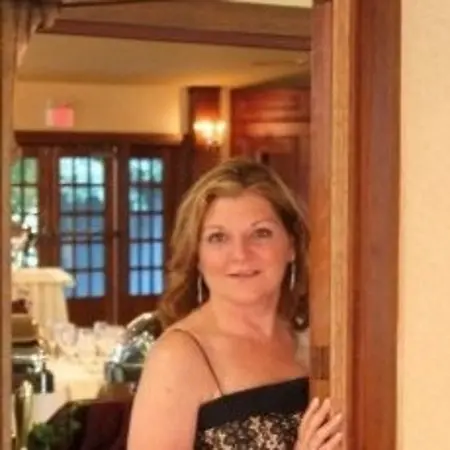
Teresa Porter-D’Aversa built an accomplished healthcare career spanning more than three decades, combining clinical expertise, operational leadership, and a deep commitment to patient advocacy. Beginning her journey in the early 1980s as a unit clerk, she quickly discovered a passion for critical care and nursing, prompting her to attend St. Mary’s Hospital School of Nursing while working full-time. Over the years, she advanced through intensive care, CTICU, perioperative nursing, vascular transplant, and open-heart surgery before taking a bold leap into cardiovascular perfusion by joining only the second class of Quinnipiac University’s perfusion program. Balancing school, work, and single motherhood, Teresa demonstrated the resilience and determination that would define her career.
As a cardiovascular perfusionist and healthcare leader, Teresa played an instrumental role in building and expanding cardiac surgery programs across several states. She helped launch the cardiac surgery program at St. Elizabeth Hospital in Utica, New York, and later contributed to the rapid growth of Charlton Memorial Hospital’s cardiac center in Massachusetts, which became one of the state’s leading community-based cardiac surgery programs. Her expertise in quality improvement, workflow management, and team development earned recognition throughout the healthcare community. Teresa later joined Yale New Haven Health, where she served as a staff perfusionist, perfusion manager, and eventually Manager of Perioperative Services and Operating Room Operations at the Bridgeport Campus Cardiac Surgery Center. During this time, she also earned her MBA with a healthcare management focus and expanded her clinical credentials with ECMO and cell saver certifications.
Throughout her career, Teresa remained deeply committed to mentoring clinicians, advocating for nurses, and improving healthcare systems for both patients and staff. She believes strong leadership requires honesty, compassion, and protecting the autonomy and well-being of frontline caregivers. Her professional affiliations with organizations such as AORN, AMSECT, and the American Board of Cardiovascular Perfusion reflect her dedication to advancing standards in perioperative and cardiovascular care. Now retired, Teresa continues to be recognized as a respected leader whose legacy includes developing high-performing cardiac programs, mentoring future healthcare professionals, and championing patient-centered care across every stage of her career.
• ECMO Certified
• Cell Saving Certified
• Registered Nurse
• CV Perfusionist
• Quinnipiac University - School of Business- B.S.
• Quinnipiac University- M.B.A.
• St Mary’s Hospital School of Nursing
• Mattatuck Community College- A.S.
• AMSECT (American Society of ExtraCorporeal Technology)
• AORN (Association of periOperative Registered Nurses)
• American Board of Cardiovascular Perfusion
• ACHE (American College of Healthcare Executives)
• Heart Run Walk for the American Heart Association
• Sock collection for Bridgeport homeless shelter
• Food kitchen volunteer
What do you attribute your success to?
Looking back on my career, I would have to say my greatest achievement and what I attribute my success to is the opportunity to mentor and develop oncoming staff and new grads. To this day, they still call me to help them with their resumes and LinkedIn pages, and ask me questions on how to go about doing this or that, so I still have that connection with them, and I've left that door open. If I didn't have that opportunity, because I had a great mentor, and if I didn't have that mentor, quite honestly, I wouldn't have had the opportunities that I've had. I think it's very important, so my greatest achievement would be to lead and develop staff - older staff, younger staff, new staff coming out of school, because they truly do not get enough of that. Passing that torch forward is extremely important as a leader. A lot of people are extremely busy, and they say, well, we'll figure it out because I figured it out. Well, that's not necessarily true. A lot of them have basic opportunities, even with their employers, that they don't even know about. Until you shed that light and say, you know, these are your strengths, and this is what I think you would excel at, and then you put that in their brains, and they're like, oh yeah, I could do that. And then they become very engaged in their own professional development. I had several mentors who really made a big impression on me. The physician that I worked with, not knowing me at all, literally had a half-hour interview with me and trusted me to bring me to Utica to start that program - he was definitely a class act. The second surgeon he brought on board was very much so a humanitarian and knew how to treat staff and people so that they both created a culture that was extremely positive. The CEO who hired me at Charlton Memorial was a class act. She had it all together, and she was very insightful, and she also developed her people. At one point, she came to me and said, I'm really looking to develop you to become the director of the cardiac surgery program.
What advice would you give to young women entering your industry?
I would tell her to leave her options open and make sure that she explores every avenue in nursing where she can be best suited to practice and maintain safety. I also think that their autonomy needs to be safeguarded. I would tell her that it is extremely important to always do the right thing, to always be the advocate for the patient, and that we're gonna make mistakes along the way, but it's that open honesty and sharing that experience with others that really enhances education for the entire staff. I was involved in a very sad situation that occurred which affected a patient, and I was the manager and had to support my staff member who made a quick decision, and unfortunately, it was a detrimental decision. I think it's important that every person knows that starting off, you're going to make mistakes. Even older nurses make mistakes, but I think it's extremely important to be true to yourself, be honest, practice the best medicine that you can, and continue educating yourself, because things are changing so quickly. You have to stay on top of your game. Compassion is definitely something that you need to have, not only for your patients, but for yourself and for your fellow staff members. I also think that advocacy is something that definitely needs more and more attention, so that we can make sure that women are known to have the capability and potentials for being CEOs, VPs, being directors, handling work-life balance and everything else that comes with it.
What are the biggest challenges or opportunities in your field right now?
I'm extremely proud of where nursing came from since I started in the 1980s. We were just 'the nurse' back then, and it's come so far. Now the nurse is everything. The nurse is the one that the patient trusts the most, that sees the most, that supports them the most, and understands what's going on, because everybody has deadlines and goals and achievements to actually meet in order to stay employed with the hospitals these days, and it's difficult. Everybody's trying to manage a lot more than they used to, and I kind of feel that the strongest people and strongest advocate right now for patients are nurses. I think it always has been that way, it's just we have more of a voice. The challenge is that everyone is getting so busy that we don't reward our staff and acknowledge our staff enough. There's a lot of acknowledgement of high-end administrative professionals, but it's the middle layer that I feel does not get enough recognition. Those are the people with boots on the ground that make things happen. You can tell me what you want and what the strategy is, but if I don't get it done, then your strategy is absolutely worthless. And those people are the people who don't get the acknowledgement. Most of the career paths I took, with the exception of nursing, were very male-dominant, and it took some strong women leadership to bring up the rest of the professional women in order to assume some of those jobs and careers.
What values are most important to you in your work and personal life?
The most important values to me are mentoring and developing staff, which I consider my greatest accomplishment. I've always believed in being an advocate for patients and doing the right thing. Open honesty is crucial - when we make mistakes, it's that open honesty and sharing that experience with others that really enhances education for the entire staff. Compassion is definitely something that you need to have, not only for your patients, but for yourself and for your fellow staff members. I've always maintained my RN license because I thought it was very important as a fallback, but I also felt that just before I retired, I needed to give something back to nursing. I think it's important to have that recognition and acknowledgement, especially for the middle layer of professionals with boots on the ground who make things happen but don't get enough recognition. I'm also passionate about advocacy for women in leadership, making sure that women are known to have the capability and potentials for being CEOs, VPs, being directors, and handling work-life balance. Having those conversations, some of the women leaders that I came into contact with were far more productive at the table, at the round table where important decisions were made, than some of the men. I'm always willing to step into a consultation job to help programs that are struggling. I still meet once a month with my director in Bridgeport, and we have a conversation where she picks my brain and I give her some ideas. I mean, obviously I'm not getting paid for it, but it's not an issue with me. That was never my intent going back into nursing - it was basically to give back and to assist the nurses who were really struggling.