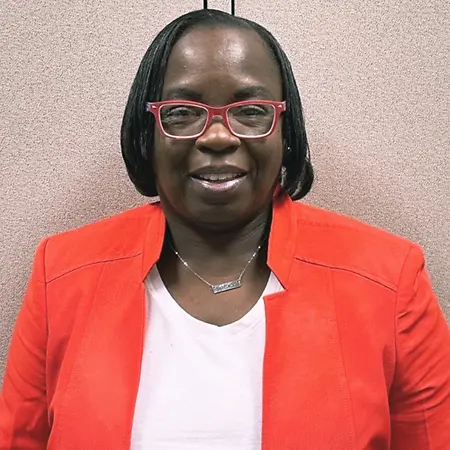
Her Story
About Teresa
Teresa Robinson is an Administrator with the National Association of Reentry Professionals (NARP) and a highly experienced administrative and customer service professional with over 40 years of experience in the administrative field. She began her career serving in the U.S. Army for approximately five and a half years as a paralegal, a role that helped develop her discipline, leadership, and commitment to service. Following her military service, she worked with various attorneys in probate and workers’ compensation, continuing to build strong administrative, legal, and client relations skills. Customer service has remained central to her career, as she finds fulfillment in providing organized, efficient, and compassionate support to the people and organizations she serves.
After focusing on family responsibilities, Teresa later expanded her professional background by attending CNA school and working in healthcare for several years. Although medical challenges prevented her from completing LPN school, she transitioned back into the administrative field where she excelled as an Executive Assistant and Office Manager. In her current role as Administrator with NARP, she works remotely from Tampa, Florida, while supporting the organization’s main office in Jacksonville. She reports directly to the Executive Director and serves as a liaison connecting the board of directors, subcommittees, and executive leadership to ensure operational alignment. She is responsible for coordinating major organizational events such as the Blue and White Winter Gala and the annual national conference in Little Rock, Arkansas, while managing sponsors, vendors, presenters, fundraising initiatives, and membership operations.
Teresa is deeply passionate about her work in the nonprofit reentry space, as she is a returning citizen who has been home for less than two years. She views her journey as one of restoration, resilience, and purpose, and is committed to helping other women impacted by the justice system successfully reintegrate into society. She aspires to become the Founder and Chief Executive Officer of her own nonprofit organization serving formerly incarcerated women veterans. Guided by values of integrity, compassion, and leadership, Teresa remains dedicated to creating meaningful community impact while continuing to grow both personally and professionally.
Her Interview
Ten minutes with Teresa
01What do you attribute your success to?
I attribute my success to my personal transformation as a returning citizen and the opportunity I've been given for restoration and resurrection. I've only been home less than two years after incarceration, and I always say it was a defining moment in my life because it led me down a path of being everything to everyone but not knowing who I was to myself. As women, as mothers, wives, grandmothers, sisters, and aunts, we have all these different roles and titles, and a lot of times we forget who we are to ourselves. We're identified by all these titles, but then we have to sit back and ask the question, who am I really? Unfortunately, in that experience, I had the opportunity to be reminded of that. I made some bad decisions trying to meet everyone's needs, but I've been offered the opportunity to go through a period of restoration and resurrection. I now have a new outlook on life, and I'm getting to help other women who are returning home, who have been impacted through social justice. This is something I have a passion for because someone always says, every knockdown is not a knockout. I learned to trust the process. I will be speaking on a panel in about four weeks at the National Returning Citizens Association, joining other returning citizens and veterans, and we are making an impact and stride in social justice by letting others know that when you come home, just because you made a bad decision, we don't count you out. A second chance is not just a second chance. It's an opportunity to give back, to be restored, to be resurrected, and to make positive changes. Working in this organization and getting this opportunity to speak on panels and work with other professionals in reentry is exciting because there are a lot of people out there that want change, want to give people those opportunities, and I'm glad to be part of that.
02What are the biggest challenges or opportunities in your field right now?
The biggest challenge and opportunity in my field right now is helping people understand what returning citizens face when they come home and giving them second chances. One of the big things our organization does is a simulation course at our conferences. We take actual participants from other organizations or companies that are interested, and they go through the entire process from beginning to end, starting with what it would be like to be arrested, facing charges, going through incarceration, all the way through to coming home and being released. They experience what it's like to go through the process of regaining your life back. We've had people tell me that some participants quit and cannot finish the simulation, or even if they make it through, it is so life-changing and the impact on their emotions is just amazing. They ask, how in the world can you come home and somebody hand you $50, put you on the bus, give you a bus ticket, and now you figure it out? This platform allows us to let people know there's a lot more to reentry than people realize. There are a lot of people out there that want change, want to give people those opportunities, and they want to do it. The opportunity is in talking about second chances, what others go through, what they face coming home, and helping people understand that everybody that comes home is not saying they don't want to be a productive citizen. My goal is to return home, to be a positive influence, to be a productive citizen in society, and just let everyone know that a second chance is an opportunity to give back, be restored, and make changes.
03What values are most important to you in your work and personal life?
The values most important to me are restoration, second chances, and making positive changes. I believe that every knockdown is not a knockout, and I've learned to trust the process. A second chance is not just a second chance - it's an opportunity to give back, to be restored, to be resurrected, and to make positive changes. I don't have a problem using my own life and my own experiences, whether it's just as simple as teaching about obeying your parents, because the choices that we make now can have a lasting impact. I'm grateful for my parents, and I often sit back now and think that had I listened to just some of the advice they gave me then, I may not have had to go through some of the things I've dealt with as an adult. Having adult sons now, I tell them I'm not trying to control your life, I just want to help you not make the mistakes or choices that I made so you don't have to deal with some of those issues. Beyond administration, I am called to ministry. As a minister in training, I teach young people about choices, about accountability, about listening to their parents before the world teaches them harder lessons. I speak on panels because our stories must be told by those who have lived them. It's about every woman rebuilding, every returning citizen who refuses to be defined by their lowest moment. During my incarceration, I had the opportunity to spend some time with me, to get to know me again, to spend some quality time with God, and really define what were going to be my next steps. I worked to stay focused, continue to see the light in a very dark place, and figure out what I could do to better myself so I don't make these choices again and don't find myself there. While I was there, I worked to encourage others and let them know that this situation does not define who you are. It's how you handle difficult situations and what you do after them - you have to learn from them.
Join Influential Women and start making an impact. Register now.