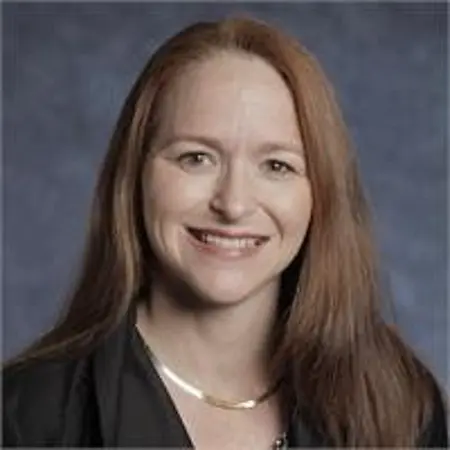
Her Story
About Terri
I started my career in clinical research with Alzheimer's disease back in the 1990s, which was a disease state that did not have any treatments at the time. The research I did certainly contributed to the medications we now have, especially Aricept, which is one of the main drugs that doctors use first line for Alzheimer's disease. I didn't even know this field existed when I got out of undergrad. I was looking for a job in psychology or psychiatry, and I met someone who was working with Alzheimer's disease doing clinical research. She explained what it was to me, and I got my first job doing memory testing with Alzheimer's patients. I just fell in love with research. Research is a field where it either fits you like a glove or it doesn't, and when it fits you like a glove, you just don't ever want to leave. About 5 years ago, I started with Pinnacle, and we are working in steatohepatitis, the acronym for that is MASH, Metabolic Associated Steatotic Hepatitis. In March of 2024, we had our first drug approved for the treatment of that. I would say that there are two indications, two disease states where I have been instrumental in getting the first drug to market. Along the way, I owned my own business doing medical research for a period of time, and I never would have felt comfortable doing that had I not had the training that I got when I got my MBA.
Her Interview
Ten minutes with Terri
01What do you attribute your success to?
I am a very straightforward communicator. I speak fairly bluntly, and I'm not afraid to bring up the uncomfortable conversation. I think that it comes off as being aggressive sometimes, which I'm aware of, and I work on that. But I do think that it is... I think I'm very good at managing people, and I attribute that to my way of communicating. I operate under a philosophy of, if I am ever in a situation where I have to let somebody go, that should not be a surprise to them or to me. It should just, you know, these things need to be discussed throughout, not just when everything's so bad that, oh, you know, we're letting you go. And I would say the same thing about an annual review. If anything comes up in an annual review that is a surprise to the person that I'm having the annual review for, then I have failed. Because it shouldn't, not unless it just happened the day before. You have to handle things as they come in. You can't let them fester, and sometimes that means very difficult conversations, but having those conversations in sort of a logical way, and allowing the person to come to the same realization that you're coming to, because all the facts are on the table, if that makes sense.
02What’s the best career advice you’ve ever received?
One of my earliest bosses told me, Terry, your bosses will always love you because you are a task completer. And if I ask you to do something, you for sure get it done. But you're stepping over everybody else to get there. Her point was, you need to not forget the niceties, right? Like, they are important. When you pick up the phone and you call somebody and you need something from them, you don't just say, hey, can you do this? Okay, thanks, bye. You need to say, hey, how you doing? Haven't talked to you in a while. How are your kids? You know, things like that. And it's not like I don't care about those things, it's just not what was on my mind at the moment. So she kind of taught me to take a step back, remember I'm dealing with other human beings who have a lot going on in their life, whether it's personal or professional, and that they need to feel valued, and that there's an actual relationship there, and it's not just a task giver kind of thing.
03What advice would you give to young women entering your industry?
Don't be afraid to take a job that pays less than you think you can manage at first. The entry-level positions in this field, at least at the site level, are not real high paying, but if you do them well, it can be a pretty fast track to higher paying jobs. Don't be afraid to take a step back from where you are in another field, and take a pay cut to enter into this field, and just, if you perform really, really well, you can move up pretty quickly. I have seen people who have a high school degree, who have gone from drawing blood at $10 an hour, and moved up into a research assistant position, moved to a coordinator position, moved to assistant manager position, and kept going until she currently works for a company that does budgets and contracts for big pharmaceutical companies, and she manages studies that are all across the world. She travels to Japan, and to my knowledge, she still only has a high school degree and was a certified medical assistant at one point. It definitely can be done, because it's mostly on-the-job training, and when it clicks, and when you get research, you can just go far.
04What are the biggest challenges or opportunities in your field right now?
I can definitely speak to challenges, having owned my own business in this field. Your biggest investment, your biggest expense, is people. The expenses outside of your personnel costs are minimal, you know? I mean, you have the office supplies and things like that, but it's really nothing compared to your people. And so, getting the right people just makes the difference, right? And so you have to invest in that. And that's not always easy for a company if they're underfunded and things like that. So I would say the biggest barrier to entry and doing things well is having the right people in the right seats, who actually care. As for opportunities, I think that clinical research in general is a really big opportunity. It's an opportunity for people who don't necessarily have three degrees after their name. I mean, I have seen people who have a high school degree, who have gone from drawing blood at $10 an hour and moved up into a research assistant position, moved to a coordinator position, moved to assistant manager position, and kept going. It's mostly on-the-job training, and when it clicks, and when you get research, you can just go far.
05What values are most important to you in your work and personal life?
Kindness. Transparency and communication to the degree that that's possible. And then just always trying to put yourself in the other person's shoes, treating someone like you would like to be treated in the same situation.
Join Influential Women and start making an impact. Register now.