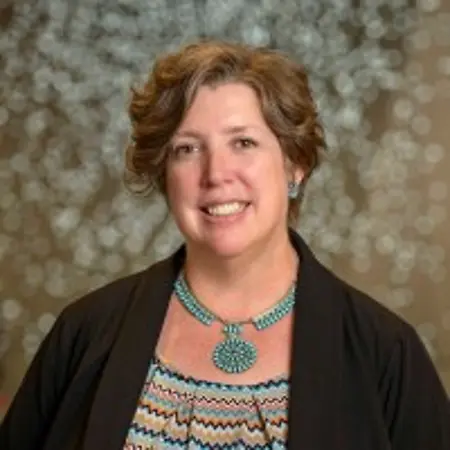
Her Story
About Tessa
Tessa Tibben, DHSc, MSPAS, PA-C, is a dedicated family medicine Physician Assistant and educator with over 16 years of experience providing care to underserved populations both locally and internationally. Passionate about improving access to healthcare, Tessa has worked extensively in general family and internal medicine, as well as with homeless populations. Her clinical expertise is complemented by her leadership in humanitarian initiatives, including medical missions to Lebanon and Kenya, and her longstanding involvement in refugee outreach ministries in Mesa, Arizona. Tessa’s commitment to compassionate care emphasizes meeting patients where they are, addressing their physical, mental, emotional, and spiritual needs.
In addition to her clinical work, Tessa is a highly accomplished PA educator. She currently serves as the Founding Director of Didactic Education at the University of Arizona, where she develops and oversees the PA program’s curriculum. Prior to this role, she held leadership and faculty positions at A.T. Still University, teaching courses in clinical medicine, patient assessment, and history and physical exams, while also lecturing on health disparities, human trafficking, and immigrant and refugee healthcare. Tessa’s approach to education centers on connection, mentorship, and modeling vulnerability, inspiring her students to provide compassionate, holistic care.
Tessa’s professional influence extends to elected leadership and advocacy within the PA community. She serves on the Arizona State Association of Physician Assistants (ASAPA) Board and is a future board member of the nccPA Health Foundation. She has also contributed to advancing equity, diversity, and inclusion, serving on advisory councils and presenting on EDI topics at state and national conferences. Throughout her career, Tessa has combined her clinical expertise, educational leadership, and humanitarian service to empower future healthcare professionals and improve health outcomes for vulnerable communities worldwide.
Her Interview
Ten minutes with Tessa
01What do you attribute your success to?
I saw perseverance and grit modeled in my mother and my grandmother. They were gritty, gritty women with perseverance. My mom was only 19 when I was born, and my father was only 18, and they divorced within about a month. My mother's parents were very much involved in my life. The grit of those women, oh my goodness, I just saw the perseverance and the grit, and they poured those lessons into me. I grew up as Gen X, and we just had to be resilient. You got knocked down all the time in life, or you were just learning really hard lessons on your own, because often both parents were working, or you were just a little more unsupervised. But I think seeing that perseverance really helped me get to where I needed to go, because it was a really long and hard path to get there. One moment doesn't define us either. I had five Fs one semester when my mother was dying and I couldn't focus on school, but there was a lot of time and space and growth and improved academic achievement from that point in time. One moment won't define you. There's ways to recover from bad grades and show a pattern of growth and improvement.
02What’s the best career advice you’ve ever received?
When I was first starting out as a PA in family medicine, I would call my mentors Randy and Michelle DeBase to say, this is how I'm doing, is this normal, or I don't remember this. They would tell me to give myself a few years to get confident. They reminded me that you know what you know, and you know what you don't, and so you can practice. To have a level of fear is quite normal, and honestly healthy when you're caring for people's lives. If you don't have those things, you probably are maybe a little too arrogant, and may make mistakes because you won't humble yourself. In education, it was a bit of the same. Senior faculty members would remind me that it's gonna look a little rough in the beginning, but as long as your heart is there, and you're willing to humble yourself and be uncomfortable again, and grow, the proficiency of teaching gets better and better. My growth curve will level out. The advice was always about remembering those coming behind us, and being in that position of a hand up and a hand down for life. There's always gonna be someone further along, and there's always someone behind you who wants to do the same. Just position yourself to pour in and be poured into, and usually you'll do just fine.
03What advice would you give to young women entering your industry?
I tell pre-PA students and students with interest in healthcare to let everybody know what your interests are, because somebody knows somebody. Share some of your aspirations with every single person you know - your dentist, everyone. You never know who people know and the contact that they can make for you. Try to find those persons in fields that you have interest in and spend a day with them to see what a day in the life is like. I've had a lot of students early in their journey who thought maybe they wanted to be a PA, but when they see what the day-to-day looks like, they realize it's not quite that. But there's other ways to care for the health of a community, maybe through public health. Let everyone know and remember that it is a marathon journey, definitely not a sprint. It's little, small wins along the way, and you have to have perseverance and a little bit of grit. You just have to be humble in it, because growth is uncomfortable, and it doesn't look perfect the first time we do anything. Kick the imposter voice out, replace it with the voice of truth, find people who can speak into that, and know that it's uncomfortable because it's unfamiliar. As you go, each little thing will become familiar. Find your tribe of people who will be real with you and can help normalize what you're feeling.
04What are the biggest challenges or opportunities in your field right now?
The PA field is actually pretty heavily dominated with women - it's about two-thirds to one-third. I think it's because of the flexibility of the job. In medicine, there's just so much need, and our career, the PA field and nurse practitioners, we're definitely designed to help fill some of those gaps that are needed. It's good pay and typically about a two-year graduate program to get to where you want to be. If your love is just to care for patients in your community and have a great career, it offers you so many opportunities. You can work in medicine and shift to education to train future healers. You can go into legislation - some PAs find themselves really leaning into advocacy, get involved in organizations, and then take jobs in legislative positions to reform the healthcare needs of our community. The care for the patient and community is central, but there's lots of ways to do that. The field offers lateral mobility - you can go into family medicine as a PA and then later decide you want to work in orthopedic surgery. That lateral movement ability to change is possible in our profession.
05What values are most important to you in your work and personal life?
Connection is really important to me, like genuine connection. I think that's why I enjoy patient care so much, and why I enjoy teaching, because of connecting with the students. The strength that comes from vulnerability is definitely a core tenet of my values. I've seen just how transformative it can be, so I really try to model that and instill it in the young folks who I'm mentoring, or even people who are in my inner circle. I can remember the exact moment that was shown to me, and how much of an impact it had on me. Your tribe, your family, your friends, your community - having those connections is essential. We all know, if we've lived long enough, that you're going to give from the well, and you're going to take from the well, but if you don't have other people pouring into the well when you need to take from it, it's going to be dry, and then you're stuck. Life is very unpredictable. We definitely need to have those folks around us to hold us up. A friend told me, when you don't let someone do for you like you would do for them, you rob them of the blessing that they want to give you. I try to reframe it, to take it off of me and make it more about the person who's giving.
Join Influential Women and start making an impact. Register now.