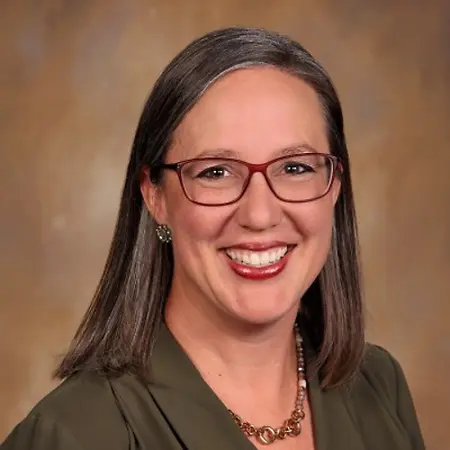
Her Story
About Theresa
During my college years, I was able to participate in global immersion experiences where I was exposed to the ways healthcare can look different throughout different cultures and different experience backgrounds. Since then, I had many experiences as a nurse traveling and teaching that helped bring in an appreciation and understanding that there's a great need for more cultural responsiveness within the nursing profession. I realized there's a gap in how nurses are trained and taught, and an opportunity to build upon the intercultural skills that health care managers and leaders need to have to respond to employee or patient needs. I built my current role based on what I had seen as a nurse and experienced as a nurse both abroad and at CentraCare. What brought me to CentraCare specifically was really due to close family ties in the area, and I really appreciated their structure of valuing their employees, their mission of listening to understand as one of the very first things in their mission, and how they live their values actively. I'm a very mission-driven, purpose-driven person, and when I see an organization that's living the values that they say they are, and they're open to new ideas and change, and where I had seen other organizations say no or we can't do that, I saw CentraCare say yes or let's think about that, how could we make that happen. Their responsiveness to continual growth, learning, and improvement, and living what they say in action and words matching is what kept me.
Her Interview
Ten minutes with Theresa
01What advice would you give to young women entering your industry?
My advice would be don't overlook the importance of relationships and facilitating psychologically safe cultures in your teams, in your organizations, in your departments, your unit, whatever it would look like. There are times where it can be really easy to prioritize the tasks and the on-fire burning items that appear on your desk or in your inbox, but the simmering culture and interpersonal relationship work is the greatest driver of some of those tasks. There's much more power and influence if you can adjust and build your skills in adjusting and shifting culture, and not to overlook that or deprioritize that for the tasks. And realize that you don't have to do it all alone. The second thing that's a huge learning is, I would say, partner with versus do for. Oftentimes, leaders or experts tend to feel like they need to come in and solve for, fix for, when really the heart of, I think, being a good leader is deep listening to understand, and then using the wisdom and different perspectives with your team to co-create a product or some sort of impact together. So my motto is partner with versus do for.
02What are the biggest challenges or opportunities in your field right now?
The current environment politically is less welcoming to the overall understanding of diversity, equity, and inclusion. There are misunderstandings of what it is. A barrier to what I do now is being able to demonstrate the return on investment in numbers and quantitative data as easily as maybe some other roles. I still can, but it's just a little more challenging. Equity and belonging is not super well understood, and so people don't always know when they need it or how to integrate it, and it's seen as an add-on rather than a part of what we are all already doing. The value of what it can bring is often missed or added too late. It's difficult to measure the impact directly. It tends to be more correlative, and so when trying to showcase the return on investment and why a nurse in this role versus somebody else, the impact is just a little bit more challenging. But I also see a lot of opportunities in growth. People are seeing the impact of and the need for something like this. What I hear all the time is, thank goodness you're here, we're so glad you're here, we really needed this. Managers are really recognizing and seeing that it's not just a political talking point, and they can apply it in their day-to-day lives. I think a barrier is traditional ways that the DEI industry has been trying to influence. It tends to be in ways that can sometimes actually push against or be counteractive to what we're trying to do. We teach using knowledge-based strategies, like if I just teach you information, you will then change your mind and learn, and that's not how deeply embedded mindsets and worldviews work. Instead that creates defensiveness. How can you connect to people and their values and bridge the gap by connecting to shared values and the good intentions that people are actually working towards, and give them an opportunity to think differently through something that connects them at an emotional level, not a thinking level. That's a stronger way of teaching and connecting people to some of these ideas than I'm going to teach you a PowerPoint and you will understand and change. So I think another barrier is just how we teach and share content, and needing to change that to be more sensitive to how our brain learns and shifts ways of thinking. I mean, how do I put that in a bullet point? It would be like shifting from traditional ways of teaching and learning DEI concepts to ones that are more effective in achieving the goals of people working together better and understanding one another better.
Join Influential Women and start making an impact. Register now.