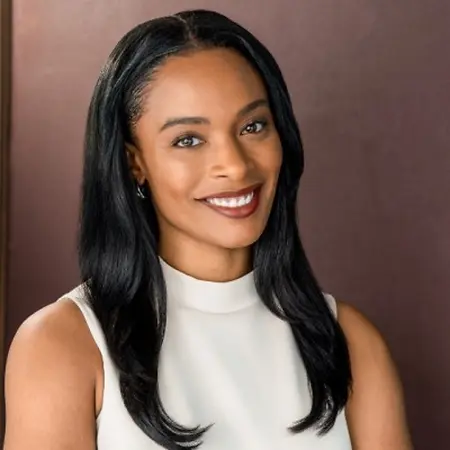
Her Story
About Tianna
I've been in the supply chain sector since 2018, working my way up over 10 years from the very beginning. I started at the bottom of the food chain in logistics, dispatching trucks, and then progressed through roles as a purchaser, inventory management specialist, warehouse operations, buyer, network planner, and MRP analyst before becoming a demand planner. Today, my main area of expertise is forecasting and demand planning. I handle forecast discrepancies within our business for food, pharmaceuticals, and personal care products, running that demand channel at my company. What I do is review the forecast and work really closely with the sales teams to get their market intel on what's going on with our customers, what they need, what they're looking for, and what they're forecasting for the next 3 to 6 months based on different products or campaigns they might be running. I also work closely with purchasing, who cut the orders and buy all the products to make sure we have it in time for our customers, as well as the warehouse and inventory team. I went to Ohio State for economics and got my degree there. Since graduating with my economics degree, I've stayed in the supply chain sector. One of my most notable professional achievements was obtaining my CSCP, which I finished in less than 3 months when it typically takes up to 6 months. Outside of work and supply chain, I'm an actor as well. It's my big passion. I did a little bit of theater in college, and then I really got into acting again the past two years. It's been amazing. I actually just did my first feature film earlier this year as the lead actor.
Her Interview
Ten minutes with Tianna
01What do you attribute your success to?
I would say my why, or what I attribute my success to, would be my son. I had him at a very young age. I was pregnant in college, and I did not know what I was gonna do. I actually dropped out twice. He was the reason why I went back 3 weeks after he was born, and I was like, I'm just going to do this. He's pushed me through college, he's pushed me through my career, he inspires me so much. For me, it was a way to get out of poverty and to make a better life for my family, because I did start on welfare and food stamps and had that struggle when I first started. So I think that was my inspiration, not being in those situations anymore and getting out of poverty was my inspiration to get into this field.
02What’s the best career advice you’ve ever received?
Don't be afraid to pivot. That was definitely the best advice that I've heard, because I think a lot of times we are so focused on the goal, and when it doesn't work out, sometimes we don't know where to go or how to navigate. A friend of mine told me a long time ago that there's power in the pivot. If you can take any situation and pivot and change it and make it better, then that's good, to not dwell on what's going wrong, but to pivot and go the other way. It might work out better for you. My sister also gave me important advice. She would always tell me that children aren't burdens, they're blessings. As women, we have some type of shame of having children in the professional world, especially in corporate America, taking time off for our kids and things like that. So, to just not have shame in being a mother. In the beginning of my career, I used to not even tell my employer that I was a mom, because I didn't want them to not hire me, because I would need more time off, or have to pick them up from daycare. I would be so fearful to tell people that I was a mom, especially earlier in my career. And my sister was just like, no, that is who you are, that's part of who you are, to just embrace that. The places and the people and the companies that you're supposed to be around will embrace that and will accept that, and you shouldn't have to hide parts of yourself to feel like you belong.
03What advice would you give to young women entering your industry?
I would say walk in the room with confidence, and know that you belong. A lot of times, I feel like women have imposter syndrome and feel like they shouldn't be in certain rooms, but if you're in the room, you're supposed to be there, and so own it, and have confidence. I would also encourage more women to try supply chain and economics. I think a lot of people think it's just pushing numbers, and it's not like that at all. It's supply and demand, shopping for me. I love shopping, and so it all made sense to me. When I was in college studying economics, I was one of the only women in my classes, and I was like, why aren't there more females in here?
04What are the biggest challenges or opportunities in your field right now?
I would say the biggest challenge is being able to depend on people, which I hate to say that. I feel like after COVID, I think a lot of people have gotten very lax in their roles. So I think that has been the biggest challenge, is getting people back into the office, as I'm sitting here at my house, but getting people back into the office and getting people having that urgency to work and perform. I think that has changed a lot since COVID. So I think that's probably the biggest challenge, is getting that mindset back pre-COVID and work ethics.
05What values are most important to you in your work and personal life?
I would say having integrity, doing what you say, and meaning it, would be probably one of the biggest values that I have both personally and professionally. Say what you mean, mean what you say, and have integrity behind it.
Join Influential Women and start making an impact. Register now.