Discover how Tierra Foley Galloway, a biomedical engineer and nonprofit founder, transforms personal experience into public impact through healthcare innovation, community leadership, and her mission to empower the next generation.
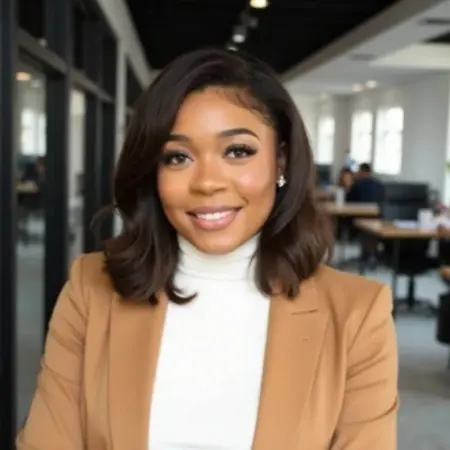
Influential Woman · Healthcare Innovation & Medical Technology
Tierra Foley
Biomedical Engineer | Nonprofit Founder | Community Advocate, Queen’s Calling
Pittsburgh, PA
1Article published
5Awards received
Her Story
About Tierra
My career is rooted in a deeply personal mission to bridge gaps in healthcare, representation, and opportunity.
That mission began when I was in high school, sitting beside my mother during her high-risk pregnancy. At the time, she was pregnant with my only sibling and was being monitored closely due to her age. During one appointment, we learned that she had fibroids the size of softballs, large enough to potentially threaten my brother’s life. When I asked what caused fibroids, the doctor shared that the causes were not fully understood, but that fibroids disproportionately affect Black women. As a young Black woman who had always imagined becoming an OBGYN, I could not accept uncertainty as the final answer. That moment became the foundation of my research journey and my lifelong commitment to using science, engineering, and leadership to solve problems that impact underserved communities.
While still in high school, I enrolled in LSU Health Sciences Center’s Research Experience for Undergraduates program. I began in the School of Public Health, where I earned first-place recognition for my research, and later advanced into the Department of Physiology, where I received the American Physiological Society Undergraduate Award. I continued my education at Baylor University, earning a degree in biomedical engineering with a minor in mathematics in 2021 and becoming the third Black woman to graduate from Baylor’s biomedical engineering program.
At Baylor, I expanded my research interests into machine learning, artificial intelligence, and diagnostic innovation. As a McNair Scholar in Dr. Schubert’s lab, I studied how machine learning could support the early diagnosis of polyps before they become cancerous. I later translated that research foundation into work at Michigan State University, where I had the opportunity to study the uterus and further connect my engineering training to women’s health.
Professionally, my work has centered on identifying gaps and building solutions across patient care, medical technology, and operational systems. At LivaNova, I contributed to neuromodulation devices for patients living with seizures. At Alcon, I have worked on ocular surgical devices in a cross-functional engineering role, managing projects, aligning stakeholders, balancing budgets, supporting manufacturing teams, and advocating for both business priorities and the people responsible for bringing life-changing technology to patients.
In 2024, I expanded my impact beyond industry by founding Queen’s Calling, a nonprofit created to empower young Black and Brown girls through mentorship, leadership development, confidence building, and access to resources. As the first engineer and first college graduate in my family, I understand what it means to enter rooms without a roadmap. Queen’s Calling was created to ensure that the next generation does not have to navigate those rooms alone.
I am also the founder of Tea Time Book Club, a literary and cultural community created after I relocated from Houston to Pennsylvania and experienced the isolation of starting over in a new city. What began as four friends gathering on FaceTime grew within three months into a community of more than 100 members and over 1,000 followers. Today, Tea Time Book Club creates intentional space for women to connect through literature, storytelling, creativity, wellness, and personal growth. The platform was recently sponsored by Marshalls and selected for the Marshalls Good Stuff Accelerator program, recognizing its growth, impact, and entrepreneurial potential.
My commitment to equity also extends into civic leadership. I serve on the Political Action Committee for the NAACP and the Civic Engagement Committee for Urban League Young Professionals in Pittsburgh, where I advocate for community engagement, systems-level change, and expanded access to opportunity.
Across engineering, healthcare, nonprofit leadership, entrepreneurship, and civic advocacy, my work is connected by a central purpose: to identify gaps, build bridges, and create pathways for those who have historically been overlooked. I am currently applying to MBA and engineering master’s programs at Carnegie Mellon University and the University of Pittsburgh to further develop my ability to lead at the intersection of healthcare innovation, business strategy, technology, and community impact. My goal is not only to succeed in spaces where women like me have been underrepresented, but to transform those spaces and open doors for others to rise.
Her Interview
Ten minutes with Tierra
01What do you attribute your success to?
I attribute my success to faith, purpose, resilience, and the people who helped me believe that I belonged in rooms I had not yet entered.
My journey has never been about success for success’s sake. It has always been rooted in a larger mission. I became interested in biomedical engineering because I saw firsthand how gaps in healthcare knowledge, representation, and access can impact Black women and families. That personal experience gave me a sense of urgency and purpose that continues to guide my work.
I also attribute my success to being willing to ask questions, challenge incomplete answers, and pursue paths that did not always come with a roadmap. As the first engineer and first college graduate in my family, I had to learn how to navigate unfamiliar spaces while also believing that I belonged there. That experience taught me discipline, adaptability, and the importance of creating access for others.
I have been blessed with mentors, family members, professors, colleagues, and community leaders who poured into me along the way. Their support helped shape my confidence, but my success has also come from my commitment to turn every opportunity into impact. Whether I am working in medical devices, building Queen’s Calling, growing Tea Time Book Club, or serving through civic organizations, I try to use my platform to bridge gaps and open doors.
Ultimately, I attribute my success to staying grounded in purpose while remaining willing to grow. Every achievement I have earned is connected to a responsibility to reach back, build something meaningful, and help the next woman or girl see what is possible.
02What’s the best career advice you’ve ever received?
The best career advice I have ever received is to stop waiting until I feel fully ready and start moving with courage, preparation, and purpose.
As a first-generation college graduate, first engineer in my family, and Black woman in spaces where I was often underrepresented, it was easy to feel like I needed more permission, more experience, or more certainty before stepping forward. That advice reminded me that growth often happens after you say yes, after you enter the room, and after you trust that your preparation has equipped you for the opportunity.
It has shaped the way I approach my career and leadership. I have learned to ask bold questions, take on challenging projects, advocate for myself, and build what I wish existed. Whether I am leading work in medical devices, founding Queen’s Calling, growing Tea Time Book Club, or preparing for graduate business and engineering education, I try to move before fear convinces me to shrink.
That advice continues to guide me because it reminds me that confidence is not always something you have before the opportunity. Sometimes confidence is built through obedience to the vision, consistent action, and the courage to keep showing up.
03What advice would you give to young women entering your industry?
The advice I would give to young women entering biomedical engineering, healthcare innovation, or any STEM-related industry is to trust that your perspective is not a weakness. It is part of your value.
So often, young women enter technical spaces believing they have to shrink parts of themselves to be taken seriously. I would tell them to bring their full curiosity, voice, lived experience, and ideas into every room. The questions you ask because of who you are and what you have seen may be the very questions that lead to better products, stronger systems, and more equitable solutions.
I would also encourage them to build both technical excellence and confidence. Learn the science. Understand the data. Ask how products are made, how decisions are approved, how budgets are managed, and how patients are impacted. But also learn how to speak up in meetings, advocate for your work, and build relationships with people at every level, from senior leaders to the teams on the manufacturing floor.
Most importantly, do not wait until you feel fully ready to pursue the opportunity. Apply for the program. Ask for the mentor. Join the research lab. Lead the project. Enter the room. You may not have every answer at first, but preparation, humility, and courage will carry you further than perfection ever will.
And when you get there, remember to reach back. Representation matters, but access matters too. As you rise, create pathways for the next young woman to see that she belongs there too.
04What are the biggest challenges or opportunities in your field right now?
One of the biggest challenges in healthcare innovation is making sure advancement does not outpace access. We are living in a moment where artificial intelligence, machine learning, digital health tools, and medical devices have the potential to transform how patients are diagnosed, treated, and supported. The FDA continues to authorize AI-enabled medical devices, which shows how quickly technology is becoming part of clinical care. But innovation is only meaningful if it is safe, effective, and available to the communities that need it most.
For me, the biggest challenge is also the biggest opportunity: closing the gap between what technology can do and who actually benefits from it. Healthcare still faces major workforce shortages, access barriers, and disparities that disproportionately affect underserved communities. The AAMC projects a physician shortage of up to 86,000 physicians by 2036, which makes it even more important to develop tools, systems, and care models that expand access without compromising quality.
There is also a major opportunity to use AI and digital health more responsibly. Digital tools can help improve decision-making, support earlier diagnosis, and reach patients in rural or underserved areas. The World Health Organization has emphasized that digital health still has immense untapped potential, especially when paired with standards for data sharing, interoperability, and evidence-based implementation.
My perspective as a biomedical engineer is that the future of the field will require more than technical brilliance. It will require leaders who understand engineering, patient care, business strategy, ethics, and equity. The opportunity is not just to build more advanced technology, but to build technology that is trusted, accessible, and designed with real people in mind. That is where I hope to contribute... at the intersection of healthcare innovation, community impact, and systems-level change.
05What values are most important to you in your work and personal life?
The values most important to me are faith, purpose, integrity, service, and courage.
Faith keeps me grounded and reminds me that my work is bigger than any title, achievement, or opportunity. Purpose gives direction to everything I do, whether I am working in medical devices, building Queen’s Calling, growing Tea Time Book Club, or serving in my community. I want my work to mean something beyond myself.
Integrity is also central to who I am. I believe in doing the right thing even when it is difficult, leading with honesty, and treating people with dignity at every level. Some of the most meaningful lessons in my career have come from working closely with both senior stakeholders and the people on the manufacturing floor. Those experiences taught me that strong leadership requires respect, humility, and accountability.
Service is one of my deepest values because I know what it means to benefit from people who opened doors, offered guidance, and believed in me before I fully believed in myself. As the first engineer and first college graduate in my family, I feel a responsibility to create pathways for others, especially young Black and Brown girls who deserve to see what is possible.
Courage ties all of those values together. Courage has allowed me to ask hard questions, enter unfamiliar rooms, advocate for myself, and build what I did not see. In both my work and personal life, I try to lead with compassion, move with intention, and use every opportunity to make someone else’s path a little clearer.
Her Content Hub
Articles by Tierra
Tierra Foley Galloway: Building Bridges Between Innovation, Access, and Impact
From Personal Experience to Public Impact: How One Biomedical Engineer is Transforming Healthcare and Building Pathways for the Next Generation
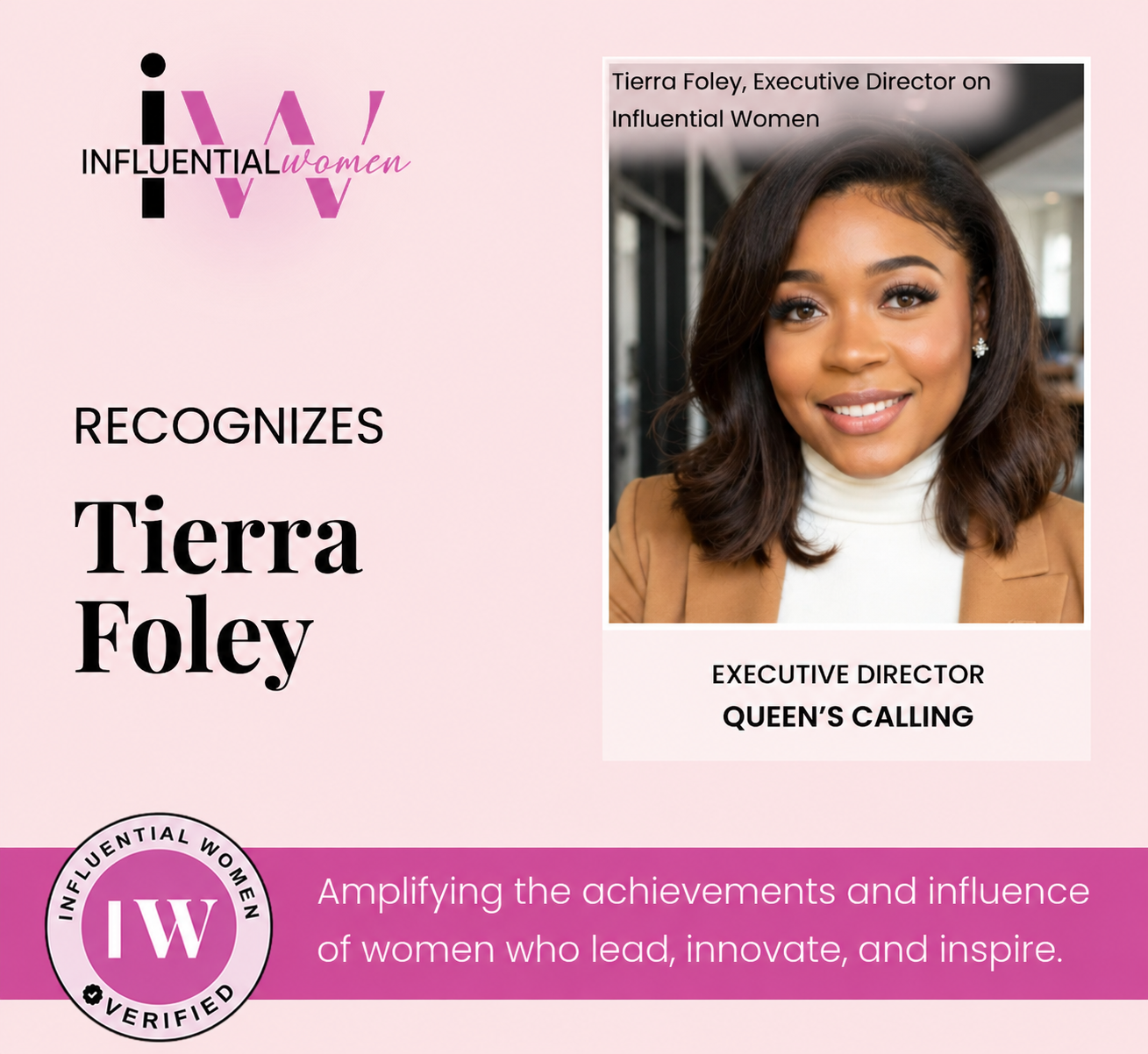
Tierra Foley Galloway has built her life like a bridge—connecting what too often remains separated.
Science and service. Innovation and access. Healthcare and equity. Personal experience and public impact. As a biomedical engineer, nonprofit founder, and community advocate, she has turned the most defining moments of her life into pathways for others to cross.
A biomedical engineer, nonprofit founder, community advocate, and emerging voice in healthcare innovation, Foley Galloway has built a life and career defined by purpose, intellect, and impact. Her work spans medical technology, women’s health, nonprofit leadership, civic engagement, and cultural community-building, but the thread connecting it all is unmistakable: she is committed to transforming personal experience into public good.
Her story begins with a moment that could have simply remained a family memory. Instead, it became a mandate.
As a high school student, Foley Galloway sat beside her mother during a high-risk pregnancy appointment. Her mother was pregnant with Tierra’s only sibling and had been placed under close medical monitoring. During one visit, the family learned that her mother had fibroids the size of softballs—large enough to potentially threaten her unborn brother’s life.
When Foley Galloway asked what caused fibroids, the doctor explained that the causes were not fully understood, but that fibroids disproportionately affect Black women.
For many, that answer may have ended the conversation.
For Tierra, it started a calling.
As a young Black woman who had once imagined becoming an OB-GYN, she refused to accept uncertainty as the final answer. That moment sharpened her curiosity into conviction. It awakened in her a lifelong commitment to science, engineering, health equity, and the urgent need to address the gaps that leave Black women, families, and underserved communities unseen.
While still in high school, Foley Galloway enrolled in LSU Health Sciences Center’s Research Experience for Undergraduates program. She began in the School of Public Health, where she earned first-place recognition for her research, then advanced into the Department of Physiology, where she received the American Physiological Society Undergraduate Award. Before she had even entered college, she was already learning how to transform questions into research, research into knowledge, and knowledge into power.
She went on to Baylor University, where she earned a degree in biomedical engineering with a minor in mathematics in 2021. In doing so, she became the third Black woman to graduate from Baylor’s biomedical engineering program—a milestone that reflects both her academic excellence and the path she now represents for others.
At Baylor, Foley Galloway expanded her interests into machine learning, artificial intelligence, and diagnostic innovation. As a McNair Scholar in Dr. Schubert’s lab, she studied how machine learning could support the early diagnosis of polyps before they become cancerous. She later built on that research foundation at Michigan State University, where she had the opportunity to study the uterus and connect her engineering training back to the women’s health questions that first inspired her journey.
Her professional career has taken her into the heart of the medical device industry. At LivaNova, she contributed to neuromodulation devices supporting patients living with seizures. At Alcon, she has worked on ocular surgical devices in a cross-functional engineering role, managing projects, aligning stakeholders, balancing budgets, supporting manufacturing teams, and advocating for both business priorities and the people responsible for bringing life-changing technology to patients.
But what makes Foley Galloway’s leadership distinct is not only her technical expertise—it is her ability to see the human being behind every system.
She understands that innovation is not impressive simply because it is advanced. Innovation matters when it reaches people, closes gaps, improves care, and allows families to experience better outcomes. It must be built with dignity, trust, and access in mind.
In an era where artificial intelligence, machine learning, digital health, and medical devices are rapidly reshaping healthcare, Foley Galloway is part of a generation of leaders asking the more important question: Who benefits from this progress?
For her, the future of healthcare innovation requires more than technical brilliance. It requires leaders who understand engineering, ethics, business strategy, equity, community, and lived experience. It requires people who can build systems that are not only smarter, but more just.
In 2024, Foley Galloway expanded her mission beyond industry by founding Queen’s Calling, a nonprofit created to empower young Black and Brown girls through mentorship, leadership development, confidence-building, identity, and access to resources. As the first engineer and first college graduate in her family, she understands what it means to walk into unfamiliar rooms without a roadmap.
Queen’s Calling is her answer to that experience.
It is a declaration that the next generation should not have to stumble into opportunity by chance. They should be guided, resourced, affirmed, and prepared to lead. Through Queen’s Calling, Foley Galloway is not simply mentoring young girls—she is helping them imagine themselves as leaders before the world tells them to shrink.
Her impact does not stop there.
After relocating from Houston to Pennsylvania and experiencing the isolation that can come with beginning again in a new city, Foley Galloway created Tea Time Book Club. What began as four friends gathering on FaceTime quickly grew into a fast-rising literary and cultural platform with more than 100 members and over 1,000 followers in just three months.
Tea Time Book Club is more than a book club. It is a cultural gathering space, a soft place to land, and a creative ecosystem for women to connect through literature, storytelling, wellness, art, and personal growth. The platform was recently sponsored by Marshalls and selected for the Marshalls Good Stuff Accelerator, recognizing Foley Galloway as one of the women entrepreneurs building brands with depth, influence, and community-centered impact.
In every space she enters, Foley Galloway builds.
She builds technology. She builds programs. She builds community. She builds confidence. She builds bridges between worlds that are too often kept separate: science and storytelling, engineering and equity, innovation and access, ambition and service.
Her civic leadership reflects that same commitment. She serves on the Political Action Committee for the NAACP and the Civic Engagement Committee for Urban League Young Professionals in Pittsburgh, where she advocates for equity, community engagement, systems-level change, and expanded access to opportunity.
When asked what she attributes her success to, Foley Galloway names faith, purpose, resilience, and the people who helped her believe she belonged in rooms she had not yet entered.
But her success is also a reflection of her refusal to wait.
The best career advice she has ever received is to stop waiting until she feels fully ready and start moving with courage, preparation, and purpose. That advice has shaped the way she leads: she asks bold questions, takes on difficult work, advocates for herself, and builds what she wishes had existed when she was younger.
Her message to young women entering biomedical engineering, healthcare innovation, or STEM is clear: your perspective is not a weakness; it is part of your value.
She encourages young women to bring their full curiosity, voice, lived experience, and ideas into every room. Learn the science. Understand the data. Ask how products are made, how decisions are approved, how budgets are managed, and how patients are impacted. But also speak up, build relationships, lead before you feel ready, and remember that representation matters most when it becomes access for someone else.
The values that anchor Foley Galloway’s life and leadership are faith, purpose, integrity, service, and courage. Faith keeps her grounded. Purpose gives her work direction. Integrity shapes how she leads. Service reminds her that every door opened comes with the responsibility to hold it open for others. Courage allows her to keep entering rooms, asking difficult questions, and creating what did not exist before.
Today, Tierra Foley Galloway stands at the intersection of healthcare innovation, technology, nonprofit leadership, entrepreneurship, and civic impact. She is currently applying to MBA and engineering master’s programs at Carnegie Mellon University and the University of Pittsburgh to further develop her ability to lead across business strategy, medical technology, and systems-level change.
But her goal is not simply to succeed in spaces where women like her have been historically underrepresented.
Her goal is bigger than access.
It is transformation.
Tierra Foley Galloway is building a legacy defined by movement: from curiosity to calling, from research to innovation, from isolation to community, from personal story to collective impact.
She is not only opening doors.
She is redesigning the pathway.
And she is making sure the women and girls behind her know exactly where to walk next.
To connect with Tierra Foley Galloway, visit her LinkedIn at linkedin.com/in/tierrafoley. To learn more about Queen’s Calling, visit queenscalling.org. To follow Tea Time Book Club, visit @teatimebc on Instagram.
Join Influential Women and start making an impact. Register now.