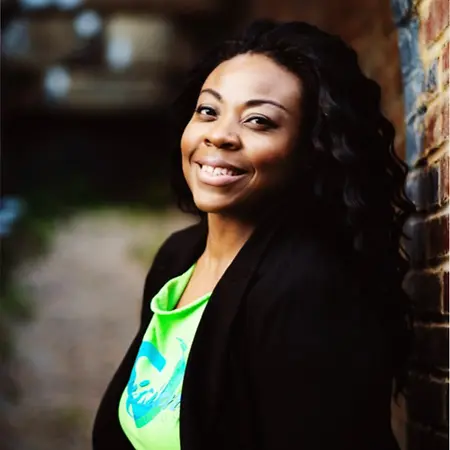
Her Story
About Tiffancy
Tiffancy Barnes, LPC, LCPC, is a highly experienced behavioral health professional and utilization management leader with more than 25 years of experience across mental health counseling, substance abuse treatment, case management, and clinical operations. Licensed in Virginia, Texas, Georgia, Maryland, and Washington, D.C., she currently serves as a Utilization Manager at Centene Corporation, where she applies her extensive clinical expertise to ensure quality, compassionate, and effective care coordination for individuals navigating complex behavioral health challenges. Throughout her career, she has successfully combined advanced clinical knowledge with operational leadership to oversee treatment planning, utilization reviews, quality improvement initiatives, and multidisciplinary care coordination.
Barnes’ diverse professional background spans nearly every level of behavioral healthcare, including work with children, geriatric populations, military families, individuals with eating disorders, and patients facing substance abuse and dual diagnosis conditions. Her experience includes leadership roles in utilization management and behavioral health care coordination at organizations such as UnitedHealth Group, CareFirst BlueCross BlueShield, Magellan Health, and MHN Government Services. She has also led Intensive Outpatient Programs and worked directly with high-acuity populations through community action teams, giving her firsthand insight into the realities clinicians, patients, and families face every day. This broad experience allows her to approach clinical reviews and care decisions with empathy, practicality, and a deep understanding of patient needs across the continuum of care.
Known for her compassionate leadership style and commitment to advocacy, Barnes is especially passionate about improving access to behavioral healthcare and supporting individuals during some of the most vulnerable moments of their lives. Her work is grounded in the belief that effective mental health care requires both clinical excellence and human connection. With specialized expertise in substance abuse and dual diagnosis treatment, she continues to serve as a trusted resource and advocate within the behavioral health field, helping organizations, providers, and patients navigate complex systems while prioritizing dignity, recovery, and long-term wellness.
Her Interview
Ten minutes with Tiffancy
01What do you attribute your success to?
I think my drive does. I've always had the mentality of, I got it, now I want to make sure you get it too. I'm always trying to help the next person up. Even when I'm reviewing now, I work with facilities in Louisiana, and I got these young girls who I have to talk to basically almost every day. I'm like, well, when are you getting your license, you know? What's holding you back? I think both of them have failed the test a couple times, and I tell them you can't stop there, keep going. I hear them say things about the position, they hate being stuck in that position, and what's holding them back is they don't have their license. So I just try to always push other people to be their best, too, especially when I see it in them. Like, I know that they have the capability of doing it. But sometimes we just get in our own ways.
02What advice would you give to young women entering your industry?
The advice I would give someone starting off in this profession would be, what is your end goal in this position? This profession can go different ways. Do you want to do psychotherapy? Do you want to be a psychotherapist, or do you want to do more of the hands-on where you're helping guide the client to do more like case management, or do you want to be in a more administrative piece? It depends on where you want to go on how my advice goes. When you're getting your graduate studies, make sure you're getting it in the correct discipline. That's what happened with me. You think you want to be a therapist and help people, and you think, oh, I should be a licensed professional counselor, but when you get out here and you're trying to find jobs, they don't want LPCs, they want LCSWs. You're fighting social workers for therapist jobs. It's hard to get into the VA to work with veterans, they only want LCSWs. I was misguided in grad school. When I said what I wanted to do, I was told to do clinical psychology, and you would think that's what you should do. But if you want different jobs, that's why I say, I would always say, what is your end goal? What is it that you really want to do with it? Like, why do you want to be a counselor? Why do you want to be a therapist? What are you going to do? That way, I can help guide. Because if somebody would have told me, I would have got the LCSW. Like, if that's the one everybody wants, if I wanted to go work at a nursing home, they don't want an LPC, they want an LCSW.
03What are the biggest challenges or opportunities in your field right now?
What I would say the challenges are is the LPC versus the LCSW. The problem is that the LPCs do not advocate like the LCSWs did. That's why the LCSW is so universal. They advocated and fought so much for different things, so therefore, it's like, that's the one to have versus the LPCs. Even with stuff we're being approved to work on, to be able to charge, to be able to bill Medicare, you can't do it with the LPC. We had to fight and fight and fight to try to do it. And in order to do it now, you gotta have a huge list of criteria that you have to meet in order to be able to see Medicare patients. And I'm like, well, I'm not going back to school to get a third degree. I refuse to do that. So that's one of the biggest challenges, is that the LPC versus LCSW, and how they don't value the LPC credentials as much as they do LCSWs. It's hard to get into the VA to work with veterans, they only want LCSWs. If I wanted to go work at a nursing home, they don't want an LPC, they want an LCSW. So the LCSW does a lot of the counseling work. It is unfortunate.
04What values are most important to you in your work and personal life?
I've always had the mentality of, I got it, now I want to make sure you get it too. I'm always trying to help the next person up. When I'm reviewing now, I work with facilities in Louisiana, and I got these young girls who I have to talk to basically almost every day, and I'm always encouraging them about getting their license. One of them, I think both of them have failed the test a couple times, and I tell them you can't stop there, keep going. They say things about the position, they hate being stuck in that position, and what's holding them back is they don't have their license. So I just try to always push other people to be their best, too, especially when I see it in them. Like, I know that they have the capability of doing it. But sometimes we just get in our own ways. I never do anything for recognition. I just do it because I know it's right to do. Outside of my professional work, my involvement is rooted in community and faith through church, which keeps me grounded.
Join Influential Women and start making an impact. Register now.