When LinkedIn DMs from newly diagnosed neurodivergent people sharing their workplace struggles kept coming in, I knew it was time to act. So here I am.
The Moment She Realized Leadership Was Already Hers
Explore more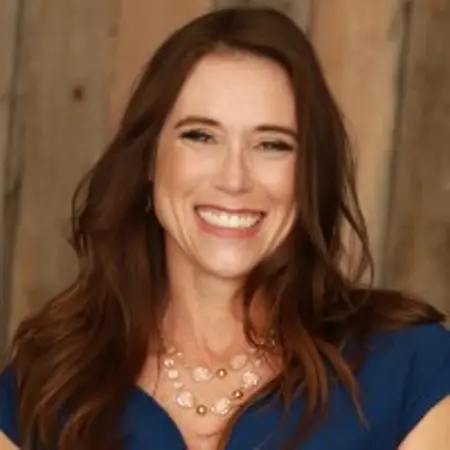
Influential Woman · Neurodiversity Consulting and Organizational Psychology
Chief Executive Officer, Founder, grit & flow
Laguna Hills, CA 92675
I said Yes to every conversation, which led me to build strong relationships, learn from others, and become a respected leader in my industry.
Dr. Tiffany Jameson, MBA, PHR · In Her Own Words
When LinkedIn DMs from newly diagnosed neurodivergent people sharing their workplace struggles kept coming in, I knew it was time to act. So here I am.
The Moment She Realized Leadership Was Already Hers
Explore moreHer Story
Dr. Tiffany Jameson, MBA, PHR is an organizational psychologist, neurodiversity specialist, executive coach, speaker, and researcher dedicated to transforming how organizations design work, lead people, and define performance. As Founder and Chief Executive Officer of grit & flow, she partners with global organizations including Fortune 500 companies, higher education institutions, and mission-driven enterprises to build person-centered, inclusive workplaces that improve engagement, retention, and innovation. With a Ph.D. in Industrial and Organizational Psychology, an MBA, and a Bachelor of Science in Computer Information Systems and Business Administration, she brings a rare combination of technical, business, and behavioral science expertise to organizational transformation.
Dr. Jameson’s professional journey is rooted in both lived experience and applied expertise. She began her career in computer science and business as a programmer and product manager before stepping away from the workforce to raise her children. Her perspective on work and inclusion shifted profoundly when both of her children were diagnosed with ADHD and autism. While completing her MBA, she discovered that autistic individuals face an unemployment rate of approximately 85%, a statistic that became a defining catalyst in her career. Motivated to address this inequity, she founded her company, returned to academia to earn her Ph.D. in psychology, and focused her research on organizational systems, workplace behavior, and neurodiversity inclusion.
For more than eight years, Dr. Jameson has led consulting engagements, research initiatives, and learning programs designed to shift organizations away from performative inclusion toward substantive, system-level change. Her approach emphasizes working directly with organizations to redesign structures, processes, and leadership practices rather than placing the burden of adaptation on neurodivergent individuals. She develops and facilitates global training programs, including content for LinkedIn Learning and Coursera, and regularly delivers keynote presentations, workshops, and executive coaching sessions. Her daily work spans qualitative and quantitative research, organizational diagnostics, stakeholder engagement, and the translation of complex psychological science into practical, actionable strategies. Known for her agility and precision, she tailors her message to each organization, ensuring that inclusion is not only understood but operationalized in measurable and sustainable ways.
Her Interview
01What do you attribute your success to?
My work is grounded in a simple but powerful belief: people deserve the opportunity to flourish. I attribute my success to a deep passion for human beings, their complexity, their potential, and their capacity to thrive when the right conditions are in place. For me, this work is not just about performance or productivity; it is about helping people and organizations recognize what becomes possible when individuals are understood, supported, and given room to grow in ways that are authentic to them.
02What’s the best career advice you’ve ever received?
The best career advice I've ever received is to manage up. It's about taking ownership of how you communicate and work with those above you, and being proactive in managing those relationships and expectations.
03What advice would you give to young women entering your industry?
My advice to young women entering this industry is to know that meaningful work does not come easily. This field will challenge you, but if you believe deeply in the work, that belief will steady you. Passion and purpose will not eliminate the obstacles, but they will help you endure them, learn from them, and keep moving forward.
04What are the biggest challenges or opportunities in your field right now?
The biggest challenges in neuroinclusion consulting right now are not simply awareness or interest. They are measurement, competing budgets, behavior change, and organizational commitment. Many companies are under financial pressure, rethinking hiring, and becoming cautious around anything that appears connected to DEI. That creates muddiness, because neuroinclusion is often treated as a separate initiative or “bucket” rather than as part of how work should function for everyone.
Neuroinclusion is not about creating a special program for a small group of employees. It is about how organizations design communication, hiring, onboarding, management, meetings, performance expectations, feedback, flexibility, and support. In that sense, it is an everybody issue.
The real challenge is helping organizations move from performative inclusion to measurable systems change. That means defining impact, building manager capability, changing day-to-day behaviors, and committing to practices that improve how people work across the organization. Sustainable neuroinclusion cannot be treated as a one-time training, a compliance exercise, or a short-term initiative. It requires investment in the organization’s operating system so the company is prepared to retain talent, support performance, and grow.
05What values are most important to you in your work and personal life?
The most important value to me in both my work and personal life is that everyone is a human being and deserves to be respected. This fundamental belief in human dignity and respect guides everything I do, both professionally and personally.
Join Influential Women and start making an impact. Register now.