Her Story
About Tiffany
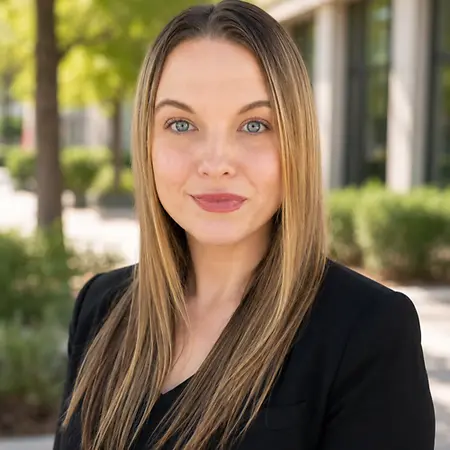
Tiffany Welch is a healthcare operations leader specializing in utilization management, clinical review, and payment integrity analytics. Based in Tempe, Arizona, she currently serves as a Utilization Management Supervisor and Interim Research and Ideation Analyst within the Payment Integrity Office at Providence Health Plan. In this dual role, she leads a team responsible for medical necessity review and high-dollar claims oversight while also driving strategic initiatives focused on claims optimization, regulatory compliance, and operational efficiency. She brings more than 15 years of healthcare experience spanning patient-facing care and payer-side operations. Her career began as a pharmacy technician in specialty pharmacy, where she supported infectious disease, oncology, and IVIG infusion programs for patients with complex autoimmune conditions. She later transitioned into insurance operations at Oscar Health, where she advanced from clinical review roles to production operations leadership, gaining deep expertise in prior authorizations, appeals, and claims processing from the payor perspective. Throughout her career, she has been recognized for challenging inefficient systems and leveraging data-driven insights to improve healthcare operations. At Providence Health Plan, she has led multiple payment integrity initiatives that contributed to significant cost savings through audit, root-cause analysis, and process redesign. Her leadership style emphasizes integrity, continuous improvement, and empowering teams while balancing operational rigor with compassion for members and providers across the healthcare system.
Her Interview
Ten minutes with Tiffany
01What do you attribute your success to?
I attribute my success to my experience, my willingness to challenge the status quo, and my ability to apply high-tech, operational approaches from previous roles. This combination allows me to create efficiencies, improve processes, and drive meaningful cost savings.
02What’s the best career advice you’ve ever received?
The best career advice I ever received was 'if it's not broken, break it.' I think a lot of times, especially in the healthcare operational side of things, it can be very difficult and challenging to really raise your voice and speak up and try to voice your new ideas and beat that status quo. But the advice was, hey, if it's not broken, break it, meaning speak up. If you think something could work better or be more efficient, if there's a passion that you have, then just go out there and do it. Voice those opinions, because you never know who's going to be listening and where that's going to get you. I really believe in this advice because when I came to Providence Health Plan, which has been around for decades, I was able to bring a new perspective from my experience at Oscar, which was a more high-tech organization. It was really exciting to come on and try to beat the status quo and give them a new perspective on how we can operationally become more efficient. That mindset led to me finding discrepancies in our system and initiating about 10 different projects that allocated almost $19 million in savings last year.
03What advice would you give to young women entering your industry?
Focus more on observation than output. Watch what your leaders do, how they communicate, and what they prioritize. Ask questions and stay open to feedback—don’t take it personally. Feedback is your opportunity to learn and grow.
The more you observe and learn, the more you can advocate for yourself and pursue the next project or role you want. Even when feedback is direct or tough, remember it’s coming from a place of support—use it to improve, keep moving forward, and continue showing up stronger every time.
04What are the biggest challenges or opportunities in your field right now?
I think a lot of what's going on right now within our government, federally, has definitely lessened access and resources to healthcare and prescriptions. It has made premiums in the health insurance industry skyrocket, and it's made prescription costs skyrocket. Unfortunately, due to those costs, right now we're seeing in our industry a massive layoff period. Members are not having access to their health insurance policies or having access to get to their doctor's appointments because they might live too far or because providers are not networked appropriately. They're also not being able to afford their prescriptions. Since a lot of those resources have dissolved, it has made it harder for those seeking care. Another big challenge is the use of technology for automation purposes. I'm not exactly a huge advocate for AI, but I would say more automation. I see a lot of healthcare, both providers and healthcare payors and facilities, that lack the technology needed to serve a high volume of members or patients and to ensure that there are no payment discrepancies, to make sure that authorizations are going in appropriately at the time that they should, and that they're being reviewed in a timely manner so that the member and patient's care is accessible faster.
05What values are most important to you in your work and personal life?
For work, my most important values are community, good culture, and teamwork. I truly believe that your team is only as good as your leaders, and so it's important to ensure that everyone is treated with dignity and respect. I believe in easing my team's way through challenges. Everybody has a life outside of work, so life-work, life-family balance is very important for me, and it's important for me to give that to my direct reports as well. I believe everybody knows that they can always come to me with anything, and that's something that I really, really do cherish. I believe that that's actually very difficult to find in a lot of companies nowadays. There can be a lot of toxic micromanaging. So, treating everyone with dignity, respect, and valuing the fact that they do have a life outside of work, those are my biggest values. In my personal life, with my volunteer work with homelessness, it's the same thing. Treating everyone with dignity and respect is my biggest value.
Join Influential Women and start making an impact. Register now.