Influential Woman · Healthcare
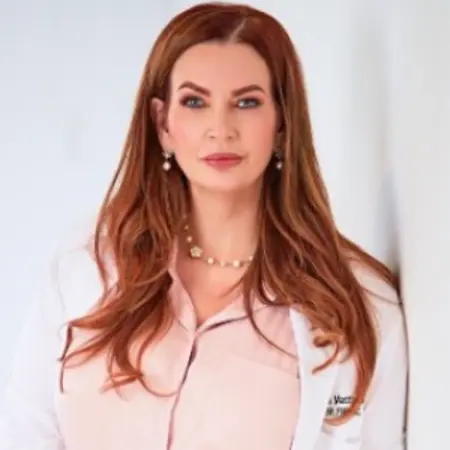
Tina Matthews-Hayes, DNP, CRNP, FNP-BC, PMHNP-BC
Founder and Owner / Program Track Director, Alis Family Psychiatry
Virginia Beach, VA 23451
Her Story
About Tina
Tina Matthews-Hayes, DNP, CRNP, FNP-BC, PMHNP-BC, is a psychiatric nurse practitioner, educator, and healthcare leader based in Virginia Beach, Virginia. She is the Founder, President, and Clinical Director of Alis Family Psychiatry, a family-run practice delivering full-spectrum psychiatric care across the lifespan (ages 3–103). She also serves as Program Director for Psychiatric Nurse Practitioner education at Carlow University, where she helps train and mentor future advanced practice clinicians. In addition to her clinical and academic roles, she is a national keynote speaker, published author, and recognized key opinion leader in mental health care.
Her career spans nearly two decades in nursing and more than a decade in advanced psychiatric practice. She began her clinical work in high-acuity cardiac intensive care before transitioning into family and psychiatric mental health nursing, with extensive experience serving underserved and rural populations in Pennsylvania. Over time, she expanded into autonomous practice and leadership roles, including training and supervising nurse practitioners, developing psychiatric care programs, and collaborating with academic and clinical institutions. She has also worked extensively with healthcare organizations focused on improving access to behavioral health services and expanding psychiatric workforce capacity.
Clinically and academically, Tina Matthews-Hayes specializes in schizophrenia, bipolar disorder, ADHD, autism spectrum disorders, and complex severe mental illness. Her approach emphasizes holistic, evidence-based psychiatric care that integrates medication management, psychosocial support, and individualized treatment planning. She has contributed to peer-reviewed publications and participates in national speaking engagements and industry education initiatives aimed at advancing psychiatric treatment and reducing stigma. Across her work, she focuses on improving access to high-quality mental health care and supporting patients in achieving long-term stability and functional recovery.
Her Interview
Ten minutes with Tina
01What do you attribute your success to?
I don't think failure was an option. I was a single mom with two kids, and I will be the first person to say that I could not have done any of it without the support of my mother and my father, my sister and brother-in-law. I had a great community and family that supported me with helping me raise my children. I am the child of an at-home mom and a police officer - I'm not the child of a bunch of physicians. I worked my way, step by step, up this ladder and learned lessons the hard way. I worked two and a half jobs all the way through my whole entire college career. It was hard, it was long, but failure was not an option because I had two children who deserved better at the end of that journey, and I promised them that it would be worth it, and I intended to keep that promise. You look at two little faces every morning and you have the energy to get up and do what you gotta do. My children deserved a better life, nursing was the path that provided that better life, and like I said, failure was not an option.
02What’s the best career advice you’ve ever received?
I think some of the best career advice that I've ever received is when somebody pulled me aside, probably about 10 years into my career and said, Tina, you're doing all of this for somebody else. You're making somebody else wealthy, and you're receiving a salary. You could do this yourself. You can move to another state, you can do this yourself. And I was like, there's no way. I don't have a business background, I don't have any business education, I don't know anything about running a practice. And they said, you're doing it every day, look at what you're doing. They pointed out that I was the clinical manager of the practice, I hired and trained 13 NPs, I carried a patient load, I did all the insurance audits and complaints. I realized, wait a minute, the only thing I'm not doing is the billing, and you hire that out. The exact learning was, Tina, you're creating generational wealth for another person. You need to do this yourself. I never thought I could, but I could, and I did. That little moment of somebody calling it out and pointing out to me that I don't need somebody else doing this for me, I can do it myself - that was the best advice. You're already doing this, you just need to have faith in yourself.
03What advice would you give to young women entering your industry?
The first thing I always tell them is, why psych? If you're going into psychiatry, or your interest in psychiatry is sheerly for the revenue, this is the wrong field for you. You won't last. You need to go into psychiatry because it fits you. Psychiatry is a little bit different, it's more intimate, but you're still saving lives every day. It's just on a quieter scale, there's less accolades, nobody's gonna pat you on the back. Psych is truly an area where you have to be more comfortable speaking less and listening more, and truly hearing a person and meeting them where they're at, and having the ability to reach a patient and have them trust you when they are truly at their most vulnerable point in life, and helping rebuild them. You need to go into psychiatry for the right reasons - you need to make sure you truly care about one's mental health, not because it's a lucrative field. It is not what you see on TV. There's so many movies out there that make psychiatry look either very scary or very glamorous. That's not how it works. If you want to have your own practice, that can be done, and I encourage people, you can do this yourself, too. But you have to learn. You don't want to jump from school to running a practice, because nobody knows enough yet. You need at least 5 to 6 years' experience working with somebody else, getting insight. Once you get your sea legs underneath you and you master psychopharmacology, you can absolutely start your own practice and provide the care that you want to provide, and truly work to make mental health equal to cardiac care or endocrine care, and help remove that stigma of mental health. Any person can be successful. They just have to want it bad enough.
04What are the biggest challenges or opportunities in your field right now?
I think the biggest challenge would honestly be that we're stuck in a world where we have to make some of our decisions driven by insurance companies, which makes things very hard. Unfortunately, sometimes medication decisions are made by what insurance companies will cover, and that is the biggest challenge, because sometimes that can short-term tie my hands. There's often times where we'll have to run trials on medications that we know are not the best treatment lines. Access to the best treatment lines secondary to insurance company approvals is truly the biggest challenge in care in my business. Other than that, I would say one of the bigger issues we're having is just a lack of support systems. We can do what we can from the outpatient setting, but when we need higher levels of care, those services are becoming more and more limited. We used to have great access to care for family-based, in-home services for pediatric patients, but the services have been cut by House and Human Services budgets. Once those services are cut, things like ABA therapy, which is an essential therapy for autistic children, trying to get autistic kids into an ABA program takes months. Trying to get a repeated neuropsych evaluation or confirmed diagnosis is a 6 to 9 month wait in Virginia right now. For these children who need these basic skills, the younger we can start them, the better our outcomes are. We're waiting 6 to 9 months just to get the evaluation. The services outside of my door are becoming increasingly limited with budgetary cuts, and it's the patients that suffer, which is heartbreaking.
05What values are most important to you in your work and personal life?
I would have to say loyalty is very important to me. Transparency, and authenticity. You have to be authentic as a person, as a provider. Fairness, justice, empathy and compassion. This world is lacking empathy and compassion. We all forget that no matter what we look like, we all have the same - the second we cut past your dermis, everybody's the same. Every single person is literally one day away from ending up in my office. To think that anyone is stronger than depression, anxiety, psychosis, bipolar, addiction, they're not. They're one life situation, one life change away from that. So I think just having more empathy, more compassion - those are truly core values that I try to embody every day. We lost my mom about six and a half years ago now, and my mom was truly the most pure-hearted person, and she just loved people, took care of everyone, and was just a good human being. So her loss has challenged me every day to be a better person, to try to kind of carry her spirit forward. I just try to live my life with kindness, with empathy, with compassion, but professionally, with transparency and honesty and loyalty.
Join Influential Women and start making an impact. Register now.