Her Story
About Tina
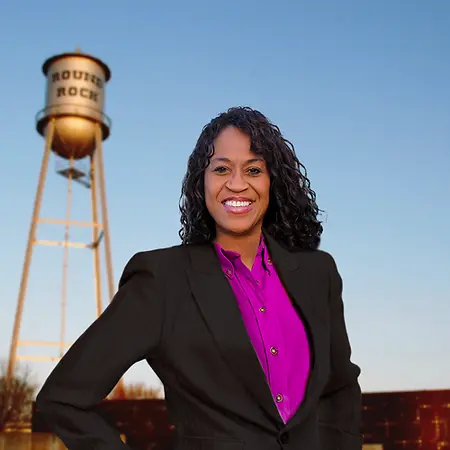
Tina Steiner is a 5th-generation native of Round Rock, a product of Round Rock schools, a 27-year educator, community advocate, and avid volunteer. For the past 21 years, she has served at a disciplinary alternative education placement (DAEP) campus, where she works as a science teacher, social skills instructor, and campus Teacher Master Gardener. In this role, she supports students who face significant academic, behavioral, and personal challenges by creating engaging, hands-on learning experiences that integrate STEM education with social-emotional development. Her teaching philosophy centers on connection, resilience, and meeting students where they are, an approach she often describes as being “the wiggly teacher for the wiggly kids.”
Her work in experiential learning and campus transformation began with a simple act of noticing and care. After observing the state of the campus garden following COVID, she launched a gardening effort that has since evolved into a comprehensive outdoor learning program. After completing the Texas A&M AgriLife Extension Master Gardener certification, she helped develop and maintain multiple raised garden beds, fruit trees, and pollinator gardens. Her efforts expanded further through a nearly $24,000 Sprouts Healthy Communities Grant, which supported the development of a campus farmer’s market, outdoor classroom spaces, and student decompression areas. Through initiatives such as “Takeaway Fridays,” students engage in planting activities that reinforce academic concepts while fostering responsibility and pride, often continuing to share their progress long after leaving her classroom.
Prior to her career in education, Tina held administrative and legal roles, including positions with the Texas State Board of Dental Examiners, Austin Community College’s Equal Opportunity and Affirmative Action division, and a private intellectual property law firm. She is currently a doctoral candidate in education and is preparing for Institutional Review Board submission as part of her dissertation research on student recidivism in DAEP settings. Her work aims to highlight the need for expanded and earlier intervention through alternative education models, particularly as demand continues to grow, with significant waitlists at the high school level. Through both her practice and research, she remains committed to creating learning environments where students are supported, understood, and given meaningful pathways toward long-term success.
Her Interview
Ten minutes with Tina
01What do you attribute your success to?
.As a child, I was the little hyper girl who could never sit still, and I see that same energy in many of the children I work with today. What once may have looked like a challenge became one of my greatest strengths. I learned early on how to take that energy and turn it into purpose, passion, and action so I could do something meaningful with my life.
My success comes from resilience, determination, and a mindset that was shaped by learning to focus on possibility instead of negativity. When one door closed, I refused to stop there, so I found another path. I have always believed that “no” does not mean never; it simply means “not yet.” That belief has pushed me to ask myself what I can build, what I can create, and how I can keep moving forward no matter the obstacle.
What shaped me as a child now shapes how I lead, teach, and encourage others. I want my students to know that their struggles do not define them, and that their energy, their voice, and their differences can become their greatest gifts. I have built my life by turning obstacles into fuel, and that determination still carries me forward every day.
02What’s the best career advice you’ve ever received?
The best career advice I ever received came from the people who saw me long before I fully understood myself. My fourth-grade teacher, Ms. Naylene Hester, never made me feel like that little hyper girl was a problem. Instead of focusing on my energy as a challenge, she gave me things to do and showed me that energy can be guided, not punished.
My middle school principal, Mr. Gene Stokes, had an even deeper impact on my life. Every time I found myself in his office, he never asked, “What did you do?” He asked, “Why can’t you stay in class?” That simple shift from discipline to understanding changed everything for me. It taught me to look beyond behavior and see the person, and that lesson still shapes how I support my students today.
Later, two of my Austin Community College professors, Dave Hill and David Ferris, reinforced that same message. I now serve alongside them, a powerful reminder that meaningful relationships stay with you throughout life. Their influence taught me the importance of truly understanding people, not just reacting to what is visible on the surface.
Each of these educators showed me that the best career advice is not always spoken out loud. Sometimes it is modeled through how you see people, the questions you ask, and the belief you choose to extend to someone else. I will always carry the lesson that someone believing in you can change the direction of your life.
03What advice would you give to young women entering your industry?
I would tell young women entering this field to never lose sight of their why. Education is one of the most meaningful callings, but it is not easy. Some days, the pressure feels heavy, the system feels overwhelming, and the work asks more of you than you expected. In those moments, remember this: you are the steady presence, the encourager, and the helper your students need.
Protect your passion by finding your people early. Seek out veteran teachers, ask questions, and learn from those who have walked this path before you. I am a veteran teacher, and I have mentored many younger educators on my campus, but I have also learned from them. The best educators understand that growth happens through collaboration, humility, and a willingness to keep learning.
Most importantly, surround yourself with a community that pours into you. You cannot pour from an empty cup, and you were never meant to do this work alone. When you build a circle of people who strengthen your purpose, remind you of your value, and help keep your fire alive, you will have the power to stay grounded in your why and continue making a lasting difference.
04What are the biggest challenges or opportunities in your field right now?
One of the biggest challenges in education right now is the declining value society places on the profession. A field that once carried deep respect is now fighting to hold its footing. Schools are closing, teachers are retiring faster than they can be replaced, and those who remain are expected to do more with fewer resources, less support, and growing public scrutiny. The workload has increased, the emotional demands are heavier, and the expectations placed on educators often far exceed what the system is designed to sustain. This erosion of respect and investment affects more than morale; it impacts campus stability, instructional consistency, and ultimately the future of the students we serve. Even so, educators continue to show up, innovate, and advocate, proving that the heart of this profession remains strong even when the system feels fragile.
Another challenge is implementing needed initiatives with fidelity. This is a difficult time for educators who are deeply committed to serving the students who need us most. But within that challenge, I also see a tremendous opportunity, particularly through my research on student recidivism in DAEP campuses. I have seen that many students thrive in DAEP because the classrooms are smaller and the teachers better understand the barriers they face. That shows a clear and urgent need for a true alternative campus model.
My hope is that my research can help make the case for an alternative campus that begins earlier, so students do not have to wait until high school to receive the support they need. Structured, compassionate environments that intervene before students fall through the cracks are urgently needed. If my work can help illuminate that need, it may open the door to building a campus that serves students proactively rather than reactively.
05What values are most important to you in your work and personal life?
The values that guide both my work and personal life are integrity, empathy, and purpose, with each serving as a daily standard for how I make decisions, lead others, and build relationships. In my professional life, integrity means consistency and follow-through; in education, students, families, and colleagues need to know my actions match my words, that I hold myself accountable, and that I will do what is right even when it is difficult. In my personal life, that same integrity shows up as dependability and honesty with my family and community, ensuring that the trust placed in me is never taken for granted.
Empathy informs how I understand and interact with the people around me, both on campus and at home. Professionally, it means looking beyond surface-level challenges or disruptive behaviors to honor each student's and colleague's unique story without immediate judgment. Personally, it drives me to listen actively, offer compassion, and cultivate spaces where others feel genuinely seen, heard, and valued. By leading with empathy across all facets of my life, I can de-escalate tension, resolve conflict constructively, and ensure that human connection always comes before policy or convenience.
Finally, purpose is what keeps me grounded, resilient, and focused on meaningful impact. In my career, purpose is anchored in educational equity, mentorship, and creating environments where young people have the tools and support to thrive. In my personal life, this purpose extends into the relationships and community efforts I pour into, seeking mutual growth and uplift rather than routine. Together, integrity, empathy, and purpose keep my life and career aligned, allowing me to serve others with humility, conviction, and heart.
Join Influential Women and start making an impact. Register now.