Her Story
About Toni
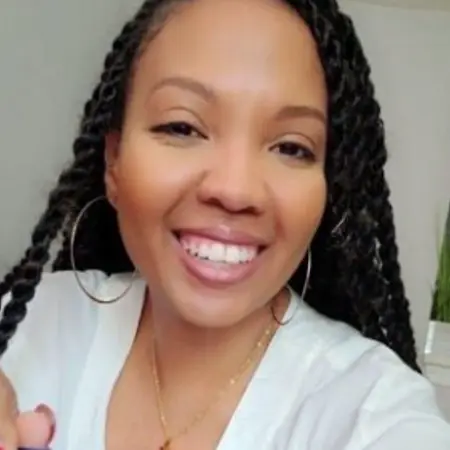
Toni Woodlon, Ed.D., is the Executive Director for Baltimore at Higher Achievement, a nonprofit organization celebrating its 50th anniversary of supporting middle school scholars through academic enrichment, mentorship, and social-emotional learning. Her journey in education spans more than two decades across elementary, middle, and secondary education, beginning as a classroom teacher in Baltimore City Public Schools. Inspired by educators who recognized and nurtured her potential, she has carried forward a deep commitment to ensuring that every student is known, valued, and supported as both a learner and an individual. That early experience continues to shape her leadership philosophy and dedication to student-centered practice. Her path to executive leadership has been both intentional and unexpected. Dr. Woodlon initially joined Higher Achievement as its first-ever Director of Diversity, Equity, and Inclusion, where she led the development of a comprehensive, organization-wide DEI strategy that embedded core values into every aspect of the work. She created inclusive and flexible pathways for staff engagement—including book clubs and facilitated learning experiences—designed to meet people where they are. During a leadership transition, she was asked to serve as Interim Executive Director for the Baltimore region, later stepping into the permanent role after building strong relationships across the organization and community. Her prior experience includes roles as a teacher, assistant principal, and school leader in Baltimore-area schools. Alongside her nonprofit leadership, Dr. Woodlon is the founder of EdAlly Consulting, where she serves as a dissertation coach for doctoral candidates. Her consulting practice emerged from her own doctoral journey, which she completed while navigating significant personal challenges. Supported by her doctoral chair, she began working with early clients and has since built a thriving, referral-based practice serving primarily women balancing professional, academic, and family responsibilities. With a 100% graduation success rate, she provides dissertation editing and coaching services rooted in empathy, encouragement, and holistic support, often centering wellness alongside academic progress. Across all her work, Dr. Woodlon is known for her belief in human potential, her relational leadership style, and her unwavering commitment to helping others achieve transformative success.
Her Interview
Ten minutes with Toni
01What do you attribute your success to?
I attribute my success to a strong commitment to self-work, balance, and harmony in my approach to leadership. I believe that personal growth is foundational and has guided my development more than any external advice. What's interesting is that I've learned to really focus less on balance and more on harmony, making sure that what I'm pouring my energy into is also filling my cup at the same time, and that everything I'm doing is aligned with what I feel is my greater purpose in life. My leadership style is rooted in the understanding that my unique gifts may be exactly what others need, even during times of personal struggle. When I completed my doctorate five years ago, I was going through a difficult time, and I thought I only had just enough to give to myself to complete my process. But my doctoral chairperson saw potential in me that went beyond just my gifts. She saw that even when I thought I didn't have enough to give, what I had might be everything for somebody else. That perspective has been transformative. I started my dissertation coaching business when I was in the thick of having just finished my doctoral journey while also in the thick of my own personal challenges, and yet I was able to start motivating, coaching, and guiding other doctoral candidates cross that finish line. A key factor in my success is my ability to balance a passionate, mission-driven purpose with high-level business acumen. The self-work I've committed to has made it easier to identify places where I can grow and to identify cultures that will accept me, embrace me, and where I can be a value add. This became critically important at this phase in my career, whereas before I wouldn't have been looking for those things. My deep dedication to educational equity continues to drive my work and decision-making. I also have a strong ability to see the big picture while mapping out a clear, long-term vision. This combination of purpose, clarity, strategic thinking, and ongoing self-reflection has been central to my continued success.
02What’s the best career advice you’ve ever received?
The best advice I've received, though it wasn't stated in those exact words, came from my doctoral chairperson's recognition of me during one of the most challenging times in my life. I was going through a divorce while completing my doctorate, and I thought I only had just enough to give to myself to complete my process. But she saw something in me that I didn't see in myself at that moment. Her seeing the potential in me was not just about seeing my gifts, because I had served as a mentor, coach, and even tutor before in different capacities in education. She was seeing more than that. What I took away from her belief in me is that sometimes when you think you don't have enough to give, what you have might be everything for somebody else. This perspective has helped me continue showing up with purpose and compassion, even in difficult moments. It taught me that my efforts and presence can have meaningful impact even when I feel depleted, and that lesson has carried me through both my nonprofit leadership work and my dissertation coaching practice.
03What advice would you give to young women entering your industry?
I would say to commit to doing a lot of self-work. I think oftentimes people, especially in leadership roles, don't take the time while they're in their roles to reflect on how their identities impact the way that they lead or relate with others. I know for a fact that the relationships I have built, especially over these last 10 years of my career, have been because I've really committed to doing a lot of self-work, not just before I stepped into a leadership role, but ongoing. Be astutely aware of who you are, and I mean that in the broadest of ways, not just as a professional but who you are as a person. Think about what you can seek to learn from other people, because all of these things really contribute to the development of a leader. It's not just about a role and training you receive on the job. You've got to commit to learning, and from there you can build trust and genuine relationships with others. As you do the self-work, it's easier to identify places where you can grow. As you advance in your career, it should become easier to identify workplaces and environments that will accept you, embrace you, and where you can be a value add and not just a culture fit. That became critically important to me at this phase in my career, whereas before I wouldn't have been looking for those things. There's a difference between being an early career educator where I just needed to know the rules and policies and what to do, versus now where I still need to know the rules and policies and guardrails, but I also need to really know what my opportunities are for me to shine, for me to thrive, for me to grow. Now I'm helping others that I lead discover that for themselves.
04What are the biggest challenges or opportunities in your field right now?
The challenges in education right now are quite dire, particularly related to funding. Education nonprofits are facing significant funding challenges, and this is really big. At the same time, I'm seeing opportunities in strategic partnerships, and that's been something I've really been focused on here in Baltimore with Higher Achievement. I'm thinking about how I can really foster relationships and strategic partnerships so that we can offer complementary services to communities in a way that fills gaps that otherwise might exist if we work in silos. These collaborations can create more effective and sustainable solutions even in the face of funding constraints. Despite the challenges, I remain focused on leveraging partnerships and innovation to drive meaningful progress and ensure we're serving our communities in the most impactful way possible.
05What values are most important to you in your work and personal life?
Balance and harmony are essential values for me, though I've learned to focus less on balance and more on harmony. They both help me to remember to center alignment as another value. Alignment is key for me. I like to be sure that what I'm pouring my energy into is also filling my cup at the same time, and that everything I'm doing is aligned with what I feel is my greater purpose in life. Boundaries are another core value. As a woman, now as a single mom with two children, one who is pre-med at University of Chicago and a daughter who is a sophomore in high school, plus being a business owner and an executive director for a nonprofit, I've got to make sure that I keep my boundaries clear. I think about the ways that I am putting myself first even as I'm also pouring into others, and what I'm saying no to. Compassion and empathy are values I hold deeply. When working with other people, especially at this stage in my life, I am meeting folks and working with folks, and we've all got things going on. I try to really support folks in a way that is grounded in empathy and compassion. That helps keep me grounded, and with my dissertation coaching business, it helps keep my clients moving forward and focused, and they feel like they're being cared for. Integrity and trustworthiness guide my actions and decision-making. After all, it is important to lead and act with integrity so others will trust you. Resilience, flexibility, and a dedication to lifelong learning help me continue to grow.
Join Influential Women and start making an impact. Register now.