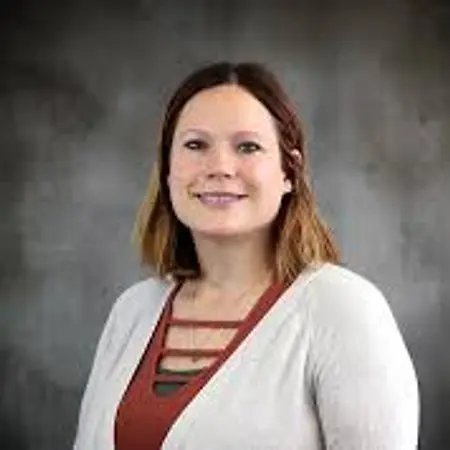
Her Story
About Traci
Traci Masau, MPA is the Dean of Career and Technical Education at Kaskaskia College (Community College District #501) in Centralia, Illinois. In this role, she provides strategic leadership for career and technical programs, working closely with faculty and industry partners to ensure curriculum remains current, relevant, and aligned with workforce demands. Her work is centered on expanding high-quality, career-focused pathways that prepare students for in-demand jobs while strengthening regional economic development.
Her journey into higher education was unconventional, beginning in emergency management as a disaster planner in Florida, where she supported hurricane preparedness and response efforts. After relocating to Montana, she transitioned into the oil field region and initially intended to continue in emergency management. However, she discovered a strong connection to higher education while working at a community college, where she applied her grant management experience to support compliance and development of career and technical education programs. Over nearly six years, she advanced from grant coordinator to Associate Vice President of Career and Technical Education and ultimately Vice President of Academics, discovering a long-term passion for the community college mission and a growing aspiration to one day serve as a college president.
She later moved into a larger institution, Kaskaskia College, as Dean of Career and Technical Education, a role she has held for nearly six years. In this position, she focuses on ensuring programs remain innovative, cost-effective, and responsive to student and industry needs, with a strong emphasis on job readiness, academic quality, and resource alignment. She holds a Master of Public Administration from the University of North Florida and a Bachelor of Science in Criminal Justice and Political Science from the University of South Dakota. Known for her strengths in adaptability, relationship-building, achievement, positivity, and maximizing potential, she remains committed to keeping students at the forefront of every decision and advancing innovation in higher education.
Her Interview
Ten minutes with Traci
01What do you attribute your success to?
I attribute my success to several things. Obviously, a big part of it is my parents and the work ethic they instilled in me. I'm a first-generation college student, so they had to work hard, and growing up, they definitely taught me that you have to work hard but you need to go to college. That instilled that hard work and work ethic in me from the beginning. But I don't want to give all the credit to my parents. I think my life experiences have shaped me in certain ways. The bravery and willingness to leave my comfort zone and do things on my own has built an independence that I instilled in myself. When I graduated college, a friend and I moved to Florida without knowing anybody, without having an apartment or jobs. We just packed what we could fit in our cars and moved to Jacksonville. I lived there for eight years, then moved to Montana, and then here to Illinois. Having that experience in my early twenties made future moves less scary. And then, of course, when you have a family, you want to provide for them and set those examples for your family.
02What’s the best career advice you’ve ever received?
The best career advice I've received, and something that has really stuck with me, came from one of my faculty members. I was busy one day and someone was talking to me about something, and I was really quick to respond while working on something else. He said to me, 'Look, you're listening to respond. You're not listening to hear me. You're not listening to listen.' That is something I have carried with me since that time. Now when I go into meetings, I try to be present. I'm the one that's not on my phone, not on my computer, because I am trying to listen to listen, not just to respond. I even share this advice when I attend conferences with deans and middle management and senior leaders, especially to those that are newer in their careers.
03What advice would you give to young women entering your industry?
The advice I would give is that you are in control of balancing your time and saying yes or no. When you're young and trying to establish a career, you're going to work hard and say yes to all the things. I felt like early in my career, when a VP or president would ask if I wanted to do something, be part of a group, or be a representative in an organization, I felt like I couldn't say no, and I didn't want to because I was trying to build a career for myself. But then you overextend yourself, and it's hard to get out of that. A supervisor is not going to tell you to work more or work less. You're in control of working until seven o'clock. I've told this to other deans who are working every night until seven, that nobody is telling them to do that. The work is always there tomorrow. It's about being selfish with your time and understanding work-life balance. I think a lot of what we read suggests the younger generations are already better in tune with their mental health and what they need, but if someone had told the younger me to say no to organizations because in three years I'd have a kid and couldn't manage it all, it would have been hard to listen to.
04What are the biggest challenges or opportunities in your field right now?
The biggest challenges in higher education right now are the rapid changes in technology, with AI being a major one, but it's not just limited to that. People are looking at the value of education right now, and if we're not responding rapidly to AI changes, to industry changes, and technology changes, they're not going to see value in our college and our programs. That's a challenge for higher education. For example, a year ago when we met with advisory committees for business technology, office technology, and computer information technology, nobody was talking about AI. This year, when we met with our advisory committees made up of industry representatives, they said they want to know on resumes that our students are learning AI. They don't have to be masters in it, but they want to know students have experience with it. This challenge is also an opportunity. If you are being responsive and leading with a student-centered, student-first mindset, which I think comes naturally to me from my background in public administration where you want to give back, it's really about the impact you can make. I work hard to make sure we have valuable programs that are meaningful to students. That's what I'm building my career on and what I take value and pride in.
05What values are most important to you in your work and personal life?
The value most important to me is integrity. To me, integrity is doing things when people aren't looking. I don't do things just for show or for recognition. I like to do things that aren't noticed. What matters to me is doing the right thing when no one is looking. At my last institution, one of the reasons I left was because there were things going on where I thought, where did this come from? I don't agree with this, this doesn't seem right. That challenged me, and it was a reason I left, because it did not fit my values. I wasn't going to lower what I valued or what I wanted in myself for work to meet the agenda of someone else. I don't share that very often, but I learned a lot from that experience about staying true to my values.
Join Influential Women and start making an impact. Register now.