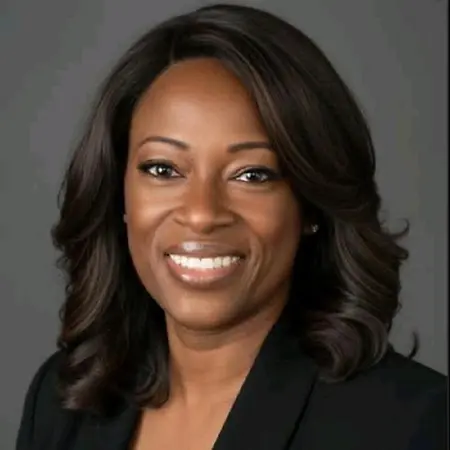
Her Story
About Tracie
My nonprofit career began in 2000 when I was working for a temp agency at a phone company and saw an ad for a fiscal assistant position at Big Bend Hospice. That's where I met Claire Benjamin, who became my mentor and helped me recognize my natural ability for reconciliations and finance. She explained to me the importance of working in nonprofit and giving back to the community, and the longer I worked there, the more I understood that. I started as a fiscal assistant and got promoted during my 5 years there. When Claire moved to Boys and Girls Club, she called me to join her, and of course I went because for me, a nonprofit is never about the money, it's always about giving back to the community. I stayed at Boys and Girls Club for 3 years working under Claire. After having my first child, I joined Florida Healthy Kids as a senior accountant, where I stayed for 8 years and managed a $484 million budget, ensuring that all kids in Florida had insurance. My job was to pay providers and ensure dental and medical plans were paid. I then moved to Early Learning Coalition as a finance manager, and after only 9 months, the CEO Matthew Ducey asked me to be interim CFO. Within 30 days, he made me permanent CFO. I was CFO there for about 3 years, managing a team of 21 people responsible for finance, contracts, and IT. After taking 10 months off for family matters, I worked for the state of Florida's DCF as an auditor, monitoring nonprofits to ensure proper spending. Then I saw that Big Bend Cares had a CFO position, applied, and was offered the job within two weeks. Now I lead a team of 4, managing a $26.5 million budget and approximately 8 grants to serve HIV-positive clients with housing, medical care, pharmacy services, mental health, transportation, and education. I'm very hands-on, preparing financial statements, grant reports, and invoices myself. I'm not the type of CFO who just passes down orders - I'm a working CFO who is deeply involved in every aspect of the financial operations.
Her Interview
Ten minutes with Tracie
01What do you attribute your success to?
I attribute my success to having empathy and sympathy for the communities I serve, because I can see myself in a lot of those situations and family members too. Growing up in a very small rural town with a population less than 2,000, I experienced hardship firsthand - we were one paycheck away from losing everything, and that actually happened to us. I was one of the blessed and fortunate ones who actually made it out and was able to be somewhat successful. I set goals for myself, and I'm the type of person that if you tell me I can't do something, I will do it. I'll never forget when my high school principal told me I was going to end up in the projects with a bunch of children, and everything in me wanted to prove him wrong. I personally think that because I wanted to prove him wrong, that was one of the things that gave me the incentive to be who I am today. My mentor Claire Benjamin was also very influential - she encouraged me to go back to school and helped me recognize my natural abilities. I also believe that obtaining my bachelor's, master's, and Certified Fraud Examiner certification moved me forward in my career. But most importantly, I work from the heart and lead with empathy, which drives me to ensure we have the funding to serve people who would otherwise be lost in the community.
02What advice would you give to young women entering your industry?
I would definitely say you have to work in an organization that you feel passionate about. Don't ever stay in a job that's a dead-end job - if you know you're not going anywhere, go ahead and move away from that job, because you'll never be happy there and you'll never advance. That actually happened to me when I was at Florida Healthy Kids - I stayed there for 8 years in that same role with nowhere to go. Make sure it's something that you can handle and that you want, and if you have children, don't ever work a job that you have to be ashamed to mention to your child. Set goals for yourself and actually work towards those goals, and make sure you try to accomplish them. I always tell people that when you obtain a degree, it is just proving that you can set a goal and accomplish it. And don't look down on candidates just because they don't have a degree - just because they don't have a degree doesn't mean they wouldn't be a great fit for your organization or a great investment for your team. I hired one of my accountants who wasn't degreed because she had transferable skills I could use to better the department. Transferable skills matter, and sometimes the school of hard knocks is the best education you can have.
03What are the biggest challenges or opportunities in your field right now?
The hardest thing is that we unfortunately have to turn people down because we max out with our funding. We're only allocated so much from the state of Florida, and we only receive so much from 340B pharmacy rebates, which have changed dramatically - 340B expenses went up and revenue went down because they restricted a lot of medications and took one of the higher dollar HIV medications off the formulary. Years prior, if grant funding ran out, we would still continue to serve clients and pay for it from our general admin funds, but we're not that fluid anymore. We don't have the funding to be able to do that. In a perfect world, I wish there was an unrestricted grant available that would allow us the opportunity to serve more clients so we don't have to turn anybody away. I remember one client we had to turn away who was living in a house that really should have been condemned, and we just couldn't help her. It's one of those things where you really want to just take money out of your pocket and find them a house, but we're not allowed to do that. One of the downsides to working here is that I become too emotionally attached to some of the situations we're involved in. If I could save the world, I honestly would, but I can't save everybody.
Join Influential Women and start making an impact. Register now.