Influential Woman · Veterinary Medicine/ Coaching
Tracy Buckholz
Practice Manager, Licensed Veterinary Technician, Professional Coach, Veterinary Hospital Consultant, Veterinary Superheroes, PLLC & Peak Potentials Coaching
Puyallup, WA 98373
Her Story
About Tracy
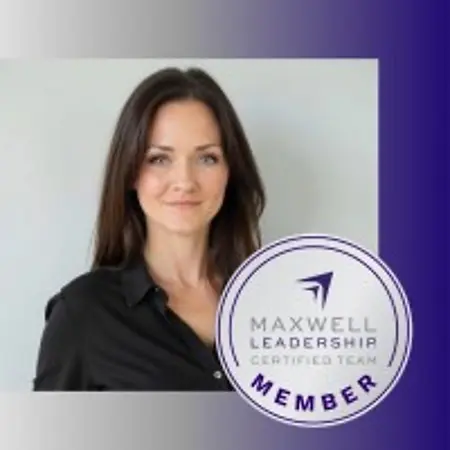
Tracy Buckholz, LVT, is a leadership development specialist, certified coach through the John Maxwell Team, and veterinary practice growth expert with more than 20 years of experience in veterinary medicine and organizational leadership. Based in Puyallup, Washington, she is known for helping individuals, teams, and organizations move beyond reactive survival mode into structured, sustainable growth.
Tracy’s career began at just 14 years old under the mentorship of her family veterinarian (Dr. Christine Carlson of Blaine Animal Hospital), where she developed a deep foundation in clinical care and patient treatment. From there, she advanced through every level of hospital operations—technician, supervisor, assistant manager, and hospital administrator—building a comprehensive, working knowledge of what it truly takes to run a high-performing veterinary practice from the ground up.
Today, as the founder of Veterinary Superheroes, PLLC, Tracy works exclusively with veterinary hospitals, combining hands-on clinical expertise with full-scale operational management. Her experience spans medical team training, client service systems, HR and compliance, financial oversight, and the development of operational infrastructure that allows practices to function with clarity and consistency. What sets her apart is not just what she knows—but how she works. Tracy embeds within hospitals, training teams in real time, stepping onto the floor to support patient care and workflow, and serving as relief staff when needed to maintain stability and continuity.
Her ability to move seamlessly between leadership strategy and day-to-day execution becomes especially critical during high-stakes moments such as ownership transitions, organizational restructuring, and leadership turnover. In these environments, she helps preserve operational integrity, maintain team alignment, and ensure that culture, standards, and systems carry forward—even as the business itself evolves.
Driven by a passion for people and culture, Tracy’s work is grounded in servant leadership and a commitment to developing strong, accountable teams. She partners with hospitals to strengthen team dynamics, clarify leadership structures, and implement systems that support both performance and workplace culture. Her approach is rooted in action, accountability, and empowerment—equipping leaders to create environments where teams are not only capable, but confident and aligned in their roles.
In parallel, Tracy is the founder of Peak Potentials Coaching, where she works with individuals and organizations across industries to develop leadership clarity, strengthen decision-making, and turn goals into measurable results. Across all of her work, she is recognized for her ability to quickly assess complex challenges, identify the leadership patterns driving outcomes, and implement solutions that hold under real-world pressure.
At the core of Tracy’s philosophy is a simple belief: strong leadership creates clarity. And when clarity is present, teams don’t just function—they move with purpose. In veterinary medicine, that shift transforms what often feels like constant motion into a coordinated, intentional system where people, processes, and leadership work in alignment.
Her Interview
Ten minutes with Tracy
01What do you attribute your success to?
I attribute my success to a combination of internal drive and the opportunities I chose to step into when they were presented.
I was raised in a household where hard work wasn’t optional—it was expected. There was always an emphasis on doing your best, continuing to grow, and not staying stagnant. That mindset became foundational. You can be given opportunities, but without the willingness to push yourself, evolve, and take ownership of your growth, they don’t turn into anything meaningful.
At the same time, I’m very aware that access matters. My career began because Dr. Christine Carlson gave me an opportunity at a young age—welcoming me into a veterinary hospital and training me within a very small, close-knit team. She taught me that veterinary medicine is a work of the heart, and what it should look like when it’s done well. More than anything, she showed me what true mentorship looks like—investing in people, setting a standard, and creating space for someone to grow into their potential.
That foundation was expanded by Dr. Susan Shirley, who trusted me with increasing levels of responsibility and gave me the space to grow into the operational and leadership side of veterinary medicine. From clinical skill development—like performing ultrasounds—to full involvement in business operations, those experiences shaped how I understand both the medicine and the business that supports it - and now she says it wouldn't run without me here because she doesn't do any of that anymore.
But more than anything, I’ve been willing to step fully into the roles I was given. I didn’t stay in the lane I was hired for—I learned the systems, took on responsibility, and worked to understand how the entire hospital functions. Being surrounded by strong, capable women who set high expectations absolutely influenced me, but choosing to rise to those expectations is what ultimately made the difference.
Success, for me, has been built at the intersection of work ethic, opportunity, and the decision to fully engage in both. If I hadn't been given the opportunity to work in places like this and surrounded by these other amazing women, I wouldn't be where I am.
02What’s the best career advice you’ve ever received?
The best career advice I’ve ever received wasn’t a single sentence—it was something I learned through the people who mentored me: don’t wait to be told what to do next.
I was surrounded early on by leaders who didn’t just teach me how to do the work—they expected me to grow beyond the role I was in. They created space for me to step up, but they also held a standard that required me to rise to it. That shaped how I approached my career.
At some point, I stopped seeing my role as just a list of tasks and started asking bigger questions. How does this system actually work? Where are the breakdowns? What would make it better? That shift—from doing assigned work to taking ownership of outcomes—changed everything.
I learned that titles don’t define your impact. Your willingness to understand the bigger picture and take responsibility for more than what’s assigned is what creates growth. You can’t wait for someone to outline the path for you—you have to step into it, often before you feel completely ready, and figure it out from there.
That mindset is what opened the door into leadership and operations for me. I wasn’t waiting for growth to be handed to me—I was already moving toward it.
03What advice would you give to young women entering your industry?
The biggest piece of advice I can give is to commit yourself to being a lifelong learner. There isn’t a point in this industry—or really any industry—where you’re done learning. Medicine is constantly evolving, and if you’re not intentionally growing with it, you fall behind. This isn’t something where you go to school, get your credentials, and you’re set. You have to stay curious, stay engaged, and keep building your knowledge over time.
The second piece is just as important: learn how to advocate for yourself.
There’s a culture in veterinary medicine where being the one who stays late, always says yes, and shows up no matter what is often seen as the standard. I’ve lived that. But if you don’t learn how to set boundaries and communicate your value, it’s very easy to give a lot without ever seeing that reflected back in your growth, your compensation, or your opportunities.
Advocating for yourself isn’t about being difficult—it’s about being clear. It’s knowing your worth, being able to articulate it, and having the confidence to ask for what aligns with that. That includes things like asking for a raise, defining your role, and pushing for growth instead of waiting for it to be recognized.
So if I had to simplify it, I’d say this: commit to continuous learning, and learn how to clearly advocate for yourself. Those two things will shape your trajectory more than almost anything else.
04What are the biggest challenges or opportunities in your field right now?
One of the biggest challenges in veterinary medicine right now is that we are losing people from the field at an alarming rate. We also have one of the highest suicide rates across professions, and while it’s often labeled as compassion fatigue, I don’t think that fully captures it. A lot of what we’re seeing is the result of prolonged emotional strain combined with the reality of how veterinary medicine is structured.
Unlike human healthcare, there isn’t a system where insurance or the state steps in to cover care. Pet insurance is inconsistent, and payment is typically required upfront. That puts veterinary teams in the position of absorbing the emotional and financial stress of clients who are struggling. We hear things like, “Why don’t you just do it for free?” or “Didn’t you get into this because you love animals?”—and when care isn’t possible, it’s often interpreted as a lack of compassion rather than a limitation of resources.
On top of that, there are moments that go far beyond frustration—threats, emotional outbursts, and even online attacks against veterinary professionals. It’s a level of pressure that builds over time, and it’s taking a real toll on the people in this field.
At the same time, veterinary medicine isn’t a high-margin industry. The cost of care reflects significant overhead—equipment, staffing, medical standards—but wages don’t always keep pace with the demands of the job. Most people enter this field because they’re passionate about it, not because of the financial return. As the cost of living continues to rise, that gap becomes harder to sustain, and people start to feel both financially and emotionally depleted.
We saw this intensify during COVID, when teams were overextended and many ultimately chose to leave the profession altogether.
But within that challenge, there’s also a very real opportunity.
We have the ability to redefine what this profession looks like from the inside out—by strengthening leadership, improving systems, and creating environments where people feel supported, capable, and valued. My focus is on helping veterinary hospitals build that kind of stability—where teams aren’t just getting through the day, but are able to grow, develop, and stay in the field long-term.
Because at the end of the day, this is a people-driven profession. There isn’t a system or technology that can replace the level of care, judgment, and connection that veterinary teams provide. If we want this field to remain strong, we have to invest in the people doing the work—ensuring they are not just competent, but supported, fulfilled, and able to sustain a career here.
05What values are most important to you in your work and personal life?
At the core, the values that guide me—both in my work and in my personal life—are growth, accountability, and service.
I believe deeply in being a lifelong learner. There isn’t a point where you’ve “arrived.” Whether it’s medicine, leadership, or life in general, there is always another level of understanding, another skill to develop, another way to improve. That mindset shapes how I show up—not just for myself, but for the people I lead, coach, and raise. I want my kids to see that growth isn’t optional—it’s part of who you are and how you move forward.
Advocacy is another core value for me—both advocating for myself and helping others learn how to do the same. Communication is a huge part of that. Being able to set boundaries, articulate your value, and speak clearly about what you need is essential, especially in an industry where giving more of yourself is often expected. I believe people deserve to be supported, respected, and recognized for the work they do, and I spend a lot of my time helping others step into that.
My work is grounded in servant leadership, but not in a passive sense—it’s about truly understanding what people need in order to succeed and then actively building that structure around them. In veterinary medicine, we often promote strong technical team members into leadership roles without giving them the tools to lead. That creates frustration, breakdowns in culture, and ultimately burnout. One of my core values is making sure people are set up to succeed—not just handed responsibility and expected to figure it out on their own.
At the heart of everything I do is a commitment to the people in this field. Yes, veterinary medicine is about the care we provide and the lives we impact—but it only works if the people doing that work are supported, competent, and fulfilled. I want to help create environments where teams aren’t just surviving the day, but actually building sustainable, meaningful careers.
That same value carries into my personal life. I believe in showing up fully, following through on what I say I’ll do, and creating stability and clarity for the people who depend on me—whether that’s my team, my clients, or my family.
Ultimately, my goal is to extend that impact—helping more people build stronger teams, healthier cultures, and careers that they can actually sustain and feel proud of. Because when you get the people right, everything else starts to work the way it should.
Join Influential Women and start making an impact. Register now.