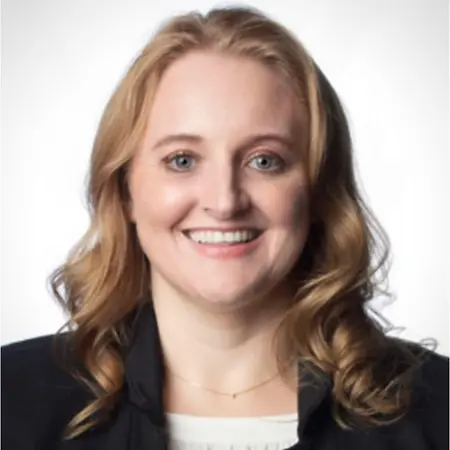
Her Story
About Trisha
Trisha Bielski is a nurse, healthcare consultant, and retired Army Lieutenant Colonel whose career has been defined by service, leadership, and an unwavering commitment to patient care. Based in San Antonio, she brings more than twenty-five years of nursing experience spanning critical care, trauma, flight nursing, primary care, and military medicine. Trisha began her nursing journey after earning her Bachelor of Science in Nursing from the University of Wisconsin–Oshkosh and joining ROTC, which launched a distinguished twenty-year career in the United States Army. Throughout her service, she held leadership roles across a wide range of military healthcare environments, including combat and forward-operating settings where she cared for wounded service members. She later earned dual master’s degrees from San Diego State University as both a Critical Care Clinical Nurse Specialist and a Primary Care Nurse Practitioner, further strengthening her expertise in advanced nursing practice and healthcare leadership.
During her military career, Trisha served in several high-level clinical and administrative leadership positions, including overseeing critical care nursing operations at major military medical centers such as Brooke Army Medical Center and Walter Reed National Military Medical Center. She considers caring for wounded warriors during deployments to be the most meaningful work of her career, experiences that reinforced her dedication to advocacy, mentorship, and compassionate leadership. Known for approaching every challenge through the lens of a nurse, she has built her professional philosophy around honesty, integrity, lifelong learning, and the development of others. Trisha credits both strong mentors and difficult leadership experiences for shaping her own leadership style, teaching her the importance of accountability, resilience, and empathy in high-pressure healthcare environments.
Since retiring from military service in 2021, Trisha has transitioned into the civilian healthcare sector as a senior consultant with Health Management Associates, where she advises healthcare organizations on best practices, policy development, operational strategy, and staff mentorship. At the same time, she continues to expand her knowledge and influence by pursuing a Master of Science in Health Law and Strategy at New York University. Passionate about supporting fellow veterans, Trisha hopes to dedicate the next phase of her career to improving veteran-focused healthcare and advocacy efforts, believing that veterans often connect most deeply with those who have shared similar experiences. Grounded in Army values such as loyalty, duty, respect, and personal courage, she remains committed to making meaningful contributions to healthcare systems while mentoring the next generation of nurses and healthcare leaders.
Her Interview
Ten minutes with Trisha
01What do you attribute your success to?
I really think it's having two parents that were just hard workers. My mom is a retired nurse, my father is a retired carpenter construction worker, and they're still working around the house and just busybodies. Seeing them so dedicated to their jobs and family gave me inspiration and drive. I'm a go-getter like them, so I think they are definitely the inspiration behind everything I've accomplished.
02What’s the best career advice you’ve ever received?
A colonel told me when I was transitioning out of the military that I would go through seven or eight jobs before I really decide on what feels right for me. It wasn't necessarily advice, but more just being real with me about what happens. The reason this happens is because when you're in the military, you don't really get a choice of what you get to do. You're a certain rank, you do this job, here's your next assignment. You just suck it up and do it for two or three years, then move to the next job, and that's your whole career. So when you finally get out, you're still trying to figure out where you really fit. I've already gone through three jobs in the five years I've been out, and that's part of the transition.
03What advice would you give to young women entering your industry?
If we're talking about nursing, it is a difficult field of work. It can be thankless most days. But that one time you get a patient that smiles at you, or says thank you, or gives you a hug, really puts it all together and puts it into perspective. You have to get thick skin, because it is a very difficult, draining job at the same time with all the responsibilities that you have on your head. But stick with it, because it's still a great profession, even though there's so much that we have to do. Never stop questioning, and never stop learning, because when you stop doing both of those, then that's time for you to move on. That's what I used to tell my students when I was a clinical instructor.
04What are the biggest challenges or opportunities in your field right now?
Healthcare is so broken, and I think that's the biggest challenge. As you get older and get more experience and educate yourself, you notice things differently. I have drastically changed my outlook on healthcare from when I first started my education to now, and it's completely different because my eyes are more open. I realize we've been lied to a lot, and it makes you really second-guess everything you've done through your career, like did we do the right thing? Healthcare as a whole for the United States is broken. It's very political, very high cost, and we don't have great outcomes. So how do you make it better? There's no right solution. It's really challenging to work in that realm because there's so many different pieces that are broken. I can't boil the ocean, so I'm trying to figure out how I can just maybe help in this little component of it. Everything boils down to power, greed, control, and money, and if you took all of those away, things would be a lot better.
05What values are most important to you in your work and personal life?
Honesty and integrity are most important to me. These values come from the military, where we had an acronym called LEADERSHIP for our Army values: Loyalty, Duty, Respect, Honor, Selfless Service, Integrity, and Personal Courage. That's who I am. I grew into these values, and I pride myself on honesty and integrity. I expect others to do the same, but I have to remind myself that's not necessarily the case with everyone. I know that I can sleep well at night because you know who you're getting with me, so either you like it or you don't.
Join Influential Women and start making an impact. Register now.