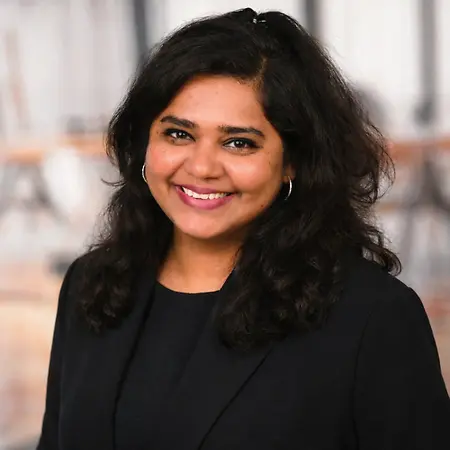
Her Story
About Urmila
Urmila is a Postdoctoral Research Fellow and Translational Scientist at Harvard Medical School and Beth Israel Deaconess Medical Center. What fascinates her most about biology is the remarkable resilience of living systems trying to restore balance, and it is that curiosity that has shaped everything she does. Growing up in India and training across two continents, she has invested herself in the research at the intersection of liver disease, oncology, and RNA therapeutics, using clinically relevant mouse models to translate mechanistic insight into therapeutic strategy. Her work has been recognized by peer-reviewed publications, travel awards, invited presentations at major conferences including the RNATx and Aspen Cancer Conference, and recognition through the Founders Fellow Award in cancer research. Every experiment carries a quiet urgency: somewhere, a patient is waiting for a treatment that does not yet exist. She intends to help build it.
Her path here was not without obstacles. She arrived in Boston in January 2020, full of excitement about this new chapter. By March, the pandemic had brought everything to a halt, including her new position. Facing a thirty-day deadline and two-year home residency rule on visa meant leaving the country, letting go of her dream of working at Harvard and being separated from her husband for two years. A dear friend pointed her to a door she didn’t consider before, and she secured her current position at Harvard within twenty-one days. That experience taught her something she has never forgotten: the difference between a career that continues and one that ends is very often not talent, but timing, opportunity, and whether someone is there when it matters.
That lesson impacted her deeply and shapes everything she does outside the laboratory. As President of the BIDMC Postdoctoral Association, she has built career development and networking programs together engaging over 250 researchers. She has also directly mentored PhD, master's, and undergraduate trainees, supporting their growth not just in experimental technique but in how to think independently and build a scientific career with intention. She is a consecutive recipient of the RNATx Women-in-Science Inclusivity Award, and believes, above all, that it is her responsibility to be the person who shows up for others the way someone once showed up for her.
Outside the lab, you will most likely find her connecting with people and learning from their life stories – the lessons they have lived, the perspectives they carry, and enjoying the ideas that emerge when curiosity meets good conversation. Looking ahead, her focus is to deepen impact by translating rigorous science into meaningful outcomes for patients, while continuing to mentor, collaborate, and build environments where both science and people can thrive. If that resonates, she is always open to a thoughtful conversation, surely over a cup of coffee!
Her Interview
Ten minutes with Urmila
01What do you attribute your success to?
I attribute my success to my family, my partner, my friends, and above all, to a curiosity that has never been content to stay in one lane. What has kept me going, and genuinely excited, is the willingness to say yes to opportunities that feel meaningful, even when the path ahead is not entirely clear. It has led me across continents and into questions that did not yet have answers. It has also led me inward, toward a deeper understanding of who I am, what I value, and what kind of scientist and human being I want to be.
I also attribute a great deal to the mentors who believed in my ideas before the results existed to justify that belief. Science is never done alone. I have been fortunate to work alongside people who pushed my thinking, held me to the highest standards, and showed me, by example, what rigorous, generous, purposeful science looks like. And to the friends who showed up at the moments that mattered most. Sometimes success is simply the product of someone thinking of you when a door opens. I have experienced that firsthand, and I have never forgotten it.
I also know that I have been deeply blessed with opportunities that shaped me, challenged me, and ultimately made me who I am today. Not everyone gets those opportunities, and I do not take a single one for granted. That awareness is perhaps the greatest driver of everything I do for others.
And ultimately, success to me is defined by three quiet questions I ask myself: Did I take meaningful steps to grow and move closer to my goals? Did I give my best to everything I was entrusted with? And did my presence make a difference, for good? If the answer to all three is yes, that is a successful day. That is a successful life.
02What’s the best career advice you’ve ever received?
The best career advice I have received, through mentors and through experience, comes down to three things.
First, always understand the bigger picture. In science, it is easy to get lost in the details of an experiment and lose sight of why it matters. I remind myself constantly: how is this work going to translate into a therapy someday for somebody who is waiting for it? That question has shaped every research decision I have made and kept my work grounded in purpose rather than just process.
Second, never be afraid to ask questions. In science especially, asking the right question is everything. A well-framed question is the foundation of good science. The researchers who have made the greatest impact are rarely the ones with all the answers. They are the ones who asked the questions that mattered.
And third, surround yourself with people who are better than you and who have already reached the place you wish to reach. Not to intimidate yourself, but to grow. The room you choose to sit in shapes the scientist, the leader, and the person you become. Choose your rooms wisely.
03What advice would you give to young women entering your industry?
When I received my offer to work at Harvard, I did not consider myself the smartest or the most hardworking person. I knew there were many others who were more accomplished, more prepared, more everything. But the opportunity came to me. And in that moment I made a decision: I would not waste it. I would not spend it wondering whether I deserved it. I would simply make the most of it, every single day.
That experience taught me the most important advice I could give to any young woman entering this field: you do not need to feel ready. You do not need to feel worthy. Self-doubt will come, and it will come often. Do not let it make the decision for you. Show up anyway, fully and completely, and commit to making the most of every opportunity that comes your way.
And when you do show up, take up space. Intellectually, professionally, and physically in the room. Do not wait. Do not shrink. Your ideas deserve to be heard at full volume, and the field is better when they are.
04What are the biggest challenges or opportunities in your field right now?
The RNA therapeutics field is at one of the most exciting inflection points in the history of medicine. The success of lipid nanoparticle-delivered mRNA vaccines during COVID-19 proved that RNA-based medicines can work at global scale, opening the door to an entirely new era of therapeutic possibility. For diseases like liver cancer and metabolic liver disease, where patients have waited decades for meaningful treatment options, that door could not have opened at a better time.
Within this broader landscape, microRNA therapeutics face a uniquely steep climb. While other RNA modalities have achieved regulatory approvals, no microRNA therapeutic has yet crossed that line despite more than a decade of clinical effort, and the reasons are real and significant. Delivering them precisely to the right tissue, avoiding unintended immune responses, and chemically stabilizing them without disrupting their function are challenges that remain unsolved in ways that simpler RNA modalities have largely moved past. These are not reasons for pessimism, they are reasons for rigorous, creative, patient science. The opportunity lies in getting the biology right before the clinical investment, and I genuinely believe we are closer than we have ever been.
05What values are most important to you in your work and personal life?
The values that matter most to me, in work and in life, come down to a few things I return to again and again.
The first is mutual respect and gratitude. I believe that how you treat people is as important as what you produce. I have been shaped by mentors, friends, and opportunities that I did not earn alone, and that awareness keeps me grounded in genuine appreciation for everyone who has contributed to my journey, making me the person I am today.
The second is giving back. I have been blessed with opportunities that opened doors for me, and I feel a deep responsibility to open those same doors for others. That is why I mentor, why I organize postdoc career development programs, and why I show up for people whenever I can. Giving back is not something I do alongside my work. It is woven into the fabric of it.
The third is resilience. Life is not a straight line. Science and careers are not straight lines. What has carried me through every one of those moments is the quiet determination to keep going, one step at a time, and the belief that difficulty is not a signal to stop but an invitation to find another way.
And finally, human connection. It is central to everything I do. The best science, the best ideas, and the most meaningful moments of my career have all come from genuine connection with people whose perspectives I had never encountered before. Staying curious about people, their stories, their struggles, and their dreams, is as important to me as staying curious about science.
Join Influential Women and start making an impact. Register now.