Her Story
About Utica
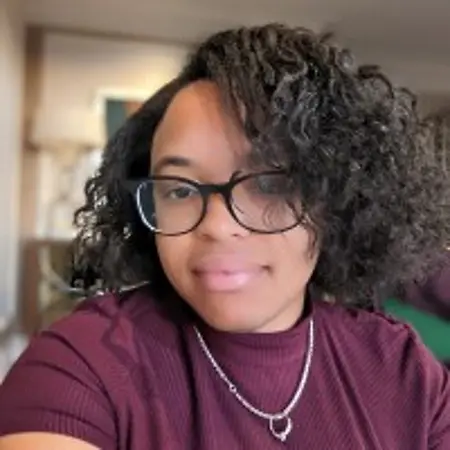
Utica Craig is a dedicated child welfare professional and Child Protective Investigations Supervisor I at the Texas Department of Family and Protective Services, where she has served full-time for over five years. Her career has been shaped by both personal experience and a commitment to protecting vulnerable children. As a survivor of sexual abuse and emotional trauma, Utica has long been driven to be the support she wished she had while growing up. After earning her Bachelor of Arts in Criminology from the University of South Florida, with minors in Psychology and Sociology, she began her career as a Digital Communications Dispatcher with the Hillsborough County Sheriff’s Office. In that role, she answered 911 calls and coordinated with deputies and other agencies for three years, developing the skills to support people during their most critical moments and to de-escalate crisis situations with calm, decisive action.
Her journey into child welfare began when she transitioned to her first role as a Child Protective Investigator, where her very first case involved removing children from a home in a situation that mirrored her own childhood experiences. This moment affirmed her calling to protect children and guide families through difficult circumstances. After relocating to Texas, she continued her work as a Child Protective Investigator for five years, mentoring new hires for two of those years, training protégés, and providing ongoing support. Her dedication has been recognized with several honors, including the Caseworker of the Year Award (2022), a mentor recognition award, and a five-year tenure award.
Currently, as a Child Protective Investigations Supervisor, Utica manages six active caseloads while mentoring her team and ensuring high-quality investigative outcomes. She uses organized tracking systems and fosters open communication with her staff, balancing the emotional demands of the work with strategic leadership. This role continues to provide personal healing while allowing her to make a meaningful difference in the lives of children and families, keeping them safe while striving to preserve family unity whenever possible.
Her Interview
Ten minutes with Utica
01What do you attribute your success to?
Honestly, I would attribute my success to my husband. When I was in college, he told me not to worry about working - we were 18, 19, and he said, hey, don't worry, I got you. He's always been my support, always pushing me. Every time I'm doubting myself because of two bad cases back-to-back and I'm mentally exhausted, he reminds me that I'm fine and I'm doing what I need to do. When I would get rewards and recognition at work, he would bring those to my attention and remind me that I am doing a good job and that I am helping people. I really need to have that support at home because you need it when it comes to this job. My husband definitely pushes me and doesn't let me give up. Sometimes I say I can't do this anymore, I want to leave, I want to go back to dispatch because that was easier. And he's just like, no - he reminds me that I'm doing this because I needed this when I was little, so let's go, let's keep it going. He's my big cheerleader, and honestly, this work has helped me heal.
02What’s the best career advice you’ve ever received?
The best career advice I received came from my training supervisor in Tampa during a very hard day. I was feeling overwhelmed and wanted to leave because I was being micromanaged during the mid-stage of training where I was on my own but still being closely watched. She told me that she went through remedial training herself, and now she's a supervisor - so I was fine. She always told me to keep my head up, ask questions, and remember that nothing is a dumb question. She said to just do my best, and if I do my best and it doesn't work out, that's fine because there are other opportunities in the world. That advice really helped me break out of the tunnel vision I had, where I thought if I failed at this, I failed at everything. I was so stressed out, but she helped me see beyond that. Now I keep that advice in mind, and I also express it to my unit - I tell them the same things she told me.
03What advice would you give to young women entering your industry?
My advice to young women entering this industry is to understand what you're getting into when it comes to child welfare. As women, we may be more emotional creatures, we are more nurturing, and we have that nurturing capacity - and those are powerful qualities for this work. But you need to make sure you have support and that you have your emotions regulated, because you're going to have some experiences that you may have never even come close to experiencing when you were growing up. Also, remember what the bigger picture is, what the goal is, what the mission is - it's to keep children safe, but also to keep families together. So I would say to young women, go for it, come join us. I know it's terrible in the news and things like that, but child welfare is a very rewarding field. Once you get into it, there's so much more different aspects of it that you can find your footing, and you can be very successful.
04What are the biggest challenges or opportunities in your field right now?
The biggest challenges in my field right now are twofold. First, there's honestly a lack of resources in the state of Texas. When we're working with these families, we want to get them connected to services and things like that when they need it, but trying to find resources that match each family and would benefit that family is difficult because no family is uniform - every family is different. So finding things that fit their unique needs is probably one of the biggest challenges I have faced. The second major challenge has been being in this new role as a supervisor. I've been in the role for about 10 months, but I'm still grasping it. Going from just worrying about your caseload to worrying about six caseloads - man, that's been a challenge. But as I'm going, I'm using what I used to manage and organize myself, and I'm just working to turn it into a bigger scale. I'm using spreadsheets and tracking logs and all that type of stuff, just on a bigger scale now because I am responsible for six caseloads. So that's my ongoing challenge right now.
05What values are most important to you in your work and personal life?
The values most important to me in my work and personal life are integrity, ethics, honesty, and transparency - I feel like those all go hand in hand for me. In my personal life, I have to be very open with my family and friends, very transparent and trustworthy. In my professional life, integrity and ethics are very important because our position has such a high expectation of credibility. You cannot falsify documentation, you cannot go out and not engage with families appropriately. If you mess up or do something wrong, you need to have that integrity to go and let your supervisor know, let someone know, and get some help. I once forgot to read a required form to someone, and I immediately called my supervisor and told her. It was such an easy thing to correct - all I had to do was go back and read it - but if I hadn't said anything and it went forward, I could have gotten in trouble. I would also add open-mindedness as a core value. I feel like you have to have integrity, transparency, and open-mindedness in your life, because with this job, you also have to be creative and think outside the box. In your personal life, you may have a situation come up where you have to be creative and think outside the box too, so these are similar values that apply to both.
Join Influential Women and start making an impact. Register now.