Influential Woman · Instructional Design
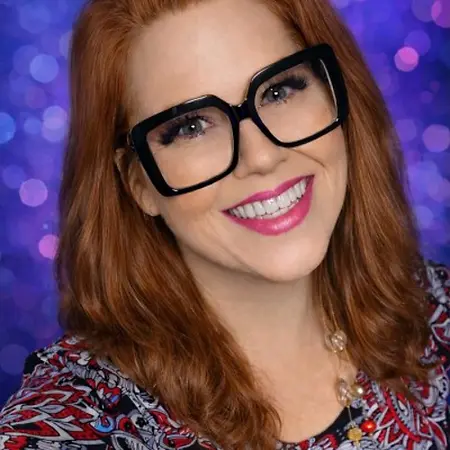
Valerie Lundberg
Senior Instructional Designer, Zscaler
Edmond, OK
Her Story
About Valerie
My career path has been anything but traditional. I was raised in the back of my father's dental office and was primed my whole life to become a dentist - we had conversations about apicoectomies and retrograde fillings at the dinner table when I was young. But at 21, while working as a dental technician and lab technician, I invented a new form of dental bleaching tray fabrication technique. The company that created the material showed up at my door asking how I was getting such good clinical results, and they started sending me around to major dental seminars in Vegas and Chicago to teach workshops. That's when I had my big moment and realized I loved adult education more than dental work. I ran off to Sweden and got my degree at their version of MIT - their bachelor's degree is six and a half years with mandatory internships. Mine was at Ravenswood School for Boys in England, where I taught business English. When I moved back to America, I started as a corporate trainer in Sweden teaching high technical manufacturing, electronics, and software. Then I deliberately specialized in cloud computing, data center, collaboration, AI, and cybersecurity because I knew those would be the growth areas. While everyone else was screaming 'AI's gonna take our jobs,' all I heard was 'Val, you better be the one that feeds that machine.' I've worked at Cisco, Paycom, Chick-fil-A corporate, and now I'm going back to Zscaler. I'm one of only two instructional designers at Cisco with DMT authorization, which means I can create videos without going through the digital media team. I work fully remote doing short-term contract work because it pays better, keeps my skills sharper, and helps me network. I'm a single mom with no family or friends to fall back on, so I have to be smart and strategic. I make educational materials and training for major corporations across different mediums - writing learning modules, making videos, doing audio work and podcasts. I work in deliverables, which means I'm graded on turning things in on time and in high quality. My biggest achievement was being the lead designer at Cisco for DCAIE, one of their very first AI certification courses, which I got by being a squeaky wheel and constantly telling leadership I wanted to work on AI projects.
Her Interview
Ten minutes with Valerie
01What do you attribute your success to?
I can't take credit for a lot of stuff - everybody goes 'wow, Val's so smart' but Val just has a really good memory. I'm neurodivergent with OCD pattern recognition, so when I read something, I often retain it. But honestly, most of my success these days, I'd say the last 5 years, is just tenacity. Being able to pivot, being able to change in order to stay in the market, and especially making myself as visible as possible. Networking has become the most important thing. That cold applying doesn't work anymore - I look at my own track record and the last job I got from cold applying was Paycom in 2022. Everybody else has hunted me down. You've got to stay visible in this market. I spend time networking, hanging out on LinkedIn, adding new certifications, keeping my stuff fresh, making sure I'm on every portal, that my resume is up to date, that I have my own website with all my good stuff on it. None of my recent success would have happened if I hadn't spent the last 2 years doing that visibility work. You may as well put out 5,000 job applications a day - they're just going to the void if you're not visible.
02What’s the best career advice you’ve ever received?
Just that your reputation matters more than you think. Especially in my industry, the world of L&D is actually quite small. No matter how many large companies you go to, after a while, you're gonna keep seeing the same people - people that you've met before and stuff like that. So maintaining a good reputation and staying professional, even when sometimes things at work aren't professional, and making sure that you're visible is really what you need. You never know, you're gonna run into somebody again, and they might be sitting on the panel deciding whether you get hired. It's the same thing that I'm doing when I kick all my friends to all the recruiters that call me once I've secured a job. Who knows? Next time I'm looking, I might be able to lean on that friend to get me in over there that I helped them get that job.
03What advice would you give to young women entering your industry?
Honestly, instructional design is a great field, especially if somebody is creative and can balance out large amounts of technical information. There's lots of resources out there to learn what you need to do, and most of them are free. That's one of the things about our job - there's only really two programs we work with that you need to have a lot of time with, and that'd be Camtasia and Storyline. You can't fake those. But almost everything else that we do, as long as you have a solid grasp on writing and grammar and stuff like that, almost anyone could do this job.
04What are the biggest challenges or opportunities in your field right now?
Layoffs, period. Tech is a war zone of constant layoffs right now, and it's not like it used to be. It used to be you'd worry about being laid off if you were a low performer. These days, most of the time, it's the high performers that get cut because they cost more. You could have a wild exceeds expectations review with your supervisor, and then 2 days later, you got a pink slip, just because some bean counter doesn't even know your name, saw an Excel sheet and said this line goes. It's the insecurity that we're feeling. I'm seeing many of my colleagues and myself included sometimes trying to pivot away from tech just because we've lived under this umbrella of insecurity for a few years now and it's getting very old. The stress levels are hard to deal with - never knowing if your job is secure, especially if you have a family and you worry about your health benefits and dental benefits. It produces a lot of unnecessary stress. It's not like the old days where you knew if you were messing up, you might get called into the boss's room. These days, you could be employee of the month and it doesn't matter - you can be the next one out.
05What values are most important to you in your work and personal life?
Honesty, for one. I'm serially honest - that's part of my neurodivergence, I don't lie. I'm a very logical thinker. I prefer honesty and transparency. I'm very much in business a straight shooter, and most employers that I've had enjoy that. I don't want to hear corporate jargon excuses. I just tell them, hey, we've got this, this is a roadblock, I'm gonna do this, and we gotta get it by this due date, and I'm gonna get it done. I piece everything apart and I keep that level of communication way open. I'm known in my industry a little bit as a SME whisperer - the subject matter experts that people don't want to deal with, the ones that are high-strung or complain a lot, they sick me on them. I think it's just because my communication style is very direct, very open, very transparent, and very often. These SMEs, a lot of times it's just anxiety - they don't know what's going on with the project, they don't have visibility, they worry about it. I'm usually good at handling those because I'll throw them options and give them choices so they feel like they're in the driver's seat. I promise what I can deliver, and I deliver what I can promise. I don't make promises I can't keep. If somebody doesn't believe me by this point after 20 years working with the same tools, I'll tell them it's not feasible. I'm not gonna butter you up just because I want to stay employed. I'm gonna give you the hard, honest facts. The employers that I have had really have always enjoyed me - they like knowing that they got somebody they can trust on the team, including when things go bad.
Join Influential Women and start making an impact. Register now.