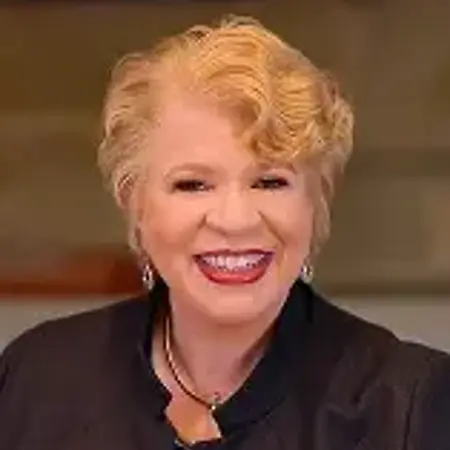
Vanessa Parker Lewis

Vice President of Human Resources
McCormack Baron Companies
Florissant, MO 63034

Dr. Vanessa Parker-Lewis is a transformational Chief Human Resources Officer with more than 25 years of experience driving enterprise-wide organizational change, strategic workforce planning, and cultural transformation. Currently serving as CHRO at McCormack Baron Companies, she partners closely with executive leadership to align human capital strategies with business objectives across complex, large-scale operations. Known for her data-driven and people-centered approach, she has delivered measurable impact, including significant cost savings, improved employee retention, and successful workforce transitions during periods of disruption.

Throughout her career, Dr. Parker-Lewis has demonstrated deep expertise in talent strategy, diversity and inclusion, crisis management, and total rewards design. Her leadership has guided organizations through high-stakes transformations, including large-scale restructuring and pandemic response, while maintaining a strong focus on employee engagement and organizational resilience. Prior to her current role, she spent nearly two decades with G6 Hospitality, where she advanced through progressive leadership roles to Vice President of Field HR & Diversity, overseeing workforce operations across hundreds of locations and leading enterprise diversity initiatives.

Dr. Parker-Lewis holds a PhD in Industrial and Organizational Psychology, along with dual master’s degrees in Human Resources Management and Human Resources Development. A certified Senior Professional in Human Resources (SPHR) and SHRM-SCP, she is recognized for her authentic, inclusive leadership style and commitment to fostering environments where individuals and organizations thrive. Her leadership philosophy emphasizes intentional presence, empowering talent, and creating sustainable cultures where people feel valued, supported, and inspired to perform at their highest potential.

• Society of Human Resources Management Member
• Senior Professional in Human Resources® (SPHR®) Certification
• Social Behavioral Research for Students

• Grand Canyon University
• Webster University

• St. Louis Business Journal’s 2024 HR Awards Nominee
• CEO Award

• Alpha Kappa Alpha Sorority Incorporated
• Society of Human Resources Management (National and Local)
• Workforce Development of St. Louis County (Board Member)
• PreventEd (Board Member)
• Regional Business Council (Mentor)

• Workforce Development of St. Louis County Board Member (since 2012
• Overseeing WEA fund for adult dislocated workers and youth)
• PreventEd Board Member (education
• Intervention and advocacy for high school students and adolescents)
• Regional Business Council Mentor

Q

What do you attribute your success to?

I attribute my success to having the courage to learn and the courage to unlearn certain behaviors. Being able to challenge myself and grow has been essential. My biggest achievement has been financing my own education all the way through to my doctorate after leaving home at a young age. I've had to be an advocate for myself, be creative, and monitor my decisions because I understood the natural consequences of those decisions. Throughout my career, I've learned to lean into situations that make me uncomfortable because that's where the real learning happens. I've also learned that if you find yourself always experiencing something, even if it's with one person or multiple people, you need to find out if you're the common denominator and do something about it. That lesson from my godmother years ago really shaped how I approach challenges.

Q

What’s the best career advice you’ve ever received?

The best piece of advice I ever received came from my godmother years ago. I was at Frito-Lay and had a really bad day where I felt like I got into it with everybody. I was telling her about all these different situations, and she listened really intently. At the end, she said, 'You know, there's only one common denominator in your day,' and I asked what she meant. She said, 'You're the common denominator in all that.' I had to take a step back, and she was just right. So if you find yourself always experiencing something, even if it's one person or multiple people, find out if you're the common denominator and do something about it. Not only find out if you're the common denominator, but do something about it. That advice has stuck with me throughout my entire career.

Q

What advice would you give to young women entering your industry?

I would say to be open to learn and to challenge assumptions. Also develop the capacity to experience emotion and embrace natural consequences. What I mean by that is sometimes we have to lean into things that make us uncomfortable in order to learn. Emotions are fleeting, so we shouldn't avoid certain situations or learning opportunities because we know that emotion will be evoked. I think sometimes we have a tendency to change or course correct because we think someone's going to be upset, but they've been upset before and that's an emotion they can handle. We need to lean into understanding why someone's upset, but not avoid action or avoid what needs to happen because of an emotion of others. I would also say to be patient, because everything doesn't happen in an instant. Be willing to experience challenges, because several of my biggest growth opportunities were those where I was challenged the most and I had to think my way out of it.

Q

What are the biggest challenges or opportunities in your field right now?

I think the biggest challenge is AI, though I don't think AI is a challenge per se, but it's viewed as one. I think there is use for AI to streamline and to assist with rote tasks. However, it shouldn't be a substitute for cognition and critical thinking, and that's where people come in and that's going to always be needed. It's not a substitute for empathy, and it's not a substitute for networking or relationship building. It could probably provide suggestions, but it's not a substitute. Another challenge I've seen is talent. Because of AI and the advancement of technology, there is a skills gap and an adoption gap that I've seen across several work streams. There's also the challenge of being able to embrace that there's new ways of work and accepting that.

Q

What values are most important to you in your work and personal life?

I value transparency above all. I'm not real good with passive aggressive behavior. When I say transparency, I mean say what you mean and mean what you say. I'm not good with no meaning yes and yes meaning no, and maybe that's because of how I had to survive. So that transparency is important to me - say what you mean, mean what you say. Integrity is also crucial, and do what you say you're gonna do. Being open to feedback and being willing to correct and admit faults is essential. Being vulnerable enough to admit faults matters because none of us are perfect. And again, if you can't challenge your assumptions, you can't learn. I mean, it's hard to learn if you can't challenge your assumptions. I also think data is important in personal life and in professional life.

Locations

McCormack Baron Companies

Florissant, MO 63034

Call