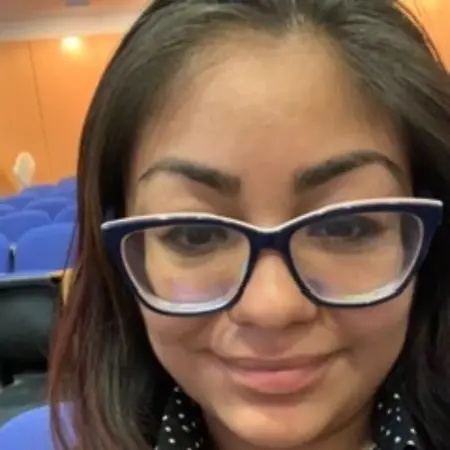
Her Story
About Veronica
Veronica Bravo is a healthcare access and operations professional based in the New York, New York, with over a decade of experience spanning patient coordination, oncology services, and healthcare systems optimization. She currently serves within the Mount Sinai Health System at Mount Sinai Beth Israel, where she works as an Access Manager focused on improving referral workflows, patient scheduling efficiency, and system-wide access to care. Her role integrates data analysis, staff training, and Epic system optimization to enhance both provider efficiency and patient experience across multiple clinical sites. Her healthcare career began at Memorial Sloan Kettering Cancer Center, where she supported patient intake and care coordination for oncology services. In these early roles, she served as a critical first point of contact for newly diagnosed patients, managing medical documentation, insurance verification, and care navigation for complex cancer cases. She later transitioned to Mount Sinai, advancing into roles such as Bone Marrow Transplant Coordinator, where she gained expertise in insurance authorization and appeals, including successful advocacy for high-cost treatments such as CAR T-cell therapy for Medicaid patients. Veronica holds a master’s degree in Health/Healthcare Administration and Management from the University of Phoenix and an associate degree in Office Technology from CUNY Hostos Community College. She is also a certified project management professional through Coursera and volunteers as a Spanish interpreter with Human Rights First, assisting asylum seekers with translation and documentation. Throughout her career, she has combined clinical insight with operational strategy, consistently focusing on improving patient access, reducing barriers to care, and strengthening healthcare delivery systems.
Her Interview
Ten minutes with Veronica
01What do you attribute your success to?
I attribute my success to staying open to opportunities and allowing each step of my journey to build on the last. I started in accounting internships but realized it wasn’t the right fit, which led me to a temporary role at Memorial Sloan Kettering where I was eventually hired permanently after proving my work ethic. That experience confirmed my passion for healthcare, which I continued to grow through roles as a Care Advisor and later a Bone Marrow Transplant Coordinator, where I gained clinical knowledge, navigated insurance processes, and helped secure our team’s first successful appeal case. In my current role as an Access Manager, I focus on improving healthcare systems and have contributed to research showing improved inpatient outcomes. I also credit my education at Hostos Community College and Brooklyn College for giving me the foundation and confidence to advance, and I encourage others to build their path step by step rather than rushing it.
02What’s the best career advice you’ve ever received?
The best career advice I’ve ever received is that you can build a successful career while also making a meaningful impact on the lives of others. That perspective has guided my decisions and reminded me that professional achievement and service to others are not mutually exclusive—they can and should go hand in hand.
03What advice would you give to young women entering your industry?
My advice to young women entering this industry is that your path doesn’t have to be linear—you can start anywhere and explore different fields before finding your true calling. Every experience, even those that don’t feel like the perfect fit, can teach you valuable skills and help clarify what you truly want. Stay open, be willing to learn, and trust that each step is building toward where you’re meant to be.
04What are the biggest challenges or opportunities in your field right now?
The biggest opportunities in healthcare right now are centered around the integration of AI and digital innovation into clinical and operational workflows. I’m particularly interested in how these tools can improve patient access, streamline processes, and help patients move through the system more efficiently. In my current work at Mount Sinai, we are continuously upgrading and optimizing our systems—such as enabling text-based referral updates and self-scheduling—to reduce delays and eliminate inefficient “phone tag” between patients and providers. We are also focused on improving provider scheduling efficiency, reducing no-show rates, and minimizing unused appointment slots across the system. The biggest challenge is ensuring consistency across multiple sites and aligning teams on standardized workflows and system usage, but despite the complexity, we are making steady progress and driving meaningful innovation in patient care.
05What values are most important to you in your work and personal life?
The values most important to me in both my work and personal life are empowerment, trust, and service to others. I’m deeply passionate about inspiring people to reach their full potential and consistently encourage those around me to pursue their education and goals—whether it’s friends completing graduate school, family members earning degrees, or colleagues growing in their careers. At work, I value transparency and an open-door culture, where my team feels safe sharing challenges so we can improve systems together and maintain trust, especially as we continuously refine healthcare workflows. Outside of my professional role, I’m equally committed to service through my volunteer work with Human Rights First, where I support asylum cases through translation and preparation, as well as past work with the Office of Immigrant Affairs helping communities access resources like the NYC ID program. Across all areas of my life, my guiding principle is making a meaningful difference in people’s lives.
Join Influential Women and start making an impact. Register now.