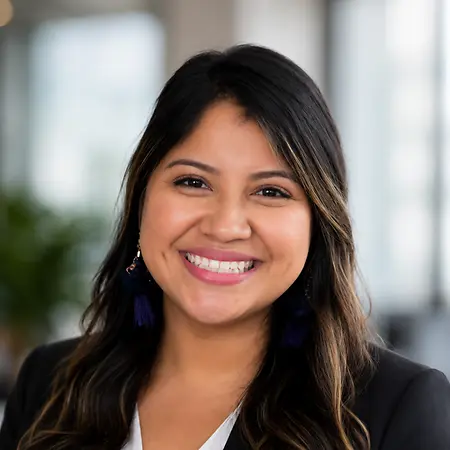
Her Story
About Veronica
Veronica Juan is a Senior Occupational Therapist at Grady Health System in Atlanta, Georgia, with nearly a decade of experience providing comprehensive rehabilitation services across outpatient, acute care, orthopedic, neurological, and hand therapy settings. She specializes in treating patients recovering from stroke, orthopedic injuries, upper extremity conditions, and complex neurological disorders while delivering individualized, evidence-based care that promotes functional independence and improved quality of life. Throughout her career, she has developed expertise in patient evaluation, therapeutic intervention, orthotic fabrication, caregiver education, and interdisciplinary collaboration.
Veronica earned both her Bachelor's Degree in Health Care Administration and Management and her Master's Degree in Occupational Therapy from the University of Alabama at Birmingham. She further advanced her clinical expertise by completing the prestigious Upstream Rehab Institute Hand Therapy Fellowship, strengthening her knowledge in upper extremity rehabilitation, clinical reasoning, and advanced hand therapy practice. Fluent in both English and Spanish, she leverages her bilingual abilities to improve communication, foster trust, and enhance access to care for diverse patient populations.
As a first-generation Latina, Veronica is passionate about advocating for culturally responsive healthcare and reducing disparities affecting underserved communities. She is an active member of the American Occupational Therapy Association and the Georgia Upper Extremity Special Interest Group, where she remains engaged in advancing the profession through lifelong learning and collaboration. Guided by the values of empathy, authenticity, resilience, and service, Veronica is committed to empowering patients, mentoring future clinicians, and delivering compassionate, patient-centered care that makes a lasting difference.
Her Interview
Ten minutes with Veronica
01What do you attribute your success to?
I attribute my success to my family. My parents, who immigrated to the United States, instilled in me the values of hard work, empathy, humility, resilience, and maintaining high standards. They made tremendous sacrifices to ensure that my siblings and I had the opportunity to pursue higher education and build meaningful careers.
Today, my husband and daughter continue to inspire and motivate me every day. Their unwavering support reminds me why I strive to provide compassionate care, pursue professional excellence, and make a positive impact on the lives of my patients and my community.
02What’s the best career advice you’ve ever received?
One of the most valuable pieces of advice I have received is to never be afraid of being the person who stands out in the room. Rather than trying to blend in, I have learned to embrace the qualities that make me unique.
As a bilingual occupational therapist and a first-generation Latina, I have discovered that my cultural background and language skills are strengths that allow me to better connect with patients, advocate for underserved communities, and provide more meaningful, patient-centered care.
03What advice would you give to young women entering your industry?
I encourage young women to embrace their individuality and recognize that their unique backgrounds, perspectives, and experiences are valuable assets. Your cultural identity, personal experiences, and voice can become powerful tools for building trust and creating meaningful change within healthcare.
Never diminish who you are to make others comfortable. Be confident in your abilities, advocate for yourself and your patients, and remember that your authenticity is one of your greatest professional strengths.
04What are the biggest challenges or opportunities in your field right now?
One of the greatest challenges facing healthcare today is provider burnout, which is intensified by budget constraints, insurance limitations, and increasing demands on clinicians. These challenges can directly impact both healthcare professionals and the quality of care patients receive.
At the same time, I see tremendous opportunities to improve access to occupational therapy, particularly for growing Hispanic communities. Expanding culturally responsive care, reducing barriers to specialty certification, and increasing representation within the profession will help bridge gaps in healthcare and improve patient outcomes.
05What values are most important to you in your work and personal life?
Empathy, authenticity, advocacy, and compassion are the values that guide both my personal and professional life. I believe in meeting every patient where they are, understanding their unique circumstances, and helping them achieve meaningful independence and improved quality of life.
I also believe in staying true to my culture and identity while using my experiences to advocate for patients who may otherwise face barriers to care. Helping individuals access the healthcare they deserve and connecting them with the resources they need is one of the most rewarding aspects of my career.
Join Influential Women and start making an impact. Register now.