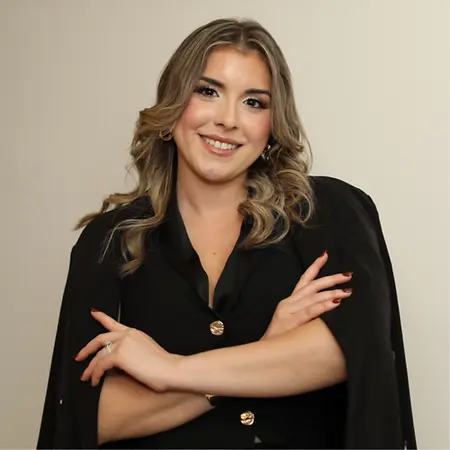
Her Story
About Vianca
I got started in media indirectly back in 2018, but officially got involved closer to 2020, right in the middle of the pandemic, working in a virtual capacity. I was then brought down to Miami specifically to work with Univision for a brand new political debate show that was really the first of its kind in the Spanish language media world. I stayed with that show for about three years, and it was really successful. After that, I worked my way through another side of the media industry from the political side, working with a really high-profile presidential campaign. My whole journey really started and kick-started when I came stateside from Puerto Rico. Now I'm working on my own capacity with my own company, doing media consulting. I handle a lot of crisis communications, social media branding, and I mostly work with the political side - public political figures, companies, and campaigns. That's the work I focus on right now the most. I love being able to be more strategic, to have the freedom and creativity to advise people, not having somebody from the top down telling me exactly what they want me to do. I like using my brain to say, I know that this has worked in the past, this could work for you to help amplify and elevate your platform in one way or another.
Her Interview
Ten minutes with Vianca
01What do you attribute your success to?
I attribute my success mostly to my courage and my resilience from my experience leaving Puerto Rico after Hurricane Maria. When I left in 2017, it was a couple months after the hurricane had just hit. My university was completely devastated, so I had no other choice but to drop my classes. I was this close to becoming a college dropout and not going back. But I took a big risk and moved to Arizona with no family, no friends, and I had never really lived outside of my parents' house before. My mom had always been kind of that helicopter mom, and she was like, oh my god, Vianca, are you sure you want to do this? And I said, you know what, and I did it, and I never looked back ever since. I made Arizona work, I finished my bachelor's degree throughout COVID, I started my master's degree, and I finished that as well. I also look up to my own mom, who had to raise me most of my life in a single-parent household because she and my dad had gotten divorced. Just seeing her being able to carry out the load of being a full-time mother and also a full-time employee working for the government, trying to make things happen, basically a hustler - that's the same mentality that I looked up to, and that's what I've been trying to emulate throughout my whole life. Now I'm a mom, and I see now, I value everything way more. My success comes from my own courage, resilience, and that family-level support as well. The family is very important.
02What’s the best career advice you’ve ever received?
I would have to say not being afraid to follow your dreams, literally. Maybe even thinking you have to be a little bit delusional, so to say, because when you're delusionally confident in yourself, you're able to achieve just about anything that you want to achieve. This was someone that I worked with on the campaign that told me, there's gonna be barriers, there's gonna be challenges, and no matter what job you have, life is gonna throw at you in your own personal life just a bunch of different things. You're gonna deal with death, loss, heartbreak, but through all of that, it's to never stop and never allow any of that to block you from accomplishing what it is that you really want to accomplish in this lifetime and in this world.
03What advice would you give to young women entering your industry?
I would say to just not be afraid in the sense of expressing yourself. We love talking about diversity, and when we talk about diversity and inclusion, we think a lot about the physical aspect of it, which is important, but we don't talk enough about the diversity of thought, and opinions. Maybe you work with somebody from across the aisle, and you guys don't agree necessarily on some things, but by hearing each other, you get a more well-rounded viewpoint of not just the world, but also of, hey, I didn't really think about doing this in that way, but it might not be a bad idea. I think it's really important to do that because we end up either in echo chambers, especially on social media, or we end up on the other side where we try to make fun of or bully other people for thinking a certain way, and that's what ultimately leads to the toxic extremism that we see in the country. Women especially, because men, for some weird reason, they always have it easier. But us women, we have to learn to speak up. We already have to learn how to speak up in general, but now more than ever, with these types of opinions, if you're a conservative woman, and you're Latina, don't be afraid to speak up for what you believe in, because ultimately, we also want to live in a better place.
04What are the biggest challenges or opportunities in your field right now?
I do see that the media industry specifically is being affected by not adopting fast enough to the new demands of social media and podcasting, and all that. The new generation enjoys that. The old traditional style of doing TV and all of that, and radio especially, is completely dead, I think. If the major media companies don't come to terms with that and don't adapt, I don't think that they're going to be able to succeed in the next, I would say, even as short as 10, 20 years in overcoming what's gonna happen, especially amid all the mass layoffs and everything. I think it's getting to a point where either those big companies adapt, or they drift off into irrelevancy, or those of us that know what it's like to work in those environments and know what's up and coming, what's really going into style, we evolve. We go beyond the traditional journalist route and communications route, and we use that to our advantage, and we try to communicate more authentically with the people that we want to resonate with, or the audiences we want to impact and do outreach to. The job market has been very rough for everyone, including myself. I've been enjoying having my own free time to be able to determine at a freelance capacity and consulting capacity what to do, but at the end of the day, we would all not mind a steady full-time job that comes with its own benefits.
05What values are most important to you in your work and personal life?
I would say being true to yourself is the number one thing. It's really easy nowadays, especially across social media, to feel intimidated by what other people are accomplishing, or what they're doing, almost like where you feel that you have to overcompensate for some reason, because the pressure's always there. But through all of that, the most important value, and in this now new world of AI, is to stay true to yourself, to be authentic, to use your true voice, because that's what's going to make you stand out from the crowd, from all of that AI-drafted, typical, mainstream stuff. It's gonna make you shine even more when you're able to bring something unique that no other artificial intelligence-led platform or voice could bring forward and break through and just bring that different perspective that a human can actually bring.
Join Influential Women and start making an impact. Register now.