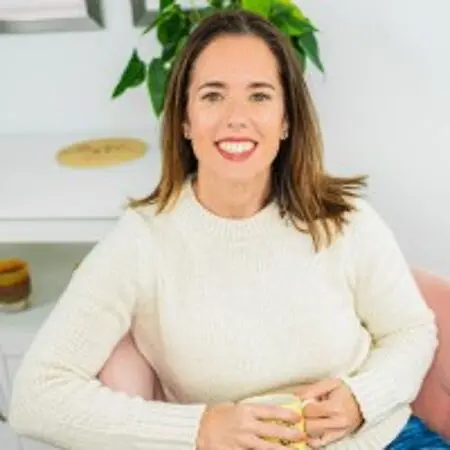
Influential Woman · Healthcare and Wellness
Victoria (Urankar) Byrd, RPh, CHWC, BCS, CNC
Pharmacist
Pharmacist Consultant, Certified Menopause Educator & Women's Health Advocate, Women Mastering Midlife
Olympia, WA 98502
Her Story
About Victoria
Victoria (Urankar) Byrd, RPh, CHWC, BCS, CNC, is a licensed pharmacist, certified menopause practitioner, and holistic health coach dedicated to helping women navigate midlife with confidence and clarity. After more than a decade in pharmacy management, counseling thousands of women through critical health decisions, she recognized a persistent gap in menopause care: women were leaving clinical encounters with more confusion than direction. That recognition became the foundation for a more integrated approach, one that bridges pharmacist-level clinical insight with evidence-based lifestyle strategies.
As the founder of Women Mastering Midlife, VB Coaching and Consulting PLLC, and host of the Women Mastering Midlife podcast and Substack, Victoria serves two audiences: midlife women seeking trusted, nuanced guidance through perimenopause and menopause, and clinicians and healthcare practices looking for pharmacist-level support through programs in chronic care management, medication therapy management, and remote patient monitoring. Her work is grounded in five pillars of menopausal health: nutrition, movement, sleep, stress mitigation, and lifestyle, and she collaborates with physicians and wellness professionals to deliver care that connects prescriptive and integrative approaches.
Victoria holds a Bachelor of Pharmacy from the University of Health Sciences and Pharmacy in St. Louis. She holds multiple certifications in perimenopause, menopause, and longevity, and is a member of the Menopause Society and the Functional Pharmacist Medicine Alliance. Beyond her professional work, she is a devoted mother of two, serves on the Board of the Hands-On Children's Museum, and co-chairs their annual gala to fund access programs for children in her community.
Her Interview
Ten minutes with Victoria
01What do you attribute your success to?
When I reflect on what has shaped my career, two things rise above everything else: a commitment to integrity, and a willingness to truly listen.
Integrity, in healthcare, is not simply about following the rules. It is about being honest when the evidence is uncertain, declining opportunities that compromise your credibility even when they are financially attractive, and consistently putting the people you serve ahead of what is convenient or profitable. Early in my career I thought that standard was assumed in medicine. Over time I learned it has to be chosen, repeatedly, and sometimes at a cost.
The other thread is listening. Not the clinical version of listening, where you gather symptoms and match them to a protocol, but the deeper kind, where you sit with a woman who has been dismissed by three providers and you let her tell you what her body has been trying to say. That kind of listening changed the entire direction of my work. It showed me that the most pressing gaps in women's healthcare were not scientific. They were relational. Women did not lack access to information as much as they lacked access to someone who would take their experience seriously and help them translate it into action.
Everything I have built, the coaching practice, the podcast, the community, the content, has grown from those two commitments. Not from a perfect plan, but from deciding early that I would rather do meaningful work with integrity than comfortable work without it.
02What’s the best career advice you’ve ever received?
The most useful career advice I ever received was not delivered in words. It came from watching what happened when I stayed quiet in rooms where I should have spoken, when I deferred to a system that was not designed with women's health as a priority, and when I waited for permission to do work I was already qualified to do.
The lesson, eventually, was this: your expertise is not something you earn once and then carry passively. You have to actively put it to use, even when the path for doing that does not yet exist.
Pharmacy trained me to be precise, evidence-based, and appropriately cautious. Those are real strengths. But the field also conditioned me, as it does many women, to stay in lane, to support rather than lead, to answer questions rather than ask better ones. It took years of clinical experience, and honestly some frustration, before I understood that the most important thing I could do was not fill prescriptions more efficiently but ask why so many women were leaving their healthcare appointments without real answers.
That realization did not come from a mentor pulling me aside. It came from paying attention. From listening to women describe symptoms they had been dismissed over for years. From recognizing that the gap I kept seeing was not a gap in medicine. It was a gap in advocacy, and I was in a position to help close it.
So if I had to distill it into something I could hand to someone else: pay attention to what frustrates you. Sustained frustration, the kind that does not go away, is usually pointing at something that needs to change, and you may be exactly the person to change it.
03What advice would you give to young women entering your industry?
The most important thing I would tell a young woman entering pharmacy or women's health is this: your clinical knowledge is the foundation, but your ability to truly listen is what will set you apart.
We are trained to solve problems efficiently, to assess, recommend, and move on. And that skillset matters. But the women who will sit across from you, or call you, or message you at 11pm with a question they were too embarrassed to ask their doctor, they are not looking for efficiency. They are looking for someone who will take their experience seriously.
I spent years in pharmacy management before I understood that the gaps in women's healthcare are not primarily knowledge gaps. They are trust gaps, time gaps, and advocacy gaps. Women have been told their symptoms are stress, or anxiety, or just aging, for so long that many of them stop asking. When you create a space where they feel genuinely heard, that is when the real clinical work can begin.
My other piece of advice is to stay curious about the edges of your field. The most valuable work I do now sits at the intersection of pharmacy, lifestyle medicine, and coaching, a combination that did not exist as a defined career path when I was in school. Do not let the boundaries of your degree define the boundaries of your contribution.
And finally, protect your integrity early and often. Opportunities will come that look good on the surface and feel wrong underneath. Trust that feeling. Your credibility is the only thing that compounds faster than anything else in this field, and it is also the only thing that, once spent, is very hard to rebuild.
04What are the biggest challenges or opportunities in your field right now?
The challenges facing women's health right now are interconnected in ways that make them particularly difficult to untangle, but three stand out as most consequential.
The first is the persistent gap in medical training on menopause. Despite the fact that every woman who lives long enough will experience this transition, menopause receives remarkably little attention in most medical and pharmacy curricula. Providers are graduating without the foundational knowledge to recognize symptoms, interpret relevant labs, or have an informed conversation about hormone therapy. That is not a criticism of individual clinicians. It is a systemic failure, and women are absorbing the consequences of it every day in rushed appointments and dismissed concerns.
The second challenge follows directly from the first: access to menopause-literate providers is genuinely limited, particularly outside major metropolitan areas. Women are waiting months for appointments with specialists, turning to online communities for the guidance they cannot get in a clinical setting, and making significant health decisions with incomplete information. The demand far exceeds the available expertise, and that gap is not closing quickly enough.
The third challenge is one I think about constantly: the overwhelming volume of misinformation circulating in the wellness space. The internet has given women more access to health content than any previous generation, which is in many ways a gift. But it has also created an environment where influencer-driven advice, unregulated supplements, and oversimplified protocols compete directly with evidence-based guidance, and they often win, because they are louder, more confident, and more convenient. Helping women develop a framework for evaluating what they read and hear is now as important as the clinical information itself.
05What values are most important to you in your work and personal life?
If I am honest about what has guided both my professional decisions and my personal life, it comes down to three things: integrity, service, and curiosity.
Integrity is the one I return to most often, because it is tested most often. In healthcare, there is constant pressure to oversimplify, to overstate certainty, to align with whatever is generating revenue or attention at the moment. I have made choices that were professionally and financially costly because they did not meet my own standard for honesty, and I have never regretted them. The women I serve are trusting me with decisions that affect their health, their relationships, and their quality of life. That trust is not something I take lightly, and it is not something I am willing to compromise.
Service is the value that gets me out of bed. I do not mean service in a self-sacrificing sense, the version that leads to burnout and resentment. I mean the genuine satisfaction of being useful, of sitting with a woman who has been struggling for years and helping her find a path forward that actually makes sense for her life. That feeling has not diminished with time. If anything, it has deepened.
Curiosity is perhaps the quieter of the three, but it is what keeps the work alive. The science of menopause and midlife health is evolving rapidly, and I am genuinely interested in where it is going. I am also curious about people, about what shapes the choices women make, what gets in the way of their wellbeing, and what it actually looks like to age with intention and dignity. That curiosity is what connects my clinical work to the broader conversations I want to be having.
In my personal life, those same values show up, perhaps less formally but just as consistently. I want the people around me to know that I mean what I say, that I show up when it matters, and that I am genuinely interested in their experience. That, more than anything, is the standard I hold myself to.
Join Influential Women and start making an impact. Register now.