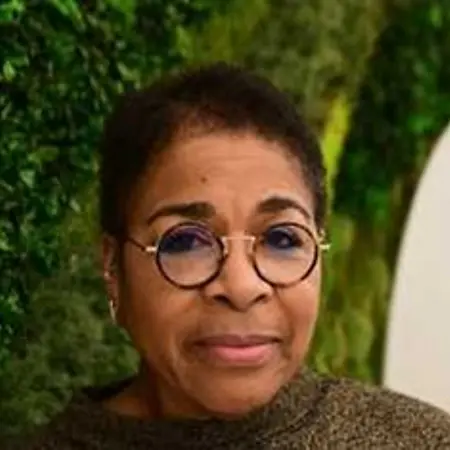
Her Story
About Victoria
Victoria Cargill, M.D., M.S.C.E.is a dedicated public health researcher and physician specializing in health equity, HIV, and health disparities. With over 40 years of experience in internal medicine and public health, she has devoted her career to improving health outcomes for underserved and marginalized populations. Trained as an internist and certified in epidemiology, Dr. Cargill has combined clinical expertise with community-focused research to address systemic inequities in healthcare. She has a proven track record in mentoring professionals, securing grants, developing evidence-based interventions, and producing peer-reviewed publications and strategic health initiatives. Dr. Cargill’s career highlights include serving as Director of Minority Research and Clinical Studies at the National Institutes of Health’s Office of AIDS Research, where she championed racial and ethnic representation in clinical trials and HIV prevention programs. She later advanced implementation science initiatives for underrepresented women in the NIH Office of Research on Women’s Health. Returning to front-line public health, she served as Assistant Commissioner of Health for Baltimore City, leading innovative interventions integrating COVID-19 vaccination, wound care, HIV, and STD testing for individuals experiencing substance use and marginal housing, achieving a 92% second-dose vaccination rate. Her work demonstrates a consistent commitment to evidence-driven solutions that bridge gaps in healthcare access and outcomes. Currently semi-retired, Dr. Cargill continues to leverage her expertise through freelance collaborations and teaching, focusing on strengthening the role of community health workers—the linchpins of the healthcare system. She engages in community-academic partnerships, mentoring community scholars and public health students, and volunteer initiatives while advocating for equity, inclusion, and systemic change. Driven by a philosophy that “to whom much is given, much is required,” she remains committed to fostering partnerships, advancing public health, and creating measurable improvements in the lives of marginalized communities.
Her Interview
Ten minutes with Victoria
01What do you attribute your success to?
I attribute my success to a passion for service instilled in me from a young age. Seeing a child suffer from tetanus because his family couldn’t afford vaccinations, and learning from my parents that “to whom much is given, much is required,” inspired me to seek opportunities to help others. That dedication has carried through to my work with community health workers, reinforced by personal experiences including CHWs supporting me as I managed my son with autism through a medical emergency. That passion drives me to persist, take action, and leave a meaningful impact.
02What’s the best career advice you’ve ever received?
The best career advice I ever received came from my parents, who lived by the principle, “to whom much is given, much is required.” They taught me through example that I am not here just to take up space—I have a responsibility to leave something behind and preferably better than I found it.. This guidance has shaped every decision in my career, from volunteering to educate communities about sickle cell disease and vaccinating homeless individuals, to championing minority representation in clinical trials, and now promoting community health workers. It’s taught me to use my opportunities and privileges to create meaningful impact and help those with less access.
03What advice would you give to young women entering your industry?
My advice to young women entering this field is to buckle up and be ready for challenges—every generation faces them, even if they’re unprecedented. The key is passion: if you truly believe in your work, that fire will sustain you when it gets tough. When I first began working with community health workers, some said it couldn’t be done, but I self-funded the work because I believed in it and had experienced the effect of CHWs during a personal crisis. Look to those who came before you—like C. Everett Koop, who persevered despite resistance—and let their example guide you. With courage and passion, you can overcome obstacles, stay focused on your goals, and keep pushing forward no matter what setbacks you experience.
04What are the biggest challenges or opportunities in your field right now?
The biggest challenge—and opportunity—in my field right now is regaining the public trust and the dissemination of factual and accurate information to counter an entrenched disinformation campaign that is endangering the nation's health. One way to address this is to ensure that trusted community messengers, like community health workers are fully integrated into the healthcare team, and receive the recognition, support, and compensation they deserve. Through focus groups, I’ve heard disheartening tales that reflect how undervalued these trusted professionals are, despite the clear evidence of their impact and return on investment for the healthcare system. It also reveals how racism and hierarchy still affect the formation and power dynamics on the healthcare team. My goal is to continue telling their story, publishing research, providing resources to empower them, and advocating for their full inclusion and fair compensation. These individuals save countless lives every day, and highlighting their work is essential to building a stronger, more equitable healthcare system.
05What values are most important to you in your work and personal life?
The values most important to me in my work and personal life are service to others—especially the underserved—and the principle that “to whom much is given, much is required.” From a young age, my parents taught me that I am not here just to take up space, but to leave something meaningful behind. I also deeply value keeping my word, staying true to my commitments, and following my passions. Personal experiences—whether witnessing the stigma faced by people living with HIV or seeing how community health workers supported my son during a medical crisis—have fueled my dedication to persist, speak up, and make a lasting impact.
Join Influential Women and start making an impact. Register now.