Her Story
About Victoria
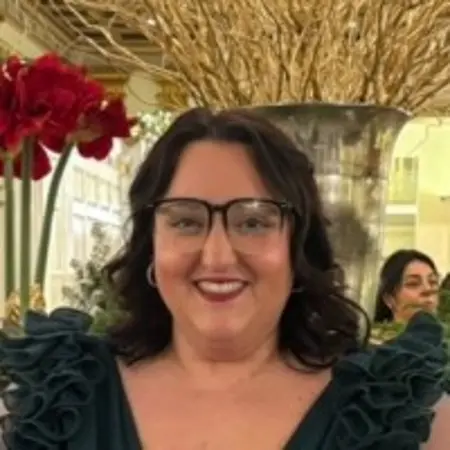
Victoria Rozzi is a nonprofit leader and social worker dedicated to building inclusive, sustainable programs that empower young people and strengthen communities. As Associate Director of Girls’ Programming at Big Brothers Big Sisters of Eastern Massachusetts, she leads strategic mentorship initiatives, develops leadership-focused curricula, and expands partnerships with schools and corporate organizations. Her work centers on creating trauma-informed, strengths-based, and empowerment model environments where youth—especially young women—can grow into confident, capable leaders. With a strong background in program development, grant writing, and community engagement, Victoria has successfully secured funding through more than 25 grant opportunities and increased volunteer participation through innovative recruitment and training strategies. Her career reflects a deep commitment to mentorship, having managed dozens of mentor-mentee relationships while also designing workshops that build emotional intelligence, resilience, and leadership skills. In addition to her nonprofit leadership, she facilitates Intensive Outpatient Programming groups at Charlie Health, supporting individuals navigating mental health challenges through evidence-based practices like CBT, DBT, and Connection Focused Therapy. Victoria’s passion for social work is rooted in a belief in dignity, kindness, and the transformative power of human connection. Recognized as a 2025 ALPFA Boston Next 50 Community Leadership Awardee, she continues to invest in both youth and adult mentorship through her work with ALPFA Boston and beyond. Whether advocating for clients, mentoring future leaders, or strengthening community systems, she approaches her work with empathy, purpose, and an unwavering commitment to helping others feel seen, supported, and empowered.
Her Interview
Ten minutes with Victoria
01What do you attribute your success to?
I attribute my success to the incredible support system around me. My grandfather was the most influential person in my life, and everything that my parents and my grandparents have done for me, I can never repay them. I make it a point to see my parents at least once a week in person, same thing with my Nonna, my grandmother. I have the most supportive and wonderful partner in the world - I don't know what I did to deserve him, but he pushes me to be my best self. I also have my own career mentor who I meet with every other week, but I talk to her every day. I can't say enough good things about her. If I didn't have her, I don't think I would be the woman I am right now in my career. I've learned so much from her, even though I'm stubborn and I don't implement it right away, but she has shaped me. I also have a therapist and I see them every week, talk to him about everything, and work on my own therapeutic goals, which is important. I'm working with people with mental health issues or self-confidence issues, and I need a place to process too. I've figured out a system that really works - calendars are my lifesaver, I journal to get it all out, and I make sure to take care of myself. Once I had the realization that I can't take on everybody's problems, I can't save everyone, it's not my job to save people, it's my job to guide people to realize they can be their best self and thrive - that changed everything. Everybody in my life has shaped me, including my cats!
02What’s the best career advice you’ve ever received?
The best career advice I've ever received came from my grandfather. His main concern was always making sure I was happy with every aspect of my life. Whenever I spoke to him about work or life in general he would ask, "Are you happy?" If I said no he would tell me that the most important thing in life is to be happy, and if I'm not happy it's not worth doing. This has shaped how I approach not only work, but my daily life.
03What advice would you give to young women entering your industry?
Seek out mentors and actively engage in your community and networking opportunities—they will open doors and provide invaluable support. Most importantly, lead with kindness, dignity, and respect in every interaction; those values will define both your impact and your reputation.
04What are the biggest challenges or opportunities in your field right now?
Key challenges in the field include nonprofit instability due to closures and mergers, systemic gaps in service delivery, and the growing emotional toll on practitioners navigating high levels of burnout. At the same time, there is a critical opportunity to expand social-emotional support for youth while investing in sustainable systems and stronger supports for those doing the work. Social work is deeply emotional, and really allows you to draw from your own experiences. You need to use those experiences to shape your own practice - this is your opportunity to guide your clients through difficult situations and learn how to extend your own type of leadership and mentoring. Regardless of the pitfalls, social workers have the opportunity to work in a human-first field, and that is what makes the field worth perusing.
05What values are most important to you in your work and personal life?
My core mission and core value is to show people that you are important, just like I'm important, so let's treat each other in the same manner, where respect, kindness, and dignity is the mission, is the goal. I believe that if I want kindness, dignity, and respect extended to me, I have to extend it to everybody else. That's how I try and live. I treat everybody the same, regardless of who they are, whether I like them or I don't like them. I talk to everybody the same. I don't need to change who I am just to fit in. That really makes people comfortable, I think, because people aren't scary. You know, people have titles, people have paths, but you're not scary - you just want to be seen and heard and appreciated. It's important to show people that they are people, even if I can't support them monetarily or give them a job or work to give them a better life. Everyone needs to be shown that they matter. I also realized through past positions that if it doesn't align with who I am or what I hope for myself, I need to leave. I need my work to align with who I am and live out my values.
Join Influential Women and start making an impact. Register now.