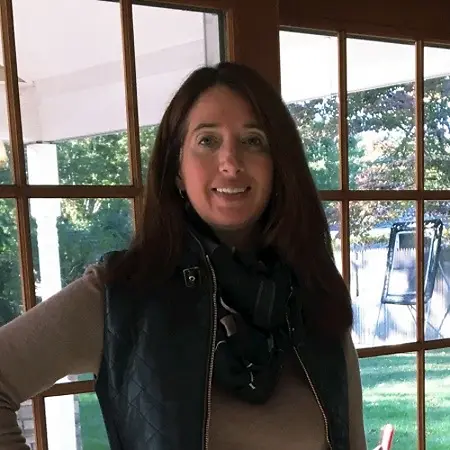
Her Story
About Victoria
Victoria Schmidt is a highly experienced Mohs technologist based in South Setauket , New York, with a career spanning more than two decades in dermatologic histotechnology . She specializes in preparing and analyzing frozen tissue sections used in Mohs micrographic surgery, a precise technique for treating skin cancer. Known for her consistency and technical skill, Victoria has worked across multiple respected practices on Long Island and in the New York area, including long-term roles in private dermatology offices and specialty surgical centers. Her career began in histology shortly after completing her training at SUNY Cobleskill, where she studied histotechnology and later earned her bachelor’s degree in science from Empire State University. Starting in hospital-based laboratory settings, she built a strong foundation in tissue processing before transitioning into Mohs surgery, where she developed advanced expertise in frozen-section preparation. Over the years, she has worked in both hospital environments and major dermatology groups, eventually moving into independent consulting while continuing to serve private practices across Long Island. Victoria is widely respected by physicians for her precision and reliability, often receiving direct recognition for the quality of her work in the operating setting. She currently works as independent consultant across several practices and remains part of a close professional network of Mohs technologists who support one another in scheduling and coverage. As she approaches retirement after more than 30 years in the field, she is considering continuing her impact through consulting work, particularly in helping laboratories prepare for regulatory and inspection standards.
Her Interview
Ten minutes with Victoria
01What do you attribute your success to?
I definitely attribute my success to the college I went to, SUNY College of Cobleskill. That program was such the right ticket to get to where I wanted to go. I still donate to that school because it gave me such a solid foundation. The other key has been networking myself, networking with other people. Meeting the right people at work, at the hospital, people who liked me and took me from histology and asked, 'Hey, you want to learn how to do Mohs?' That networking has definitely helped me throughout my career.
02What’s the best career advice you’ve ever received?
The best career advice i have ever received is to never stop learning. Whether it’s new cutting techniques or even new technology equipment. If you are constantly learning you are constantly improving.
03What advice would you give to young women entering your industry?
One piece of advice that I would give to women in my industry is getting your state Certification. This plays a key part in securing a job. With these certifications your pay wages are elevated and the diversity in were you work is increased. Another piece of advice I would give is In New York State one of the key networking systems to join are New York State Hisotology Society and Mohs National Society.
04What are the biggest challenges or opportunities in your field right now?
One of the main challenges is this is a dying field. Most employers are currently having issues with hiring people because the study of histology is not popularized. Most of the people that finish there degree are having an issue with state examples because they are increasingly getting hard which is a good thing because they expect excellent for everyone. Some big opportunities with in the field are the diversity to work anywhere because of the lack of employment once you have these certifications the job opportunities are endless
05What values are most important to you in your work and personal life?
Some value that I like to uphold at work are being punctual. Along with being punctual there are other values that I have learned over the years working such as hard work and perfecting my craft to be the best that I can be while allowing others in the work force to rely on me and my consistency, Not only do I hold a standard for my work but I also hold a stander in perfecting my craft and taking time to listen to others needs and information for them to have the best outcome. In my personal life I feel that I’m committed to not only my family but I also set an example to my kid that when you work hard and try your best you can achieve anything.
Join Influential Women and start making an impact. Register now.