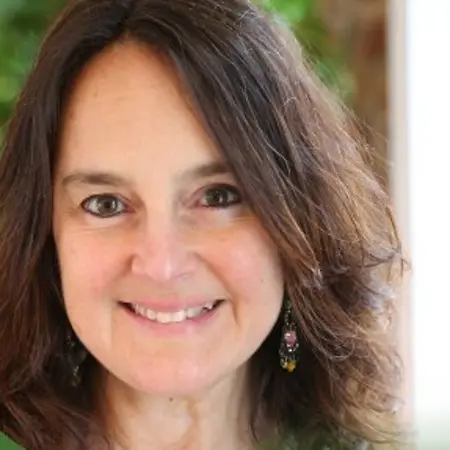
Influential Woman · Non-profit organizational development consulting
Victoria Wigodzky
Founding Partner Consulting Collaborative, Organizational Development Consultant
Washington, DC
Her Story
About Victoria
I have always been involved in the social justice field in Latin America. Originally from Argentina, I emigrated to the United States in the 1990s and have been drawn to international relations and international development throughout my career. My personal family background shaped my perspective - my family were immigrants from Western Europe to Latin America in the World War II period, and then my family immigrated again to the United States. I've always been drawn to the in-betweens. I studied international relations with a focus on human rights, transitional justice, and democratic governance, growing up as Argentina was coming into a democratic opening. Throughout my career, I've worked on various "sides of the desk" - in NGO program and institutional development roles, as a philanthropic foundation regional program officer, and most recently as an organizational development consultant and facilitator. My partners and I built something organically, without realizing we were doing it. We responded to growing demand for language and culturally appropriate and sensitive nonprofit organizational strengthening resources, facilitation and tailored accompaniment. Today, we provide organizational development services to Latin America-based NGOs (or US organizations that work on Latin America) and funders, and we mentor other consultants on the ground so that organizations in Latin America can have access to a diverse and talented cadre of well-trained local consultants who have grown exponentially and beautifully in their respective fields. Strengthening local capacity and sharing open-source resources generously is one of our guiding principles and something we are particularly proud of.
Her Interview
Ten minutes with Victoria
01What do you attribute your success to?
I would say mentors, for sure. Just very generous people that are willing to spend time with you, teaching you, making connections for you, thinking of you when opportunities arise, validating your gut feelings, and also challenging you at the same time. Sometimes our gut tells us that we should just stay in our comfort zone, because this it is so nice, like chicken soup. But sometimes you need a little bit of a kick, and be like, you know what? Enough chicken soup. Now you have to try something new, even though you may feel that you are not ready. Those people have been so important. I've noticed, especially in the last couple years as the sector has been struggling and so many people are out of work and rethinking their careers, many women especially in my generation and a little older, are feeling like they have to start over and continue to prove themselves. Feelings of scarcity unfortunately can make people more inward-looking and protective, rather than outward-looking and generous to help others. When we feel like we don't have enough opportunities, or that the options are shrinking, we don't want to share with or open up to others. I am always impressed -and relieved- when I see us able to resist that temptation. Because when one person grows, the whole sector grows. The best moments in my career have appeared as opportunities I didn't really anticipate or foresee, because someone thought of me and said, you know what, this could be good for you, we could use your expertise and your help, are you interested? I hope that we move more in that direction.
02What’s the best career advice you’ve ever received?
Be yourself and pay it forward.
03What advice would you give to young women entering your industry?
I would say be okay with having different phases and moments in your career. You don't have to follow the path that seems very clear and traditional right now, and "climb the ladder" in the usual ways. An impactful, interesting and joyful career doesn't have to be a ladder! It can be a smorgasbord - the most meaningful careers don't have to be a vertical climb necessarily. I think, especially for women, we keep talking in terms of vertically - ladders and ceilings. What if it's just a little bit more horizontal and messy and unplanned? I'd invite us all to be okay with the messiness, because at different moments in my career, it's been okay to take a step in a different direction: back or sideways, not always "up," and new and exciting, unexpected things came out of those less traditional -and at times scary- movements. As long as you listen to your whole self -mind, heart and gut- and check that you're doing something that makes you happy, that you love, that brings up and uses the best of your qualities, and that keeps you curious and learning. That can be in the private, public, nonprofit sector, at the domestic or international level, whatever it is that rocks your boat. And you can make a difference in different sectors at different points in your career. But be honest about what it is that makes you happy in the day-to-day at different points in your life, and look for and stay at jobs that get at that, that meet *your* moment, regardless of the "step on the ladder" or the piece in the puzzle.
04What are the biggest challenges or opportunities in your field right now?
The biggest challenges right now have to do with the fact that the international development, international relations and democracy and human rights sectors are going through a major crisis of funding because of political decisions made at the federal level. Particularly the shut-down of USAID and its ripple effect on funding more broadly, beyond the United States, as European funders are moving in the same direction, and private philanthropy, with a few exceptions, are largely reverting to a "wait and see," restrictive or "re-thinking strategy" mode. So even NGOs that haven't historically received U.S. government funding because of political or other reasons, they are and will continue to be affected in the coming years, because the pool of resources is getting smaller as the needs are getting bigger. Now you're competing with those NGOs that did use to rely, partially or completely, on U.S. government or European funding. The pressure is growing once again to show impact, focus on indicators and "return-on-investment," when the issues that many civil society organizations dedicate themselves to are not linear, are very long-term and require more, not less flexibility, responsiveness, adaptation and agility, beyond rigid ROIs. I don't think that's a trend that's getting any better in the short to medium term.
In terms of opportunities, some of the changes in civil society practices were needed, international development and other agencies needed reform, no one ever denied that, and the sector itself has been talking about them for years. Changes at the US federal level kind of forced those changes, and in my view, in cruel, erratic and irresponsible ways that will take years to revert. And I don't see a return to what it was. That's the reality. At the same time, there may be opportunities for organizations to become more nimble, to clarify and focus on their niche, their unique and special contribution within the broader social justice ecosystem, to collaborate with others strategically, not because a donor demands it, but because it makes sense to achieve their mission in this new context. I'm hoping these shakes to our old ways of operating don't translate into more closed-in, inward-looking and siloed work, but rather bring clarity about each group's contribution to the field, what they can do with the resources they have, and how they're going to relate to others in the field, so that we work collectively towards a common goal. I think that's exciting, that possibility of having alignment and having different organizations and people contribute to a better world in a more effective and sustainable way.
05What values are most important to you in your work and personal life?
My partners and I are conscious of the need to create new ways of working, structuring and organizing ourselves that center the sustainability of the human rights and social and environmental justice movements within a culture of care. Among other things, we seek to question and interrupt cultures and dynamics of perfectionism, constant urgency and “more is better.” We value building trusting relationships through which we can deeply understand and be sensitive to each group’s culture, dynamics and particular challenges. We aim to be low profile and use processes that keep it simple and are respectful, participatory, inclusive, highly flexible, non-prescriptive and sustainable. We also believe in the integration of hearts, minds and bodies -in both our work and personal life. Among ourselves, we aim to “practice what we preach,” in a constant “inter-weaving” (entre-lazo) of learning and experimentation. We prioritize ongoing reflection on feedback from those we work with to help us learn collectively if our actions and approach are having the intended effects, foster cultures of learning, change course as necessary, and continue growing. In both my professional and personal life, I value having and modeling honest, clear and kind conversations where different perspectives can be heard, considered, and channeled toward alignment, and when that is not possible, to agree to disagree in ways that protect individuals and relationships.
Join Influential Women and start making an impact. Register now.