
A haunting meditation on truth, silence, and the margins of existence, where a toad witnesses the gap between official narratives and what the body remembers.
“
I learned that timing isn't something we control, but something we trust. My detours through law and returning to school later gave me the depth to write meaningfully.
Virginia L Brown · In Her Own Words
Her Story
About Virginia
I've dedicated almost 30 years to the legal field as a paralegal, and for the past 5 years, I've been pursuing my passion for writing, focusing on Southern writings. What gives me the greatest satisfaction is the empathy I have for others and serving others in our community, especially our underprivileged youth. I have 3 children who have had a great life, but there are children in our community that are so deserving of so much more, and I really want to advocate for them and use my writing to bring attention to that. I'm currently completing my graduate degree in October and then plan to go towards my doctoral degree in community and social sciences. As a writer, I'm a colorful storyteller - someone once told me I need to start documenting my life, and I found that it was a great outlet. I take ordinary objects like the oak in the front yard or renovating an old historic home and intertwine them into things in life, bringing inanimate objects to life through parallels with the difficulties we as women go through. My work is really about sharing my work and helping others - that's the basis of everything in my life.
****Tidal Record, LLC is a contract paralegal and writing service rooted in precision, discretion, and depth. We provide litigation support, legal drafting, and case management alongside narrative-driven writing that captures truth with clarity. Where law meets language, the record holds.
Her Interview
Ten minutes with Virginia
01What do you attribute your success to?
I attribute my success to persistence and a deep sense of responsibility to the people and communities I serve. Over the years, I have learned that success rarely comes from perfect circumstances. More often, it grows from continuing forward when circumstances are difficult, uncertain, or discouraging. Working in the legal field for nearly three decades taught me the value of resilience and attention to detail. Every case involved real people whose lives depended on careful work, ethical judgment, and the courage to challenge systems when they failed to deliver justice. That experience shaped my belief that meaningful work requires both discipline and empathy. I also attribute my success to curiosity and a commitment to growth. Returning to graduate school later in my career has reinforced that learning is not limited by age or circumstance. Each new challenge, whether academic, professional, or creative, has pushed me to expand my perspective and refine my purpose. Finally, my success comes from staying grounded in the values of the community that raised me. Growing up in the Lowcountry taught me that strength is often quiet and steady. I have been inspired by people who continue to show up every day for their families and neighbors without recognition or reward. Their example reminds me that success is not simply measured by titles or achievements but by the integrity and perseverance we bring to the work we do.
02What’s the best career advice you’ve ever received?
The best career advice I’ve ever received was simple: do the work in front of you well, even when no one is watching. Early in my career, I learned that reputation is built quietly through consistency, integrity, and attention to detail. Titles and recognition may come later, but the habits you build when no one is paying attention shape the kind of professional you become. Working in the legal field reinforced that lesson. Many of the most important tasks were not the ones anyone celebrated, such as reviewing records, preparing documents, or making sure every detail was correct, but those were the moments where trust was built. When people depend on your work, accuracy and reliability matter more than recognition. That advice has stayed with me because it applies far beyond any single job. Whether in law, public service, or education, meaningful careers are built by showing up every day with discipline, curiosity, and a willingness to do the hard work others might overlook. Success, I’ve learned, is rarely sudden. It grows from steady effort and a commitment to doing the right thing even when it would be easier not to.
03What advice would you give to young women entering your industry?
My advice to young women entering the legal field or public service is to trust your judgment and never underestimate the value of your voice. Early in your career, it can be easy to believe that experience always equals authority. While experience matters, integrity, preparation, and critical thinking matter just as much. Do not be afraid to ask questions or challenge something that does not feel right. Many of the most important moments in my career came from speaking up when a situation required closer scrutiny or when someone’s rights or dignity were at stake. Systems improve when people within them are willing to question and strengthen them. I would also encourage young women to develop resilience. This field can be demanding and, at times, discouraging. There will be moments when your work goes unnoticed or when progress feels slow. Those are the moments when persistence matters most. Finally, remember that your career does not have to follow a single straight path. The experiences you gather—whether in law, education, advocacy, or community service—will all shape the perspective you bring to your work. Stay curious, stay principled, and remember that meaningful change often begins with people who are willing to keep showing up and doing the work.
04What are the biggest challenges or opportunities in your field right now?
One of the biggest challenges in the legal field today is adapting to rapid technological change while maintaining ethical standards and public trust. Artificial intelligence is transforming legal work—from document review to legal research, making many tasks faster and more efficient. At the same time, it raises important questions about accuracy, confidentiality, and professional responsibility. Lawyers and legal professionals now have a duty not only to understand the law, but also to understand the technologies that shape how legal services are delivered.
Another major challenge is access to justice. Many people cannot afford legal representation or struggle to navigate complex systems on their own. While this gap has existed for decades, new technology and policy innovation are creating opportunities to expand legal assistance to underserved communities. If used responsibly, tools like legal technology platforms and AI-assisted services could help reduce barriers and make legal help more accessible. At the same time, the profession faces workforce pressures. Many offices, especially in public service, are dealing with heavy caseloads, staffing shortages, and increasing complexity in legal matters. These challenges can strain professionals but also create opportunities for reform, better training, and more collaborative approaches to solving legal problems. Ultimately, I see this moment as a turning point. The challenge is to ensure that innovation strengthens justice rather than weakens it. The opportunity lies in using new tools, thoughtful policy, and strong ethical leadership to build a legal system that is both more efficient and more equitable.
05What values are most important to you in your work and personal life?
The values that guide both my work and my personal life are integrity, perseverance, and compassion. Integrity matters to me because trust is the foundation of any meaningful relationship—whether with colleagues, clients, students, or family. I believe in doing the right thing even when it is difficult or when no one is watching. Perseverance is equally important. Life and careers rarely follow a straight path, and many worthwhile goals require patience and resilience. I have learned that progress often comes from continuing forward through uncertainty rather than waiting for perfect conditions. Finally, compassion shapes how I approach the people around me. In professional settings, it reminds me that behind every file, policy decision, or problem is a person whose life may be deeply affected by the outcome. In personal life, it keeps me grounded and connected to the people and communities that matter most.
Together, these values guide my decisions and help me stay focused on work that is not only productive, but meaningful.
Her Content Hub
Articles by Virginia
Keeper of the Ledger
A meditation on silence, truth, and what remains unrecorded in the margins of power.

The Keeper of the Ledger
He scooted—
a dry, raspy sound—
slipping back into the rot
whenever a heavy boot
or a patent-leather shoe
passed too close to his ribs.
Truth be told,
he was never in their way.
Toads prefer the margins.
They do not invite the light.
He was a keeper of echoes—
a vessel
for what no one thought to claim.
I learned early
how a thing becomes official:
repeat it until the air thickens,
scrub the paper
until it forgets what it held.
Suddenly,
the truth is a trespasser.
No raised voices.
No broken glass.
Only excellence—
a cold, polished stone
set at the threshold.
And when it was not met,
something needle-thin rose—
a quiet venom
that never left.
It settled into the body
until even the body
began to doubt its own shadow.
The children learned
how little it took—
a sigh
to collapse a room.
So the toad waited,
a gargoyle in the weeds,
watching the house
hold its breath.
They wrote it down in ledger lines—
clean, contained,
a version that did not bleed.
They said the water knew its place.
They said the land held.
The river does not.
And the toad—
at the edge of the rotting step—
knows which one is telling the truth.
Exploring the emotional demands of family law paralegal work, this article examines how compassion and empathy drive meaningful client support while addressing the critical need for sustainable boundaries and self-care to prevent burnout.
The Weight We Carry
The Hidden Cost of Compassion: Finding Balance in Family Law Work
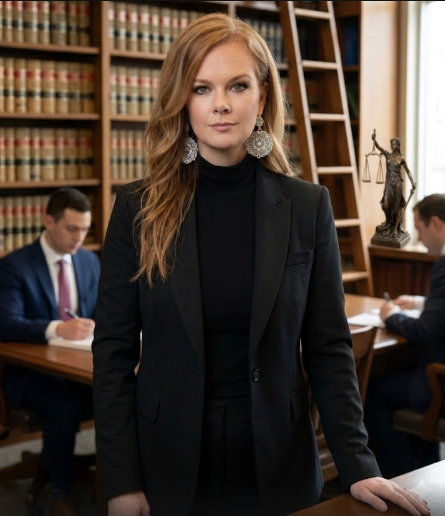
Family law is one of the most emotionally demanding areas a paralegal can work in. It requires more than knowledge of the law; it requires compassion, patience, and a genuine commitment to helping others through some of the hardest moments of their lives. Clients often come in facing financial strain, custody disputes, or the breakdown of a marriage they never saw coming. In those moments, a paralegal is not just supporting a case but helping steady someone in crisis. It takes heart, resilience, and a willingness to carry both the legal and emotional weight of the work.
What often goes unseen is the emotional balance required behind the scenes. You learn to listen without absorbing, to care without collapsing, and to remain steady when everything around your client feels uncertain. There are days filled with conflict, grief, and difficult truths, but also moments of quiet impact where clarity replaces chaos and someone begins to find their footing again. Family law is not for everyone. But for those called to it, the work becomes more than a profession; it becomes a purpose rooted in service, empathy, and the belief that even in broken places, people can move forward. That’s the part of family law no one really prepares you for: the cost of caring too much.
You don’t just process files; you carry stories. You sit with people in the middle of betrayal, fear, and loss, and if you’re wired the way you are, you don’t leave it neatly at your desk when the day ends. It follows you home, quietly taking up space that belongs to your own life and your own family. The truth is that the same empathy that makes you good at this work can also drain you. Learning balance isn’t about caring less; it’s about creating boundaries that allow you to keep caring without losing yourself in it.
That might look like small, intentional shifts: mentally “closing” a case at the end of the day, setting limits on after-hours availability, or giving yourself permission to be fully present at home without guilt. And it’s okay to admit you haven’t mastered it yet. Most people in this field never fully do; they just learn to manage it better over time. The goal isn’t perfection; it’s sustainability. Because you can’t continue to show up for others if you’re running on empty in your own life.
You’re not failing at balance—you’re in the process of learning it. And that, in this line of work, matters more than getting it right every time.
Tidal Record, LLC — carrying the details, the silence, and the truth that always finds its way back to the surface.
Tidal Record, LLC
Why the Work Needed a Name
Tidal Record, LLC: Why the Work Needed a Name
There comes a point in long-term legal work when you begin to see what is not written.
Not what is filed, stamped, or entered into the record, but what sits just beneath it—the gaps, the missed details, the things that should have been documented but weren’t. The moments where the outcome hinges not on the law, but on how well the story was preserved.
Tidal Record, LLC was built from that space.
After decades of working across civil, family, criminal, and probate matters, one truth became clear: cases do not fall apart all at once. They erode—quietly. Through overlooked deadlines, incomplete narratives, disorganized records, or the absence of clear, structured support behind the attorney. And when that happens, it is not just procedure that suffers; it is people.
Tidal Record was created to address that erosion directly. At its core, it is a contract paralegal service grounded in precision, strategy, and accountability. But more than that, it reflects a deeper understanding: legal work is not just technical—it is narrative. Every case tells a story. Every filing builds it. Every omission weakens it.
The role of a skilled paralegal is not simply to assist. It is to hold the structure together.
This includes:
- Maintaining organized, accessible case records
- Ensuring deadlines are not only met, but anticipated
- Supporting attorneys in building clear, fact-driven narratives
- Managing communication across multiple parties and agencies
- Preparing cases for hearings, mediation, and trial with completeness and clarity
In today’s legal environment—where caseloads are high, timelines are compressed, and expectations are constant—the need for reliable, experienced litigation support is no longer optional. It is essential. Tidal Record exists to meet that need.
The name itself reflects the philosophy behind the work. A tide carries everything with it—what is visible and what is not. It reshapes the shoreline over time, often quietly, but always with impact. The record works the same way. What is documented—and what is not—will determine the outcome long before a case ever reaches a courtroom. This is especially true in complex or sensitive matters, where details matter and consistency is critical.
Tidal Record is also built on discretion. Legal work requires trust—not just in skill, but in judgment. Knowing what to document, how to present it, and when to act is part of the discipline that comes only with experience.
Beyond litigation support, Tidal Record extends into writing, because the ability to communicate clearly, concisely, and with purpose is inseparable from effective legal work. Whether drafting pleadings, summarizing records, or shaping narratives for broader audiences, the same principle applies: clarity creates strength.
The importance of Tidal Record is not just in what it does, but in why it exists. It exists because details get missed.
Because attorneys are stretched.
Because clients deserve better than disorganization.
Because outcomes should not hinge on preventable oversight.
And because the record—when done right—does more than document.
It holds.
Join Influential Women and start making an impact. Register now.