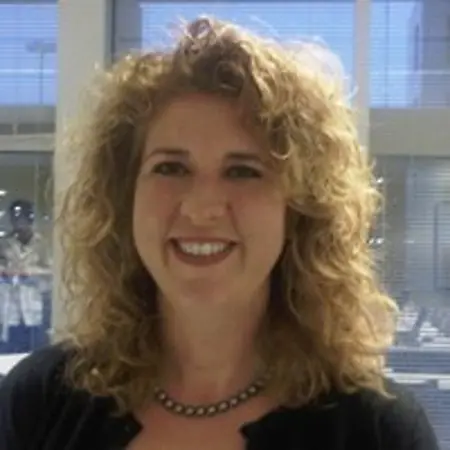
Her Story
About Wendelyn
Wendelyn Risher, Ph.D., MBA, SPHR, is an Assistant Professor at Southeastern Oklahoma State University who brings nearly two decades of real-world human resources experience into the classroom. She transitioned into higher education in 2018 after a successful career as a full-time HR professional, where she developed a deep understanding of organizational dynamics, talent management, and strategic leadership. She earned her Ph.D. in Management from the University of South Alabama, where she refined her academic focus on organizational behavior, human resources, and leadership.
Dr. Risher is driven by a commitment to bridging the gap between academic theory and practical application. She believes that business research should not remain confined to journals, but instead be translated into actionable insights that practitioners can use to improve organizations. Her passion for strategic HR is rooted in the idea that when organizations execute the fundamentals well—such as payroll, benefits, and onboarding—they build the credibility needed for HR to evolve into a true business partner. Through this lens, she emphasizes HR’s potential to influence decision-making, shape culture, and drive meaningful organizational change.
In her teaching, Dr. Risher works with students across all levels, from undergraduates exploring HR for the first time to doctoral candidates contributing new knowledge to the field. She is particularly focused on mentoring emerging scholars to produce research that is both rigorous and generalizable, ensuring it can make a broader impact beyond academia. Ultimately, her goal is to equip the next generation of leaders with the mindset that knowledge holds its greatest value when it is applied to solve real problems and improve the lives of people within organizations.
Her Interview
Ten minutes with Wendelyn
01What do you attribute your success to?
I attribute my success to a strong foundation of integrity and a commitment to doing the fundamentals exceptionally well. Throughout my career, I have focused on applying research to real-world challenges, ensuring that what I teach and practice creates meaningful impact. I also believe that growth requires courage—the willingness to act even when there is uncertainty or fear. That mindset has allowed me to take opportunities, adapt, and continue evolving both professionally and personally.
02What’s the best career advice you’ve ever received?
The best advice I’ve received came from my mother: pray, but also take action. In other words, you can hope and plan, but if you don’t get up and “answer the door,” nothing will happen. That advice has stayed with me throughout my career. I also strongly believe that everything is figureoutable—there is always a way forward if you are willing to put in the effort and remain persistent.
03What advice would you give to young women entering your industry?
My advice is to start by mastering the basics. When you execute core HR functions like payroll, benefits, and onboarding effectively, you build credibility and trust. From there, position yourself as a strategic partner rather than a transactional resource. Don’t wait to be invited to the table—pull up a chair and contribute your perspective. Be willing to take risks, try new things, and embrace failure as part of the learning process. Growth comes from stepping outside of your comfort zone.
04What are the biggest challenges or opportunities in your field right now?
One of the biggest challenges is that HR is still often perceived as a transactional function, which limits its influence within organizations. There are also skills gaps that can prevent HR professionals from fully stepping into strategic roles. However, this presents a significant opportunity. By building strong business acumen and credibility, HR can become a true strategic partner. Additionally, there is a growing need to translate academic research into practical, generalizable solutions that organizations can actually implement, which can greatly expand HR’s impact.
05What values are most important to you in your work and personal life?
Integrity is at the core of everything I do—it guides my decisions and how I show up for others. I also value courage and openness to new experiences, as they enable growth and innovation. Discernment is important to me in making thoughtful, informed choices, and my faith provides both grounding and direction in my personal and professional life.
Join Influential Women and start making an impact. Register now.