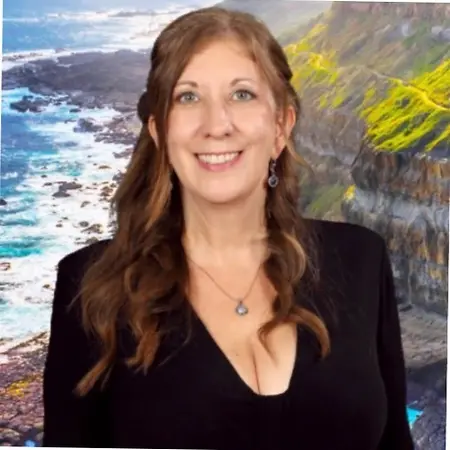
Her Story
About Wendy
Dr. Wendy Stout is the Coastal Director at Virginia Tech, where she leads the Virginia Tech Coastal Collaborator Center in Hampton, Virginia. In this role, she connects interdisciplinary teams across the university with coastal stakeholders to address pressing challenges such as sea level rise, subsidence, and broader coastal resilience. Her work focuses on translating research into actionable solutions for communities and policymakers, particularly through collaboration with government agencies, academic researchers, and regional partners in the Chesapeake Bay and surrounding coastal regions.
With more than 20 years of experience in the geospatial field, Dr. Stout has held influential roles across federal and state government as well as academia. Her career includes work with NASA, where she supported GIS education and internship programs, and with FEMA, contributing to emergency management geospatial analysis. She also served as Acting Geographic Information Officer for the Commonwealth of Virginia, where she helped advance statewide GIS initiatives, including major efforts in LiDAR data acquisition and geospatial infrastructure development. Prior to joining Virginia Tech, she held academic leadership roles at the University of Richmond, directing spatial analysis and GIS programs.
Dr. Stout earned her PhD in Instructional Design and Information Technology and completed a postdoctoral fellowship at the Hebrew University of Jerusalem. She has continued to expand her professional expertise through certifications in GIS (GISP), geospatial education (GeoEdC), and yoga instruction (RYT200). A recognized leader in the field, she is also the founder of the Virginia chapter of Women in GIS, supporting mentorship and networking for women in the geospatial profession. Her career reflects a sustained commitment to bridging science, education, and public service to strengthen coastal resilience and geospatial innovation.
Her Interview
Ten minutes with Wendy
01What do you attribute your success to?
I attribute my success primarily to the relationships I’ve built, my willingness to continuously learn, and my openness to explore opportunities beyond my formal training. I’ve never limited myself strictly to my field of study, choosing instead to develop new skills and follow paths that align with emerging opportunities. My faith has also been a guiding influence throughout my journey, helping me discern which opportunities to pursue. When faced with decisions, I’ve prayed over them and moved forward with confidence when I felt led in a certain direction, trusting that I was being guided toward the right path.
02What advice would you give to young women entering your industry?
I would advise young women entering the field to stay persistent and not give up, even when challenges arise. It’s important to build a supportive community of mentors, peers, and professionals you can turn to for guidance, questions, and encouragement—having that “tribe” can make a significant difference, and I’m always willing to be part of that support system. I would also strongly encourage pursuing professional certifications and credentials early, as they help validate skills and open doors to opportunities that might otherwise be closed. While many women already have strong capabilities, taking that extra step to formalize their expertise through certifications can strengthen confidence and credibility in the field and ensure that qualifications are never a barrier to advancement.
03What are the biggest challenges or opportunities in your field right now?
Key challenges in my field include the underrepresentation of women in GIS and technology, along with urgent coastal issues such as sea level rise and subsidence. At the same time, there are strong opportunities to translate academic research into policy, improve access to large datasets for practitioners, and advance coastal resilience and water quality efforts, including plastic prevention initiatives.
04What values are most important to you in your work and personal life?
The values most important to me in both my work and personal life are faith, mentorship, professionalism and ethics, collaboration, and a strong commitment to protecting water resources and coastal environments. I strive to let these principles guide how I make decisions, work with others, and contribute to meaningful, long-term impact.
Join Influential Women and start making an impact. Register now.