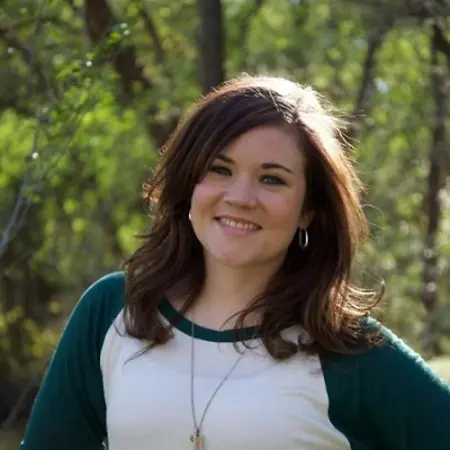
Her Story
About Whitney
I've been in education for 15 years, and my journey into this field was deeply personal. After working with my cousin who has Angelman syndrome and an intellectual disability, I realized this was my calling. I never wanted to teach middle school math or special education initially, but my first job out of undergrad was middle school math, and then my second year I became a special education teacher. For the past 12 years, I've worked as an educational diagnostician in Texas, where I test students for learning and cognitive disabilities, complete all their paperwork, conduct initial evaluations, and hold ARD meetings to determine if students qualify for services and what kind of support the school should provide. I'm a huge advocate for people who are marginalized and oppressed, and I want them to be seen as equals and have the ability to learn, even if it looks a little bit differently. I myself am dyslexic, which helps me relate to my students on a personal level. I'm constantly researching and learning, and I hold myself to a higher standard. I earned my PhD at a young age, and I currently serve on the board of Educational Diagnosticians for the state. I'm also very active in advocacy work, signing up for newsletters from TEA, lobbying, and sending open letters to congressmen and representatives about education policy.
Her Interview
Ten minutes with Whitney
01What do you attribute your success to?
I'm very analytical minded, and if there's something that I feel strongly about, something that I want to do, then I go in guns blazing, full force, especially if it has anything to do with making sure that people as a whole are being taken care of and given the education and rights that they desire and need. I'm a huge fan of learning and I'm constantly researching. I myself am dyslexic, and so I have a disability, which helps me be able to relate to my students. I work very hard at reading and I hold myself to a higher standard, typically, than a lot of people do. I'm very hard on myself, but it has helped me get to where I am right now, especially getting my PhD as young as I was.
02What’s the best career advice you’ve ever received?
For my job working with kids, the best advice I had was treating them as individuals. It's easy to get caught in the weeds and see education as a whole and the classes, but when you truly get to know the student as an individual, it makes their behavior and their abilities make sense. Meeting them at their level, getting to know them, and building that relationship is key. For my PhD, it was just keep going, one by one at a time, keep going. It's not about how smart you are, it's about how much work you're willing to put in.
03What advice would you give to young women entering your industry?
Keep going, and understand that this job is not for the faint of heart. You really have to have a heart for kids, and understand that there are going to be policies and things that are created by people who do not do our job. But we're on the front lines, and we're the people that work with our children in need, and so if you're going to be an educator, you really, truly have to have the kids' best interests at heart, but also love kids. You can't do this if we don't love the kids. Also, find a mentor that truly loves what they do and soak in everything that they tell you. It's easy to get jaded in education, it's easy to find the teachers that sit there and say I retire in 5 years and it's easy to get negative, but if you keep the mindset of I'm here for the kids and see them each as an individual that has potential, it makes the job way more enjoyable, but also easier to do.
04What are the biggest challenges or opportunities in your field right now?
Right now, I'm on the board of Educational Diagnosticians for the state so that I could see what's coming from a state level for educational diagnosticians as far as the law is concerned. I've signed up for newsletters from the state of Texas, from TEA, because I'm the type of person that I want to know what laws they are creating, so that I know exactly how that's going to affect me and my students. I've also lobbied and sent open letters to congressmen, representatives, and also TEA, based on some of the Senate bills that they've passed for teachers, letting them know that it's not what's best for teachers, and it's not what's best for our students. I'm just very active because I love what I do, I love my students, and I want to see them protected and also educated. Right now in the state of Texas, it's kind of scary how education is being handled.
05What values are most important to you in your work and personal life?
I've always been a person who fights for the underdog and wants people who are marginalized and oppressed to be seen as equals and have the ability to learn, even if it looks a little bit differently. Advocacy and inclusion are huge for me, not just in special education professionally, but for anyone who needs something and needs someone to be there for them. That is what I do, and it's a huge part of my heart, being there not only for students with special needs, but also for people from different backgrounds. When I look at our society and America right now, especially with politics and what we're dealing with in Texas with ICE and immigrants, and also people who are queer and transgender and part of the LGBTQ community, it's huge for me that people feel loved and accepted no matter who they are, or where they come from, or what they believe. One of my values is just making sure that people feel unconditionally loved, no matter what.
Join Influential Women and start making an impact. Register now.