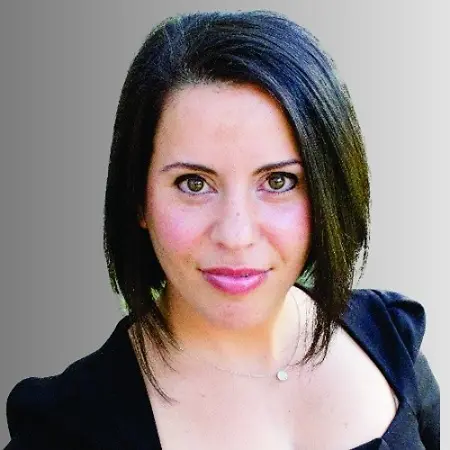
Her Story
About Yara
Yara Kadria-Vili, PhD, MBA, is a Senior Research Scientist at Nanospectra Biosciences Inc. and a director-level professional in Medical Science Liaison and clinical science with a specialization in oncology. She holds a PhD in Chemistry from Rice University and an MBA from Rice Business, combining deep scientific training with strategic business and clinical insight. Her expertise centers on designing nanomaterials for cancer therapy and detection, and advancing novel oncology therapies through complex development and regulatory pathways. In her role at Nanospectra Biosciences, she works on the development and clinical advancement of nanoparticle-based therapies for cancer, with a strong focus on prostate oncology applications. She has contributed to cross-functional initiatives spanning R&D, clinical data analysis, and FDA regulatory submissions, including leading efforts tied to De Novo regulatory documentation for first-in-class medical technologies. Her work also includes communicating complex scientific and clinical data to FDA reviewers, clinicians, executives, and Key Opinion Leaders, ensuring alignment across scientific and regulatory stakeholders. Previously, Yara completed an NIH T32 postdoctoral fellowship at Rice University and MD Anderson Cancer Center, where she focused on translating nanomaterials into clinically relevant cancer diagnostics and therapies. Across her career, she has authored and co-authored multiple peer-reviewed publications, contributed to high-impact presentations, and led collaborative research initiatives. She is recognized for her ability to bridge rigorous scientific research with clinical application and strategic execution, with a career focus on advancing oncology innovations from the lab to patient care.
Her Interview
Ten minutes with Yara
01What do you attribute your success to?
Honestly, there's no one thing; every step was critical to move to the next. I've always been passionate about healthcare because cancer is personal to me. I had members in my family who had cancer. That's what made me want to make a difference and realize that cancer patients need more options, faster. I also realized that getting therapy to patients depends on more than just good science. It depends on political, financial, and strategic decisions. That is what inspired me to pursue my MBA so I could understand how those decisions are actually made and become an influential leader. Furthermore, the support from my family, my husband, my kids, my company, and my professors played a significant role in my success. So if I had to name what success comes down to, it's this: an intention to make a positive impact, a "no excuses" mindset, a supportive husband and family, and the kind of support around me that never made me choose between my work and the people I love.
02What’s the best career advice you’ve ever received?
The best career advice I've ever received was this: when you get a job offer, you don't just get a job, you get the key to the building. And once you're inside, opportunities are everywhere, even in a workplace you don't fully enjoy. It's up to you to find them. That reframed everything for me. Some of the most defining moments of my career, leading the FDA submission, taking on the scientific liaison role, and becoming Co-President of the Rice Jones Strategy Association, happened because I walked through doors that were already open. I just had to notice them. The way I say it now is even simpler: the job description is the smallest version of what you can do in a role. The rest is up to you.
03What advice would you give to young women entering your industry?
First, don't wait to be invited. Almost everything that shaped my career happened because I stepped forward before I felt ready - leading an FDA submission, moving into scientific liaison work, running for Co-President of the Rice Jones Strategy Association. No one tapped me on the shoulder. I saw the opportunity, and I took it. It was uncomfortable, and I didn't feel qualified half the time, but that's exactly where I learned what I was capable of. You don't find that out by waiting. Second, the pivots are not detours. They are the path. I trained as a chemist, became a translational scientist, moved into clinical and regulatory work, and went back for an MBA. Each move felt like a sidestep at the time. But those pivots are the whole reason I can do what I do now. So if you're chasing something you care about, trust the path, even when no one else understands it yet. And finally, choose work that lights you up. Financial stability matters, but the careers that carry you through the hard years are the ones that keep you curious and a little obsessed. When you care that much, it shows.
04What are the biggest challenges or opportunities in your field right now?
The biggest opportunity in oncology and biopharma right now lies in how we integrate AI into healthcare. With AI, we can analyze data faster, identify the right therapies sooner, reduce recurrence rates, shorten the distance between scientific insight and clinical decision-making, and help promising therapies reach patients faster. For someone like me, who entered this field because cancer is personal, that opportunity is the entire point.
At the same time, there are real challenges. The first is the pace of change itself. AI is rapidly reshaping how we discover drugs, design clinical trials, interpret data, and interact with regulators like the FDA. It's moving fast, and it's uncertain, and you can either get on the boat and be part of the change, or watch it leave you behind. I'd definitely be on it.
But beyond the technology, the harder challenge is human motivation. Technical skills can be taught; resilience, curiosity, and persistence are much harder to cultivate. That is the true bottleneck in our industry. The leaders who navigate this era well will be the ones who build deeply motivated teams, create environments where people keep growing through uncertainty, and remain humble enough to lean on those teams when the work gets hard. No leader does this alone.
05What values are most important to you in your work and personal life?
Four values guide me in my work and personal life: purpose, credibility, growth, and family.
I believe every one of us is born with a purpose to deliver. For me, it's about getting better therapeutic options to cancer patients faster, and that's what's carried me through every hard decision. Credibility is the value I protect most. In a field where it's tempting to oversell, I've always chosen to represent my work and myself accurately, because credibility is the only currency that compounds. Growth matters to me. Continuing to evolve and modify how I can be better every day so I can be better tomorrow than I was today - that's a value I stand by. And family ties it all together. I believe you can be fully committed to your work and fully present for your family. I've spent my career proving it's possible.
Join Influential Women and start making an impact. Register now.