Influential Woman · Education
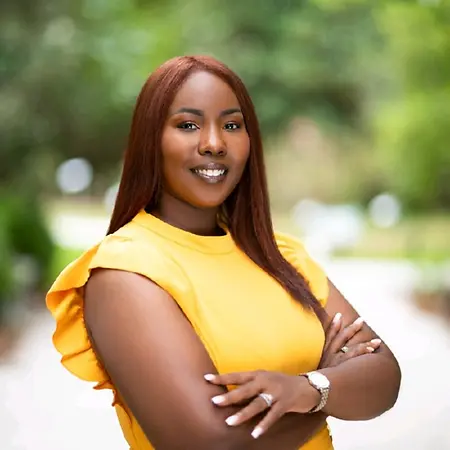
Yasha Chapman
Chief Executive Officer/ Lead Consultant, Elementary Education Evolved, LLC
Temecula, CA 92591
Her Story
About Yasha
I began my career as a classroom teacher back in 2013. I realized my love for teaching was deep and wanted to have an impact on a larger scale, being able to reach more students than the ones in my classroom. I thought, "What if I took the same strategies I'm doing inside my individual classroom and applied them to a grade level?" So, I went back to school and received my master's degree in curriculum and instruction with a specialization in leadership, then began instructional coaching. I fell in love with it because it's very similar to teaching students, but you're working with adults- the key factor in closing academic achievement gaps. Seeing adults have that aha moment when something clicks and when they see a strategy that works and actually drives student outcomes is even more powerful! That became my life's work. As a military spouse, I've had experience in numerous states from Georgia, South Carolina, North Carolina, New York, Pennsylvania, and now here in California. I noticed that the need for stronger instruction was evident no matter where I lived. It also became quite difficult with constantly changing my certification depending on the state's requirements, so I decided I would just go into business for myself, still with the same mission and passion of working with teachers and driving student outcomes. Now I just do it for myself as opposed to working within a system.partner with schools and school districts. I provide transformative professional development sessions. The PD sessions are the focal point, and classroom observations follow to determine how well the teachers are implementing the content from the session. It's very intentional that they're not only using it, but I examine how they're using it and what areas can be strengthened. We assess student data, teacher mindsets, lesson plans, pedagogy, best practices, student gaps, all of the things to make sure that strong implementation happens and that we see positive outcomes within our students. On a regular day, I'm visiting schools, facilitating coaching meetings, conducting observations, rehearsing with teachers, and transforming education- one classroom at a time.
Her Interview
Ten minutes with Yasha
01What do you attribute your success to?
I attribute my success to my faith in God and my mother. My mother is a huge driving force. She was one of five children who grew up in the civil rights era in Birmingham, Alabama. Raised in poverty, she is now a retired doctor of education. Just seeing the life she was able to provide for my brothers and myself, we're all high school graduates and bcollege graduates. We all have our master's degrees. She took education seriously and was able to really change her life's circumstance. For me, the movement of education, the purpose, and what it can do is so much bigger than just getting a degree or diploma. It truly has the ability to transform and change lives. For Black and Brown students who don't have the financial advantages or maybe the right network of people that can actually help them, education is what levels the playing field. That is my driving force, and her example is a contributing factor to my success. She even got her doctorate while she was fighting breast cancer. Just to see her fight through that, going through treatments and surgeries and still writing her dissertation, that's another level of dedication. With her as my example, success is the only option.
02What’s the best career advice you’ve ever received?
It's not necessarily advice, it's more of a saying: If not you, who? And if not now, then when? That's what keeps me motivated and going, especially in this entrepreneurial field. It can get challenging, it can get taxing, just having to wear all the hats. Being very open and transparent, there are many days where it's like, I don't know if this is worth it, I don't know if I can keep going, but then I always come back to, if not you, then who? If not now, then when? Knowing that the work is urgent. I'm not sure if you're familiar with statistics in our educational system right now, but they're pretty bad in terms of reading proficiency and math proficiency, as a nation. And that number is even more disparaging for students of color. The time to act is now, it is urgent, and so I can't afford to allow my emotions to get in the way when there's so many people who I have not met yet that are dependent on me.
03What advice would you give to young women entering your industry?
I would say that education is heart work. Nobody, I believe, goes into it for money, although because of the economy, we need it. But just being sure and having clarity around why they're going into the field. This is service work. Children are truly our future, and I know it is so cliche, but they really are. Making sure that we're going in there knowing that they may not have all of the resources, they may not have the support, and so those resources and that support is going to come from the teacher. Oftentimes, that's the first example of a professional that they have in their lives. When we center and when we remember those things and we focus on it, that this is heart work, I believe we're able to do the job with more care, with more intentionality behind what we do and the decisions that we make regarding children. So that would be my advice, just understanding that your heart in this work matters, and their posture needs to be right, and they need to be clear on what it is that they're walking into and aware of their capacity as well. Are you able to provide this at a high level, with a high amount of consistency and a high level of intentionality? Because all of that matters. We're dealing with people's most prized possessions. These are the greatest gifts that they have, their children, and so we just want to handle that with the utmost care.
04What are the biggest challenges or opportunities in your field right now?
The biggest challenge is AI and technology, because many educators and school systems have allowed technology to become the driving force. They rely on these customized AI systems to tell them what their students need, and that's taken away their ability to pivot, to fully become experts in that area. They risk being not as strong with making instructional decisions and getting student data to move, because we're solely relying on technology to inform us. Technology doesn't know your students, they don't know their background, they don't know their strengths and their weaknesses. They only see a quick data snapshot, yet we're allowing that to create a full picture. The bigger issue is the class sizes. Class sizes these days are too large. I'm talking 25, 30 kids in one class with one teacher, expecting them to be able to differentiate and meet all of their learning styles and their learning needs with fidelity, as well as with limited support from any outside help. That almost cripples them. And then when you throw in the fact that a lot of teacher preparation programs don't fully prepare teachers to teach special education, and we have a lot of inclusive classrooms-so they may have 30 students in their class and 10 of them are on IEPs or have 504s, and they are not equipped to manage all of that. That is a heavy caseload. With limited support, with limited knowledge, that leads to teacher burnout, which aids in the teachers leaving the field. The nature of education right now is very scary. It's really like on a sinking ship. There should be a national emergency around our education system right now, and there isn't.
05What values are most important to you in your work and personal life?
Integrity is most important to me. Moving with integrity, just honoring my word and living in a way where my actions and words align. We live in a society where there's ghosting, there's flakiness, people say things just because it sounds good. I don't operate like that. If I say I'm gonna do something, I'm going to do it. I'm really just big on presenting myself as who I truly am. There's no facade with me. Honesty, which ties into integrity is important to me as well as accountability. I'm really big on accountability, because no one's perfect. We all make mistakes. Whether we're putting out positive energy or negative energy or whatever, we have to be accountable for that. Not only accountable, but we have to be willing to self-reflect and change or grow from it to become better. So those are my biggest values.
Join Influential Women and start making an impact. Register now.