Her Story
About Yasmine
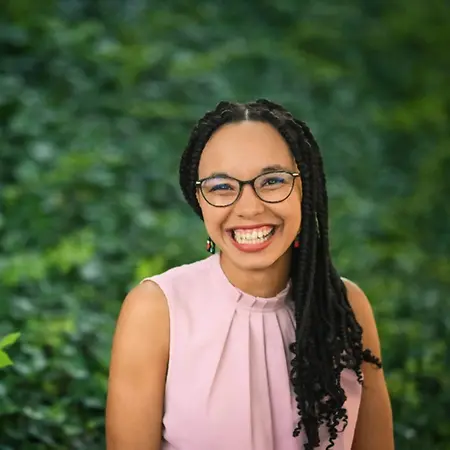
Yasmine Vaughan, MPH, PMP, is a global health professional and Technical Advisor for Global Health and Missions at Helping Children Worldwide, where she has served for the past five years. Her journey with the organization began during her graduate studies at The George Washington University’s Milken Institute School of Public Health, where she completed her practicum with the organization and transitioned from intern to full-time staff. She now also serves on the leadership committee, contributing to organizational strategy and cross-functional decision-making.
Her work is centered on global health program design, project management, and health system strengthening, with a particular focus on collaboration across organizations in the Global South. She works closely with international partners to build coordination structures, foster partnerships, and align diverse expertise to improve health outcomes in resource-limited settings. Her role also includes preparing individuals and teams for international short-term mission work, with an emphasis on cross-cultural engagement, ethical practice, and a deeper understanding of poverty and global health systems. She describes her work as being a convener, connector, collaborator, and catalyst—bringing people and organizations together to strengthen impact and drive meaningful change.
Outside of her professional work, Yasmine enjoys reading, embroidery, canning, kayaking, and listening to podcasts, activities that reflect both her curiosity and appreciation for hands-on creativity and lifelong learning. She holds a Master of Public Health in Global Health Program Design, Monitoring, and Evaluation from George Washington University and a Bachelor’s degree in History from James Madison University. She is also a certified Project Management Professional (PMP), guided by a commitment to equity, collaboration, and sustainable, community-centered approaches to improving global health outcomes.
Her Interview
Ten minutes with Yasmine
01What do you attribute your success to?
I think success is often a combination of timing, preparation, and courage. I've been fortunate to find myself in the right places at the right times, where my particular passions and skill sets aligned with opportunities that needed someone to step in. But opportunity alone isn't enough—you also have to be willing to raise your hand, take on challenges that may feel beyond your comfort zone, and trust yourself enough to go for them. For me, success has come from recognizing those moments when they appear and being willing to step into them.
02What’s the best career advice you’ve ever received?
The best advice I would give is to find opportunities to explore your interests. My undergraduate degree is in history, and then I did minors in sociology and biology and pre-medicine. A lot of people saw that as a very random set of things to do, but it all led really naturally into being able to do public health work, because our history, our sociology, our biology all interact to determine our health outcomes. So go for the things that you're interested in, and you'll find somewhere that fits well for you.
03What advice would you give to young women entering your industry?
The biggest advice I would give is that in the nonprofit space, there's a lot of opportunities for not just burnout, but moral injury. So being a person who can cultivate really good habits for setting boundaries and for taking the time to do your own emotional regulation and reflection time is going to be really, really important to being able to continue the work. A quote from a Christian speaker, Ruth Haley Barton, really resonates with me: "If you don't come apart for a while, you'll come apart after a while." So taking the time to come apart from the work that you do as much as possible is really important.
04What are the biggest challenges or opportunities in your field right now?
The biggest challenge is fundraising, and it always has been, and probably always will be. Being able to connect people who are interested in your work to the work that you're doing, keeping them up to date, and communications is always a massive challenge. We're seeing a lot of movement in the United States away from international development efforts, not just on the government level with the withdrawal of USAID, but also on a private donor level. A lot of people are saying, what good are we really doing? They don't feel like they're seeing the change they're expecting. So the challenge is to help people see the pace that progress grows, the structural factors that prevent NGOs from being able to make as big of a difference as they could be, and the work that is actually progressing. The other challenge I think about a lot is understanding what the future goal is. A lot of people approach international development work from the lens of making other countries look like the United States or UK, but the goal isn't that we change other places. The goal is that we learn from each other ways to help those who are most vulnerable in our society.
05What values are most important to you in your work and personal life?
One value that I really try to embody that's very much embedded into my organization, Helping Children Worldwide, is radical honesty. Being very upfront with people about the challenges we face in our work, what's going on, what it's looking like, what we're hoping will happen, what we think is gonna happen. It's really important in any sort of networking space for people to be able to be honest about what they're doing and what their challenges are, so that we can all work together as much as possible. With that also comes radical collaboration. Our annual policy conference every year is called Rising Tides, after the JFK quote that a rising tide will lift all boats. I'm very committed to work that empowers people to reach out and work together, not operating in silos, not seeing other people as competition, especially in the nonprofit space. Every organization and every person brings their own skills, and when you work together, you're able to accomplish a whole lot more. I've also recently become very passionate about systems thinking, about forecasting and thinking about how people and organizations and opportunities can all work together to strengthen the system as a whole. It's something that doesn't always happen in nonprofit work, which can be very reactive and focused on immediate relief efforts. But looking towards development, community wholeness, and empowering people to be agents of change in their own future through a systems thinking lens, I think is the future of how we make the world a better place.
Join Influential Women and start making an impact. Register now.