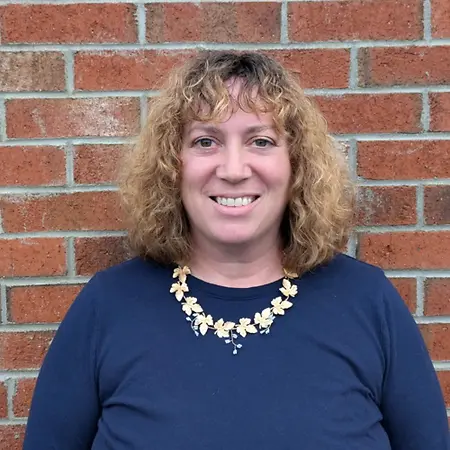
I recharge by downshifting with gardening and watching the sunset... when I'm not working or caring for my family.
Yvette Brooks · In Her Own Words
Her Story
About Yvette
Yvette Brooks is the Founder and Executive Director of Through the Trees, a community-based nonprofit she established in 2020 in Brevard, North Carolina. Her work focuses on addressing the digital divide in rural Western North Carolina by expanding access to technology, improving digital literacy, and supporting device redistribution so that more residents can meaningfully connect to education, healthcare, employment, and civic life.
She launched Through the Trees during the COVID-19 pandemic after working in a domestic violence nonprofit, where she observed how the lack of reliable internet access in Transylvania County and surrounding rural areas severely limited families’ ability to access critical services. This experience highlighted how deeply digital exclusion affected students, low-income households, and underserved communities. In response, she built an organization centered on device access, computer refurbishment, and digital skills support, helping bridge both the hardware and knowledge gaps that prevent full participation in the modern digital world.
In addition to her nonprofit leadership, she is an active community advocate and network builder, having served in civic leadership roles such as Rotary Club president and participating in regional initiatives focused on equity and access. She is also involved in national digital equity efforts through policy and advocacy spaces connected to broadband expansion and inclusion work. A graduate of Arizona State University with a background in psychology, she brings a community-centered, systems-aware approach to her work, emphasizing collaboration, storytelling, and policy engagement to advance long-term digital opportunity in rural communities.
Her Interview
Ten minutes with Yvette
01What do you attribute your success to?
I attribute my success to the fact that our work addresses a real and widely felt need, as many people are unsure how to properly wipe data from old electronic devices. We provide a service that supports both individuals and businesses, helping protect privacy while delivering practical value, which has allowed the work to naturally sustain itself through positive impact and trust. I also believe my approachable communication style helps clients feel comfortable entrusting us with their devices, but ultimately I see this as something larger than myself—something that should be available in every community, which is why we are focused on expanding our reach.
02What’s the best career advice you’ve ever received?
The best career advice I’ve ever received is to build small and well, and then expand. While there is awareness that a second location is part of the long-term plan, I am intentional about not rushing it until everything is right—having a strong team, the right pricing structure, and a model that can operate independently. I also value partnering with organizations that demonstrate integrity, especially because we handle sensitive data where doing things correctly is critical. If growth takes a little longer to achieve the right way, I’m comfortable with that, because quality and trust have to come first.
03What advice would you give to young women entering your industry?
My advice to young women entering my industry is to feel comfortable starting small and to recognize what you know while also surrounding yourself with people who know more and can support your growth. Seek out good mentors and helpers, and don’t hesitate to take a break when you need it—sustainability matters just as much as ambition. I also highly encourage connecting with other women business owners, such as through groups like the Chamber’s Women’s Power Hour, because there are unique challenges and strengths that come with being a woman in business, and it helps to be in community with others who understand that experience. Most importantly, be kind to yourself and keep going—steady, consistent progress wins in the long run, like the tortoise in the fable.
04What are the biggest challenges or opportunities in your field right now?
The biggest challenges are that costs for electronics are going up, and having enough time in the day to let everybody know about what you're doing - that takes a lot of time. I've wanted to be bigger than I am now for a while. We were awarded the Digital Equity Fund grant last year through our collaboration with Land of Sky - they were awarded $7.7 million and we were a partner - but the administration rescinded it, and so that was a loss of $750,000. It's really frustrating because the work still needs to happen, and it's bipartisan what we're doing. With that funding, it just means we can only do a fraction of what we intended to do. So I have the most grants I've ever had written right now, waiting to hear back. Normally I've got like 2 or 3 that I write and you hear back and you go, but it's like upwards of 8 because we're casting a wider net, working with different foundations to try to have the two ends meet faster. The loss of that funding, we're not hurting because we didn't build as if we already had the money, but it's just frustrating because we were awarded it.
05What values are most important to you in your work and personal life?
The values most important to me in both my work and personal life are integrity and balance. I prioritize making sure that I am well, and that my immediate family is supported—my husband, our four children, and my mother, who has Parkinson’s. From there, I focus on what I can give to my community. I’ve learned that if I try to do it in reverse, burnout becomes a real risk. For me, it’s about treating life and work as a marathon, not a sprint, and making decisions that support long-term sustainability and well-being.
Join Influential Women and start making an impact. Register now.