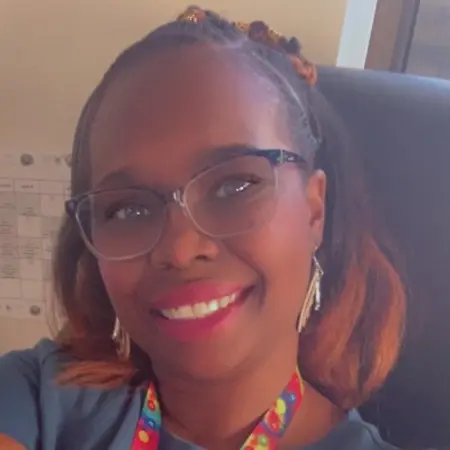
I stopped measuring my life against everyone else's timeline and started trusting God's timing. The delays didn't define me. They prepared me for the success I have today.
Letting Go of the Timeline
Explore moreEarly in a leadership role, I rebuilt trust by communicating clearly, listening to concerns, and following through. Proving resilience comes from accountability and transparency.
Zaneta Artis, ADT, M.S, B.S., A.A.S · In Her Own Words
I stopped measuring my life against everyone else's timeline and started trusting God's timing. The delays didn't define me. They prepared me for the success I have today.
Letting Go of the Timeline
Explore moreSupport became strength when I stopped confusing struggle with independence. Partnership makes your path sustainable. You don't have to carry everything alone to be strong.
When She Stopped Trying to Do It Alone
Explore moreIn Conversation
Zaneta Artis, ADT, M.S, B.S., A.A.S: To me, being an influential woman means using my voice, experiences, and leadership to positively impact others. It means leading with confidence, compassion, and purpose while creating opportunities for those around me to grow and succeed. An influential woman does not have to be the loudest person in the room. She inspires through her actions, resilience, authenticity, and willingness to uplift others. I believe true influence is measured not only by what you accomplish, but by the lives you positively affect along the way.
What's one piece of advice you would give to younger women chasing their dreams?
Zaneta Artis, ADT, M.S, B.S., A.A.S: Never make yourself smaller just to fit into a space where you belong. If you have the vision, skills, and passion to make a difference, have the confidence to use your voice and step into leadership, even when it feels uncomfortable or unfamiliar. Do not let self-doubt, rejection, or someone else's expectations convince you that you need to be less ambitious. Know your worth, trust your journey, and never be afraid to better yourself.
Her Story
Zaneta Artis is an experienced human services and behavioral health professional with more than a decade of progressive leadership in nonprofit operations, crisis management, and client care services. She currently serves as a Client Care and Operations Director at a 200-bed men’s shelter in Maryland, where she oversees 24/7 shelter operations, emergency response coordination, and multidisciplinary staff supervision. In this role, she is responsible for ensuring safety, maintaining operational compliance, and fostering an environment grounded in honesty, dignity, and trust for individuals experiencing homelessness and complex life challenges. Throughout her career, Zaneta has worked across a wide range of settings including school-based mental health programs, substance use treatment facilities, and community-based care coordination services. Her previous roles include clinical case management, addictions counseling, and director-level leadership positions within behavioral health and nonprofit organizations. She has extensive experience supporting individuals facing trauma, mental health conditions, substance use disorders, and reentry challenges, while also developing staff training programs, crisis protocols, and client-centered care systems. Zaneta holds a Master of Science in Psychology with a concentration in Behavioral Health, and a Bachelor of Science in Criminal Justice Administration and Management. Her professional practice is further supported by certifications in Mental Health First Aid (Youth and Adults) and specialized de-escalation training. Inspired by her son’s ADHD diagnosis and her personal journey as a young mother, she is deeply committed to advancing mental health awareness, strengthening community-based support systems, and expanding access to compassionate, trauma-informed care.
Her Interview
01What do you attribute your success to?
I attribute my success first and foremost to God then my son. When I found out he was diagnosed with ADHD, they didn't explain it in a way I could understand, so I decided to go to school and get my master's in psychology to learn about it myself. As I was learning, I discovered how the human brain works and all the chemicals in the brain, and I loved it. But my main focus was to understand my son better. Having my son young also drove me because I felt I had no choice but to get up and do better to make sure he had what he needed. You always want your children to have better than what you had and do better than what you did. Beyond my son, I credit my grandmother, my grandfather (God rest his soul), my uncle, mother, a lot of my immediate family, and my friends. Their words of wisdom and their prayers have always helped, even in the little things. And then my daughter came along, and she was very helpful too because she wanted me to get off the computer as soon as possible while I was in school. What I'm most proud of is that I am not part of the statistics that I was supposed to be in. I was pregnant at 17, had my son at 18, and was living in Southeast Washington, DC. The statistics basically said that I would live in poverty forever, that I wouldn't continue my education or get a college degree, and that I wouldn't make it to where I am now. So truthfully, that's what's notable to me - that I made it out of the bracket of statistics that I was put in.
02What advice would you give to young women entering your industry?
I would advise young women to set and maintain strong professional boundaries, especially in a field that can be emotionally demanding. It’s important to know when to step away from work, turn off your phone, and allow yourself time to rest. Self-care is essential because you cannot effectively support others if you are not taking care of yourself.
03What are the biggest challenges or opportunities in your field right now?
One of the biggest challenges in human services is the shortage of staff, which often leads to burnout among professionals. The emotional weight of supporting vulnerable populations can be overwhelming without proper self-care and boundaries. However, a major opportunity lies in the ability to witness transformation—helping individuals rebuild their lives and seeing powerful stories of resilience and recovery.
04What values are most important to you in your work and personal life?
Honesty, dignity, and trust are the most important values in both my professional and personal life. These principles guide how I engage with clients and staff, allowing me to meet people where they are and build meaningful, respectful relationships.
Join Influential Women and start making an impact. Register now.