How She Found Her Voice Later in Life
Stories of women who discovered confidence after years of silence.



Stories of women who discovered confidence after years of silence.


For a long time, I believed I already had my voice. I had built a career in policy and government affairs, worked inside powerful institutions, and learned how to speak clearly, strategically, and persuasively. I understood systems, language, and influence. What I did not yet understand was how much of my voice was still shaped by expectation rather than intention. When life-threatening chronic illness and disability forced me to step away from the career I had spent years building, I lost more than a professional path. I lost the structure that had told me where my voice belonged. I was suddenly navigating spaces where people looked past me, underestimated me, or assumed my capacity before hearing my ideas. For a while, that invisibility was disorienting. I was used to contributing in rooms where my role was defined and my value was understood. Without that framework, I had to ask a harder question: what do I want to say when no one is assigning me a seat? I am also a survivor, which taught me early on how easily voices can be dismissed, and how essential it is to speak with intention rather than permission. Living with disability deepened that lesson. It made me more deliberate about where I invested my energy and more discerning about the spaces that were worthy of my voice. My voice began to re-emerge in unexpected places. Beauty became one of them. What started as a personal grounding practice during periods of uncertainty revealed something larger. I did not see bodies like mine considered in design, messaging, or leadership. I did not see disability treated as a perspective worth building around. Naming that gap out loud was the beginning of finding my voice again. This time, it was quieter but clearer. Less performative, more deliberate. I stopped trying to fit my story into spaces that were not built to hold it, and started building work that reflected what I knew to be true. That shift required letting go of the idea that credibility only comes from traditional titles or linear progress. It also required trusting that lived experience, when paired with strategy and care, is a form of leadership. Finding my voice later in life was not about becoming louder. It was about becoming more precise. I speak now with a deeper sense of responsibility, grounded in the belief that representation should lead to real inclusion, and that influence is most powerful when it creates access for others. My voice found its strength not in being heard everywhere, but in knowing exactly what I am here to say.

I didn't find my voice all at once—I earned it case by case. For a long time, I thought being 'professional' meant being agreeable and quiet. Then I started sitting across from patients who were scared, being told no, and I realized silence was a luxury they didn't have. The more I fought for them, the more I stopped shrinking in rooms I'd worked hard to be in. Somewhere along the way, advocacy became confidence—and my voice became non-negotiable.

I've always been a wife and a mother; roles that shape me just as much as the work I do. Raising two boys, now 17 and 12, has taught me patience, perspective, and the importance of being present even when life is busy. Balancing family and leadership hasn't always been simple, but it has grounded me and kept my priorities clear.

I don't think I found my voice all at once. I think I grew into it over time. Like many women, I spent earlier seasons of my life focused on doing what was expected of me: working hard, proving myself, being dependable, and making sure I was delivering. I had thoughts, instincts, and ideas, but I did not always use my voice as fully or as confidently as I could have. In many ways, I was building the substance of leadership before I fully stepped into the expression of it. What changed for me was not one single moment, but a gradual realization that my perspective carried value and that leadership required more than execution alone. As my responsibilities grew, both professionally and personally, I began to understand that using my voice was not about being the loudest person in the room. It was about being clear, intentional, and willing to contribute what only I could see, say, and offer. Over time, experience gave me confidence, but purpose gave me conviction. I also came to understand that finding your voice later in life is not a disadvantage. In many ways, it can be a gift. By the time you begin speaking from a deeper place, your voice is often more grounded, more thoughtful, and more aligned with who you truly are. It is shaped not just by ambition, but by wisdom, resilience, and lived experience. Today, I use my voice with much greater intention. I see it as a responsibility as much as a privilege; to lead, to encourage, to advocate, and to create space for others. If my voice emerged later than expected, it is because it was still being formed. And now that it is here, I am committed to using it in ways that create impact, open doors, and help other women trust the power of their own.
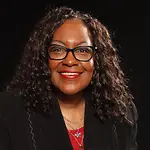
"You are either green and growing or ripe and rotting!" (Ray Kroc) I have always pursued my vision and God's purpose for my life, why stop now? My continual growth keeps me healthy and alive to continue, at the age of 72, to uplift, encourage, motivate, inspire, and educate to transform lives. My later years have been shaped by my former years of experiences, the good and challenged, and continual learning. Never give up on your dreams, purpose, and passion.
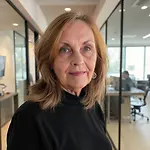
I discovered my voice over time, shaped by my journey as a wife, mother, artist, and teacher. Each day brought its own challenges, and there were moments when expectations felt heavy and appreciation seemed distant. Yet through those difficult times, I was supported and uplifted by the encouragement of friends and family, which helped me build confidence and resilience. Returning to graduate school as a middle-aged woman to study painting, printmaking, and Art History marked a turning point as I began to pursue my true calling as an artist. I took classes in the evenings and some summers because I was teaching full-time. Balancing full-time teaching with my studies was not easy, but through determination and dedication, I achieved my goal. At the age of 52, I graduated with an MA major in Painting and a minor in Art History. My graduate show was a significant artistic achievement because I produced a body of abstract landscapes in various sizes, oil on canvas, to fulfill my prospectus. After I received my degree, I was hired as an adjunct professor at a local university. I had learned so much from my graduate professors that I was excited to begin this new journey as a professor. Teaching at the college level further strengthened my confidence and inspired me to continue growing as both an educator and an artist. I taught for fourteen years, and simultaneously, I pursued my love for painting whenever I could in my home studio. After I retired from teaching at age 66, I began a new journey to find a studio space outside of my home. After I found a studio, I set a priority to be in the studio as many days as I could during the week. I began to produce a body of work that kept me engaged and satisfied; it met my needs for growth through self-expression and communication. I am still painting today at age 76. Even though it’s not a daily ritual as it was, I find much satisfaction being in my home studio; I am excited about what I may discover about myself and my paints as I work through unfinished paintings or new work. The showing up never gets old, and that I find is a true treasure.